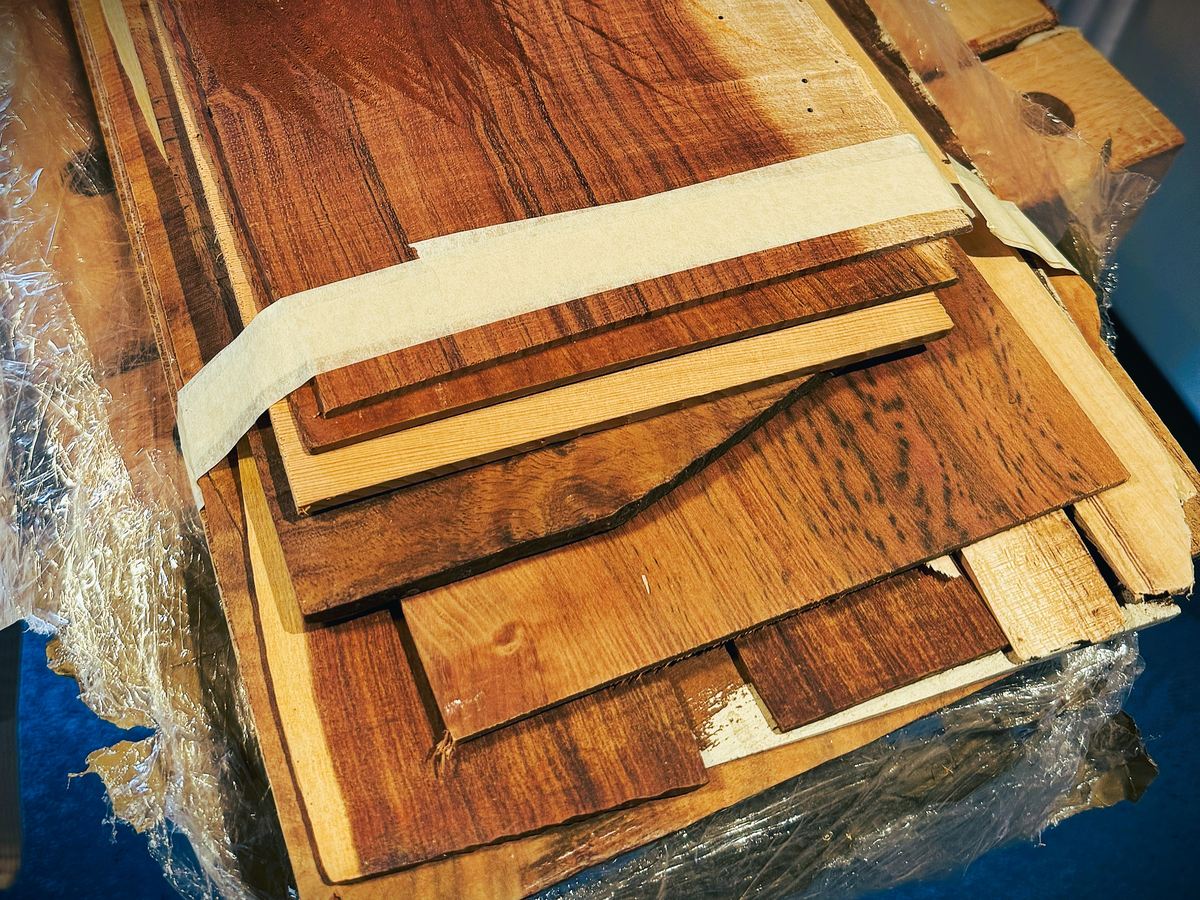
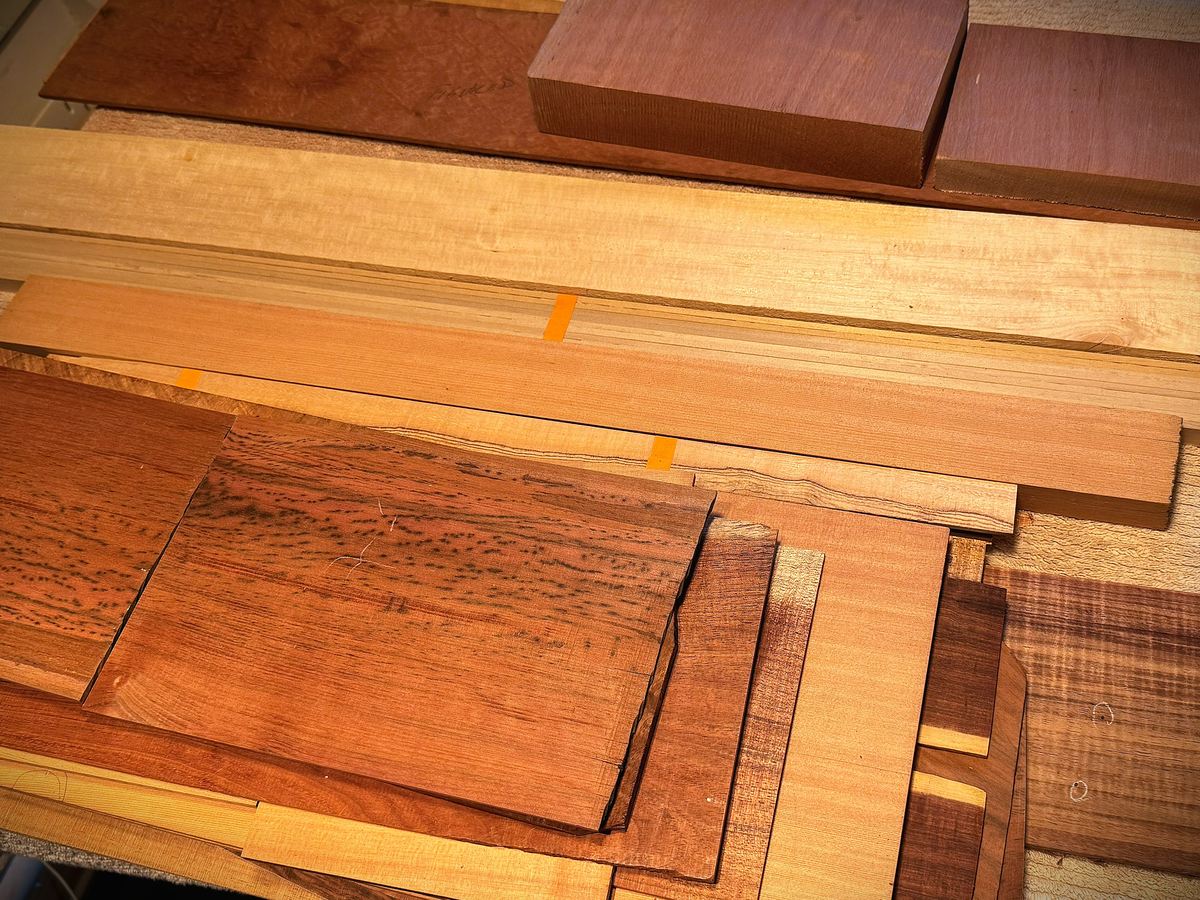
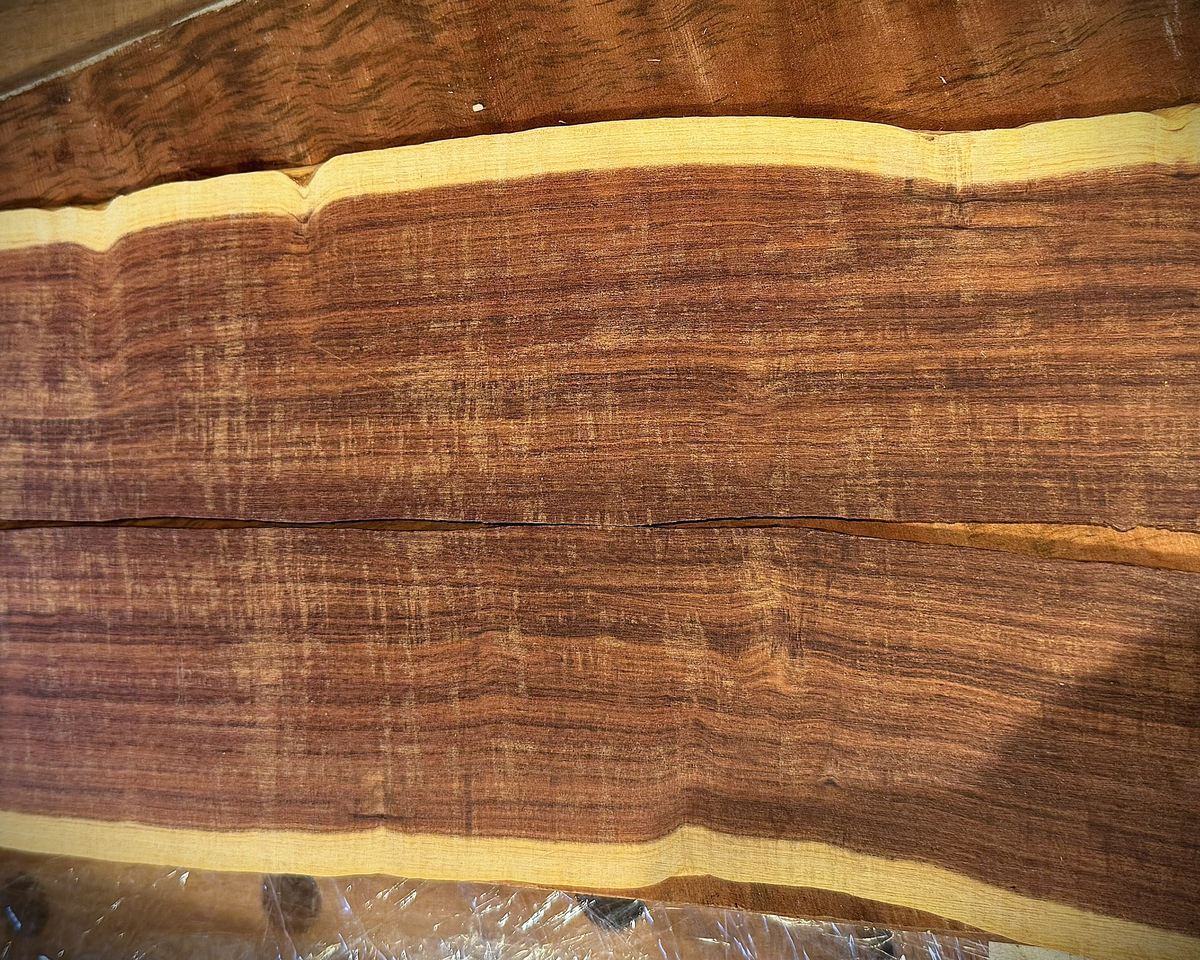
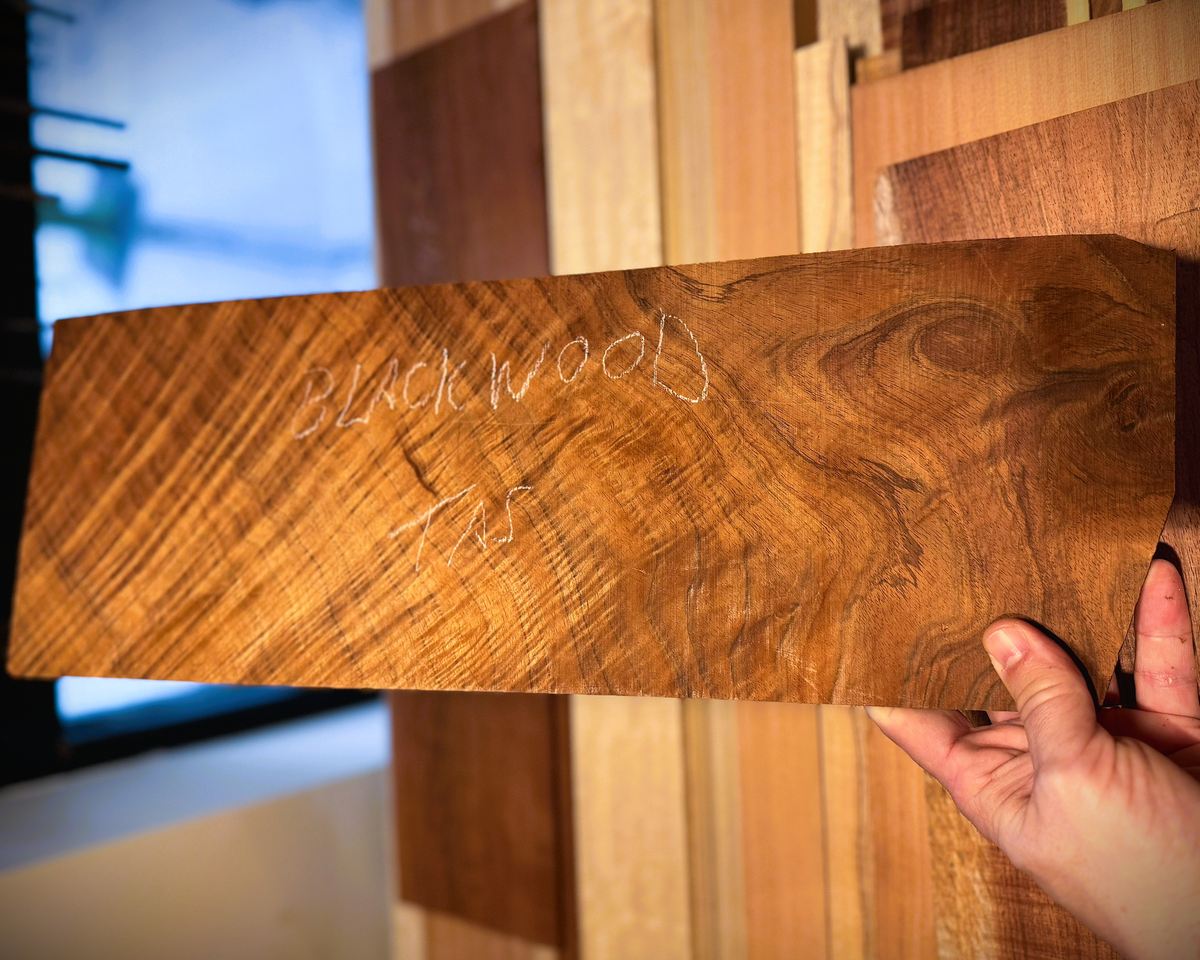
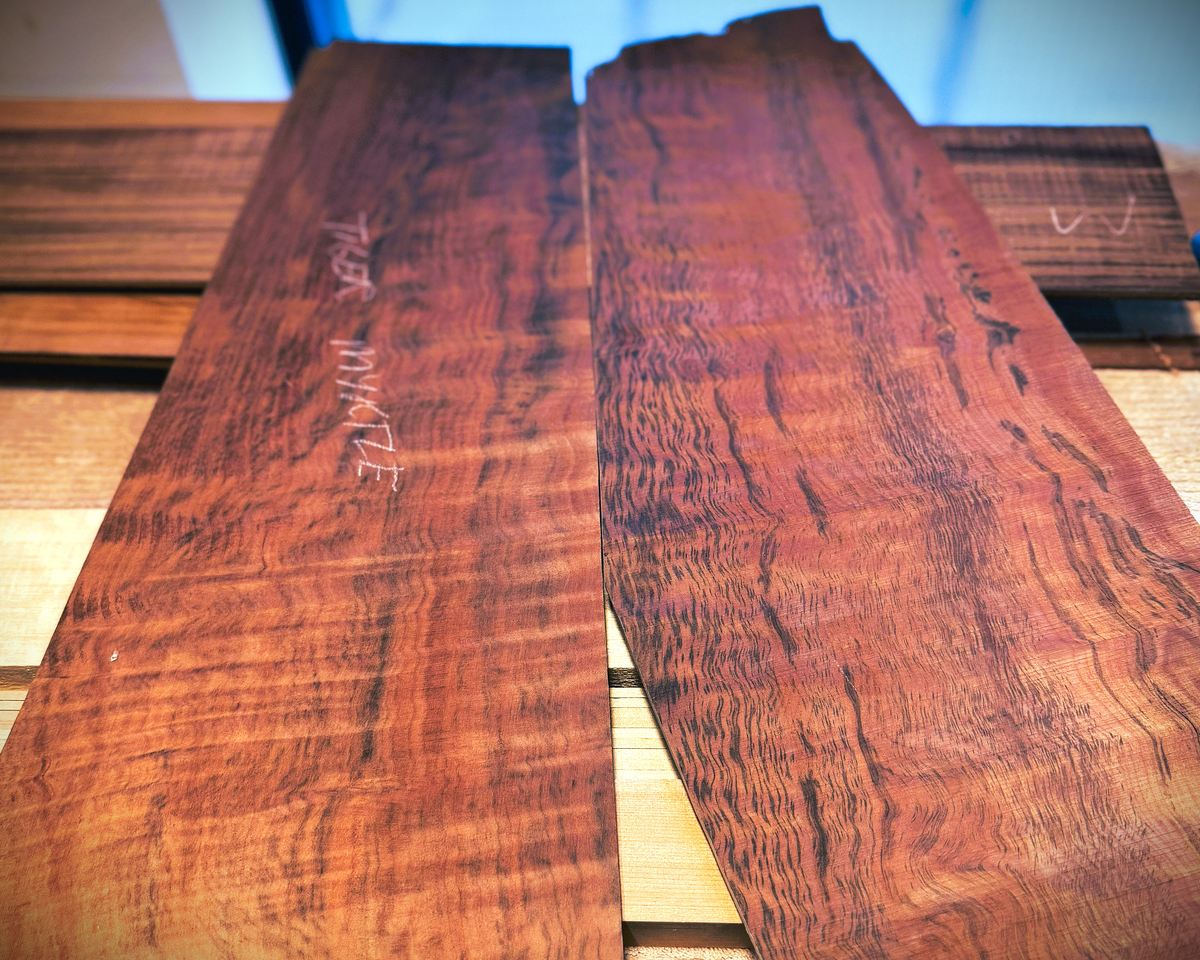
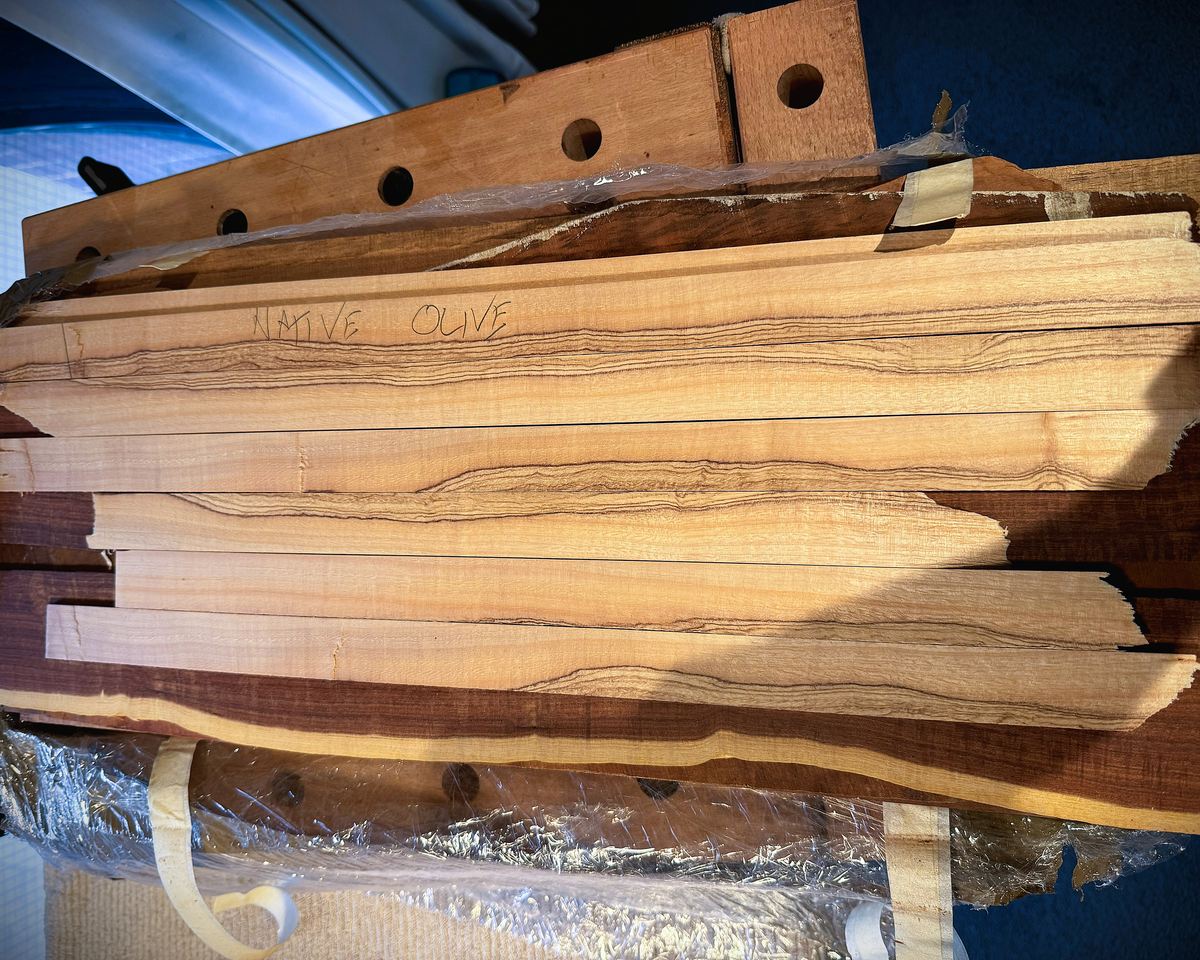
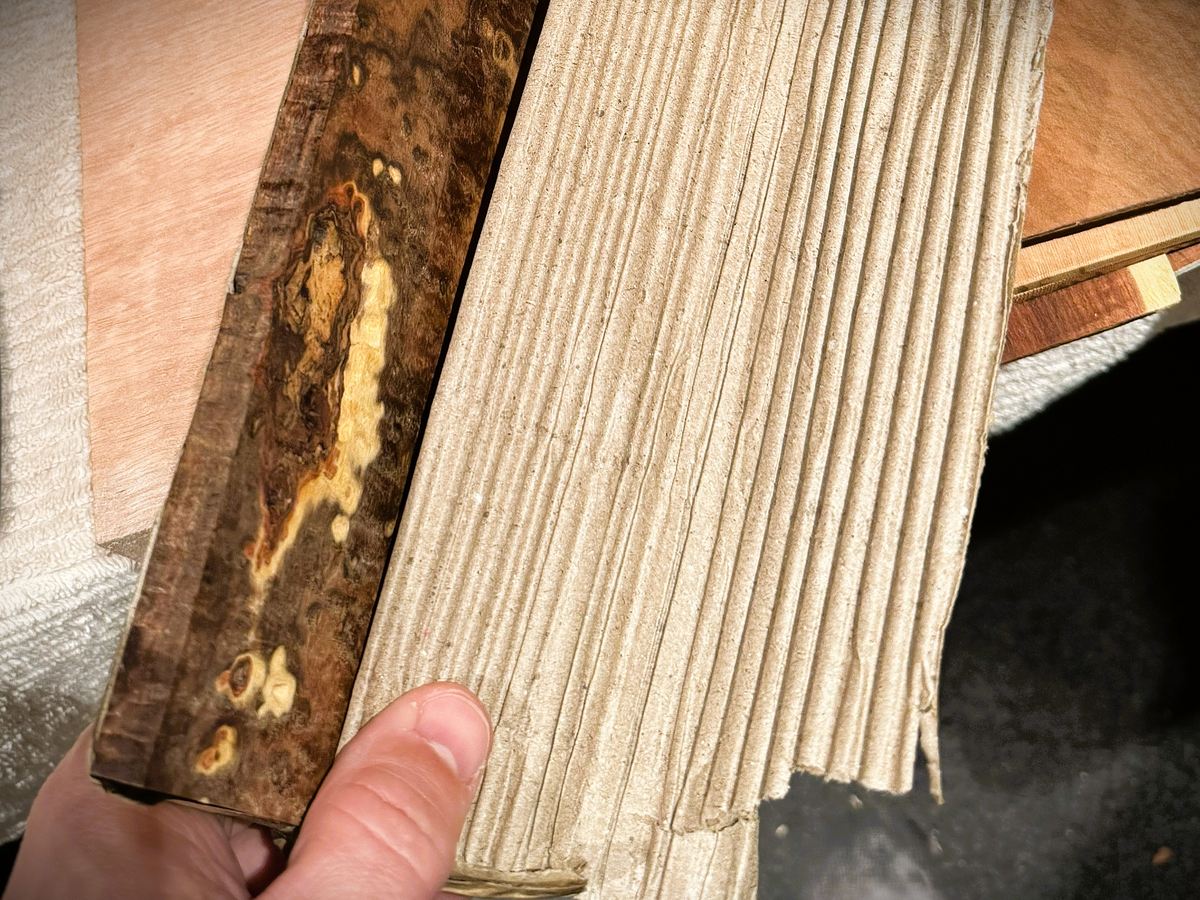
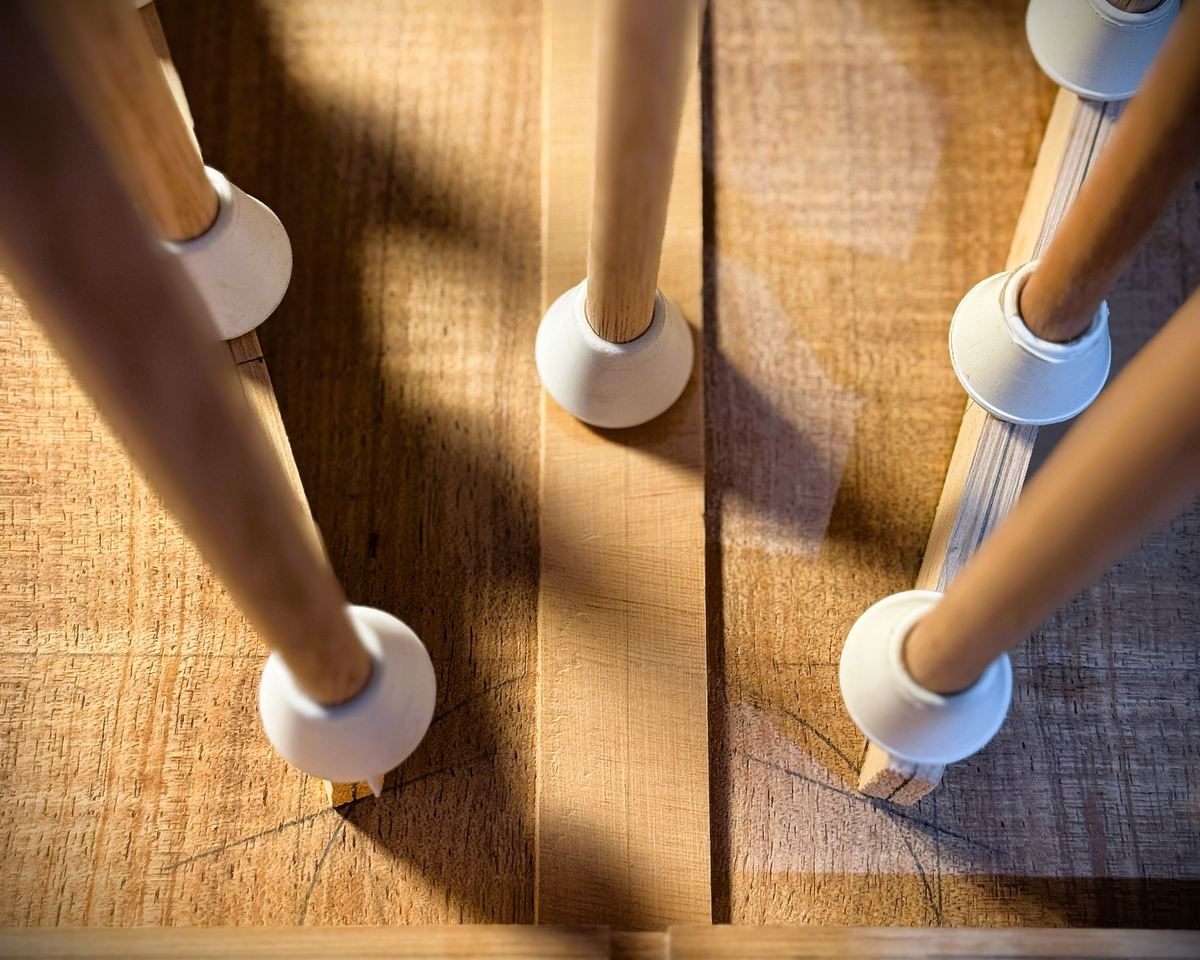
Endemic means found naturally in one place and no other. Every timber here is endemic to Australia and sustainably sourced.
Soundboard & internal bracing
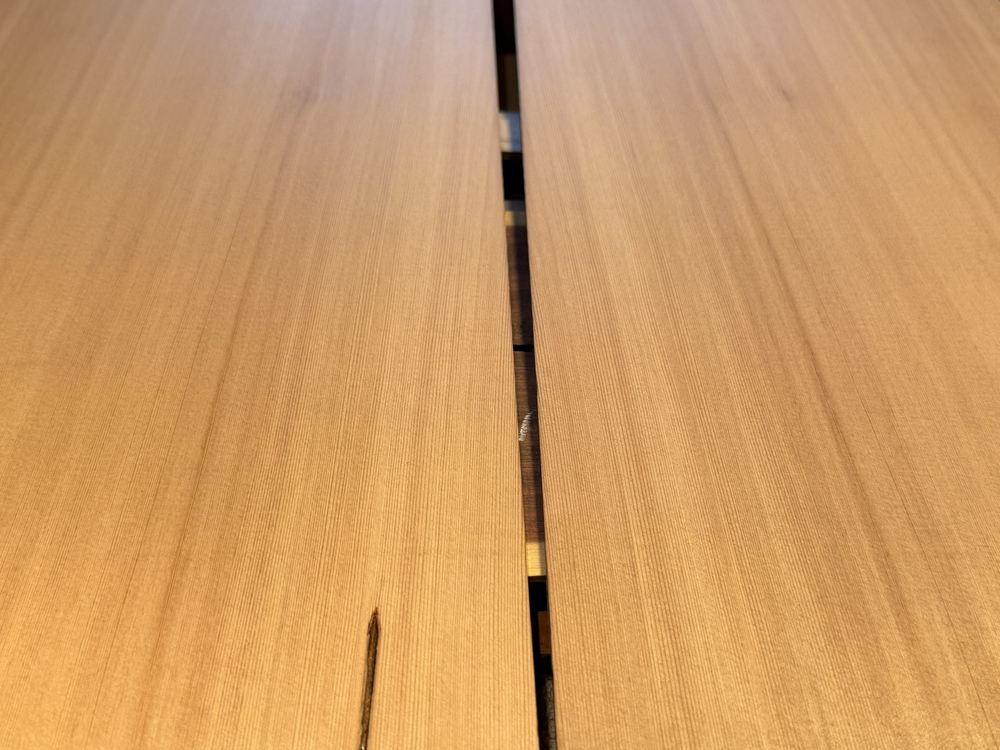
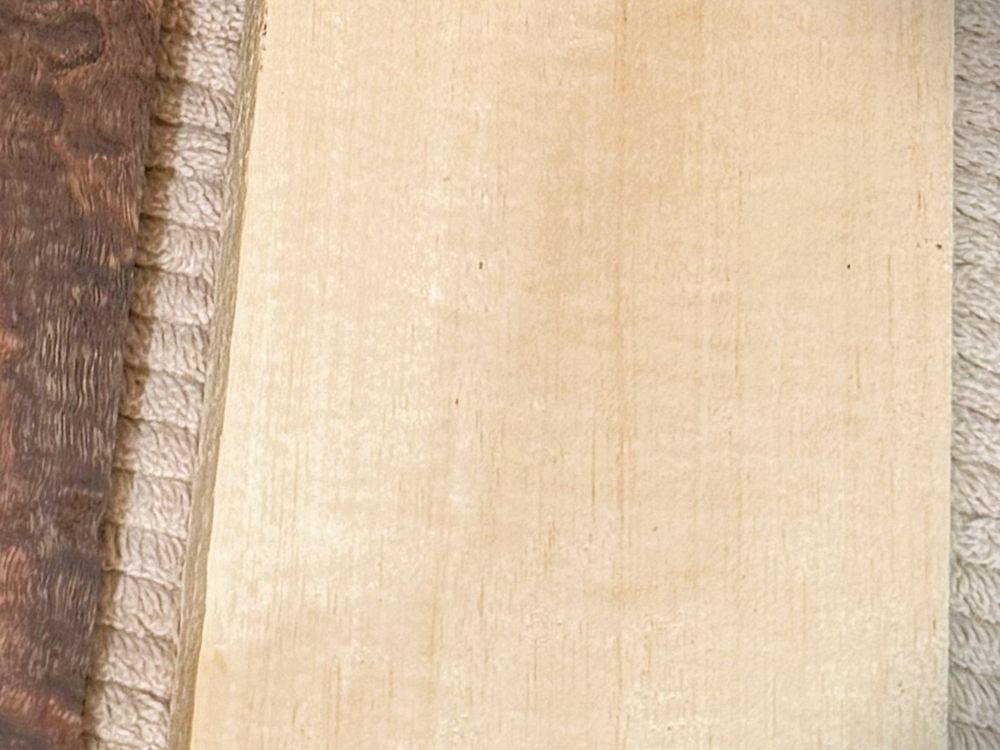
King Billy Pine
Athrotaxis selaginoides
king-billy.jpg
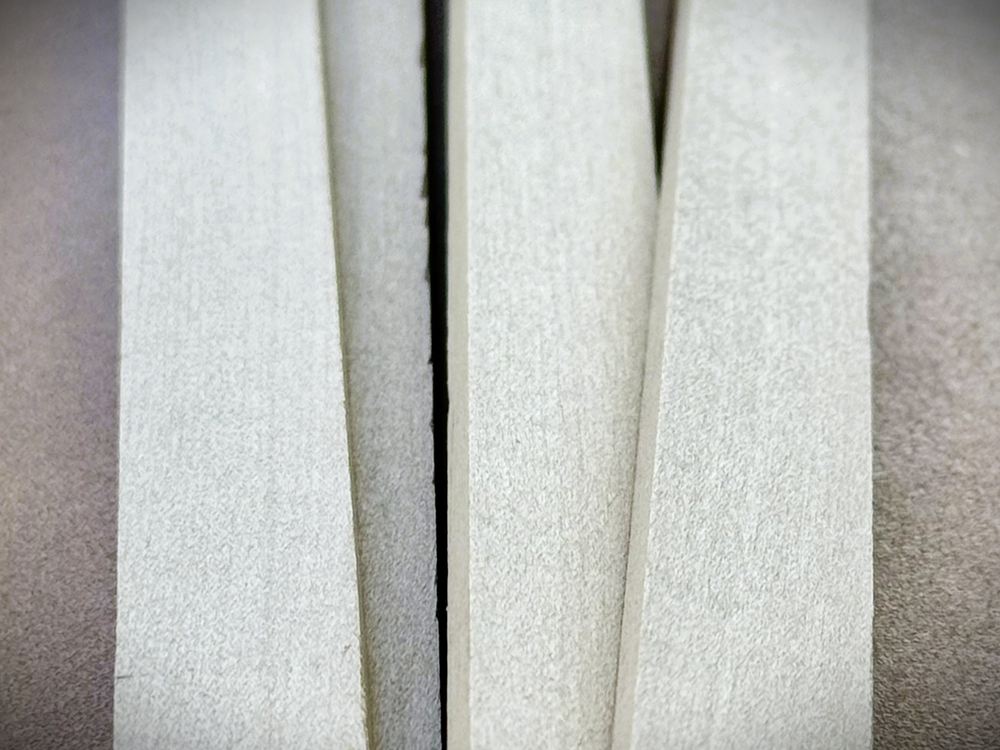
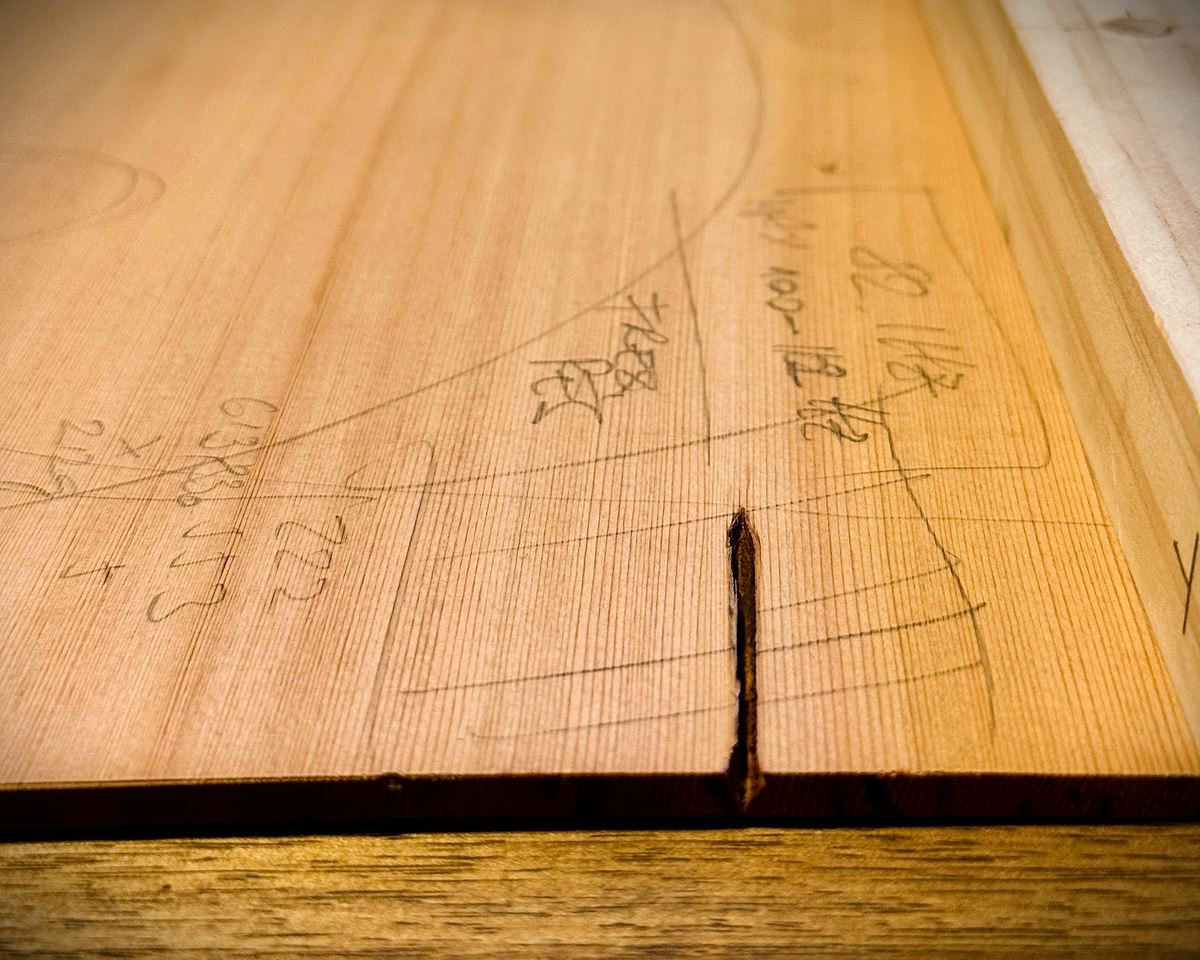
Clear, crisp and exceptionally stiff for its weight, which is what a soundboard wants above all else. The same stock is worked down for the bracing beneath it.
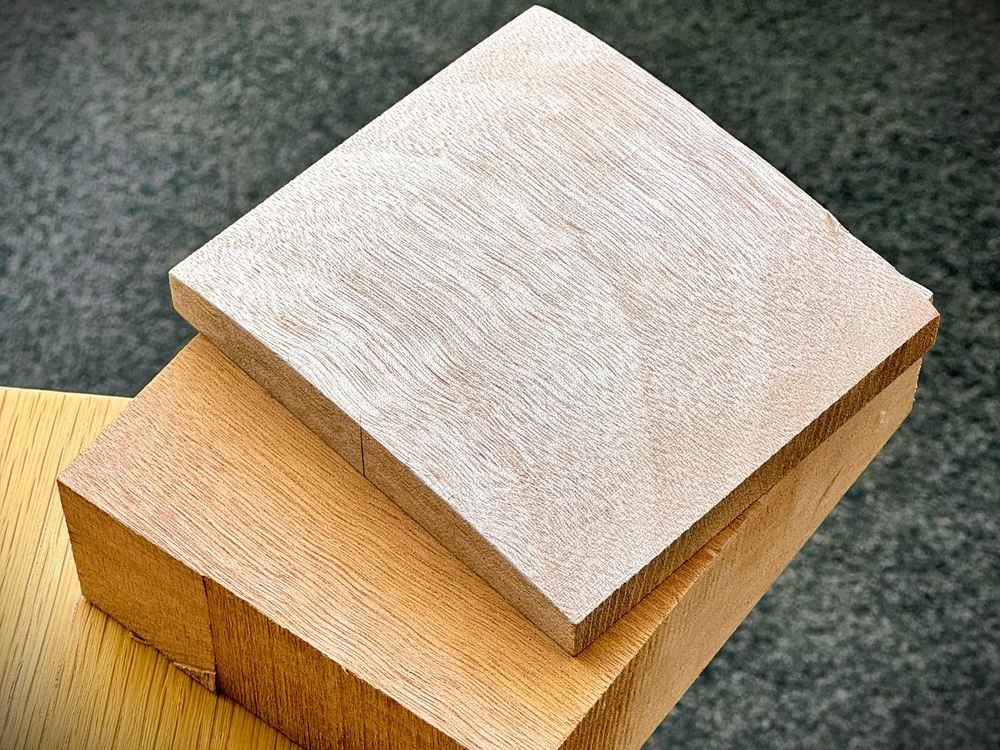
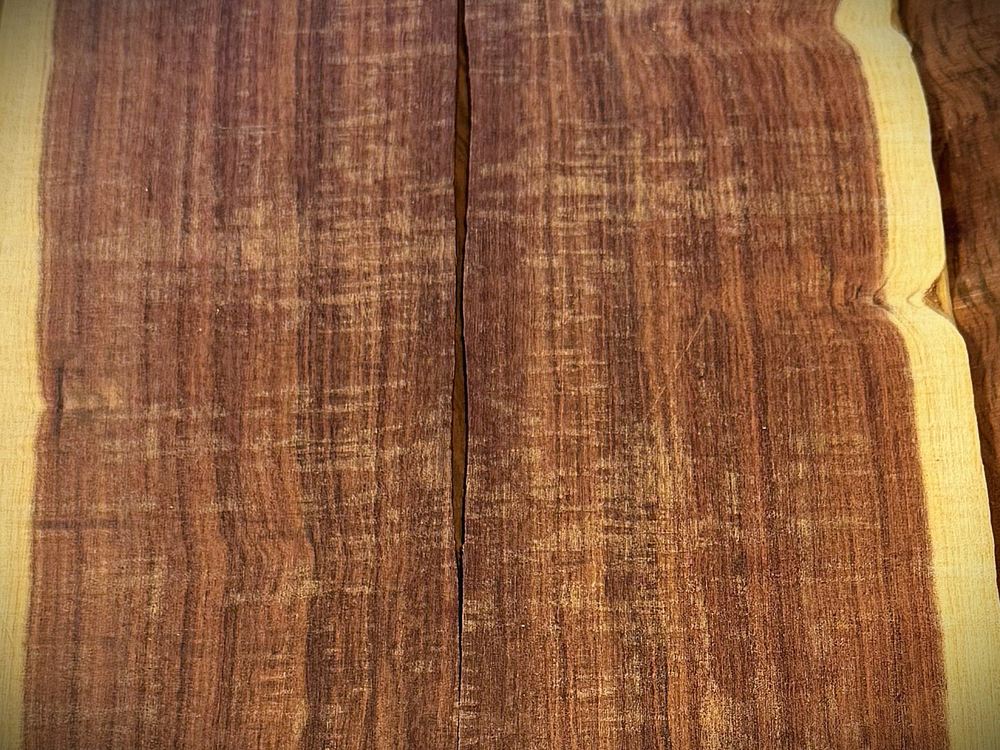
Warm and rich, with striking interlocked figure. A tree of great cultural significance, traditionally worked into tools, weapons and ceremonial objects.
Smooth under the hand and dimensionally stable, the two qualities a neck lives or dies by. A rainforest timber of the wet tropics of far north Queensland.
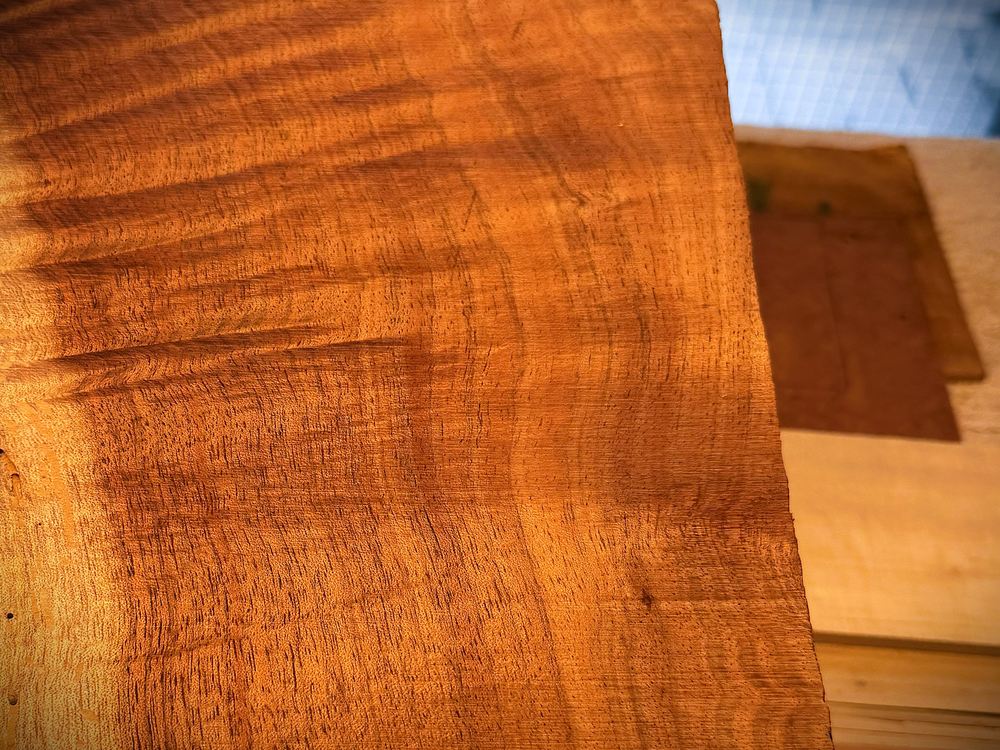
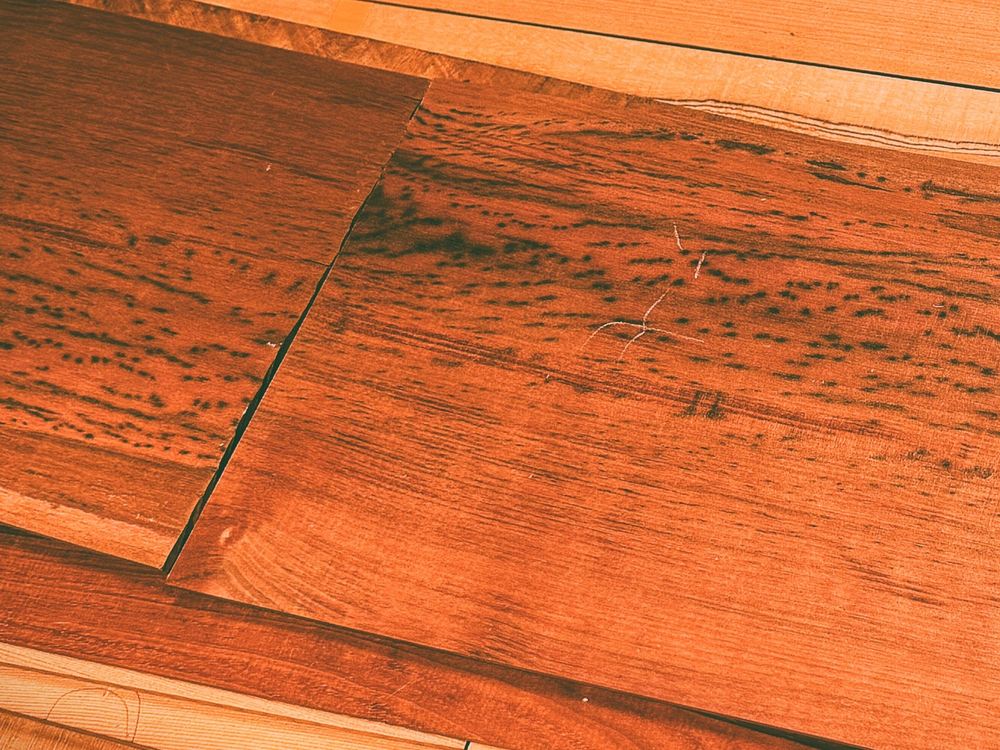
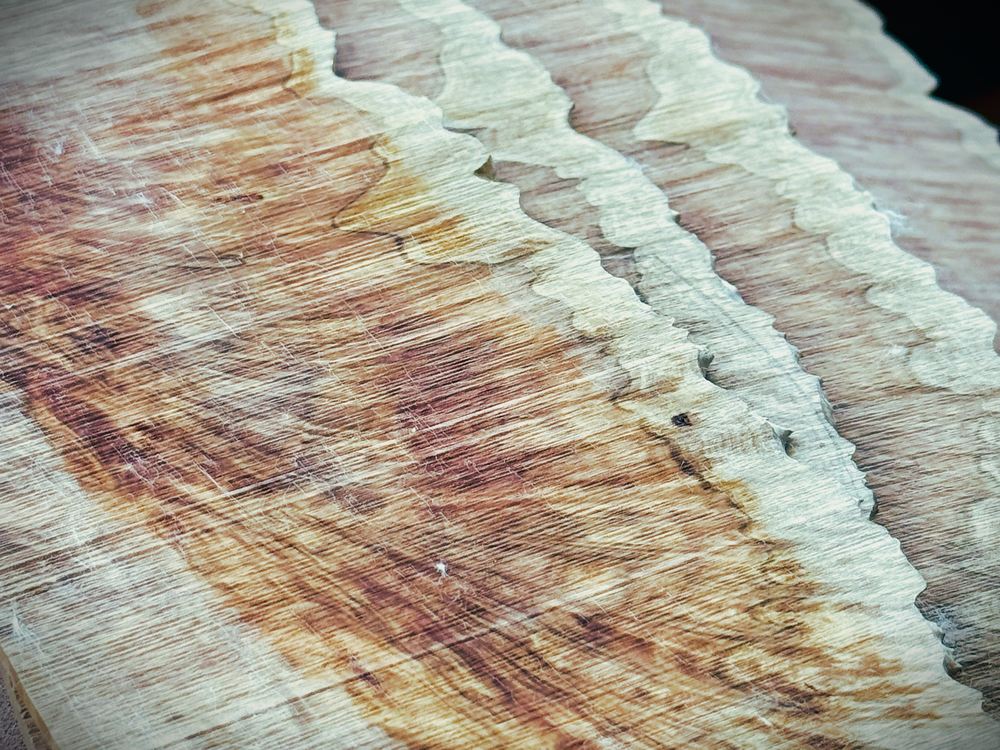
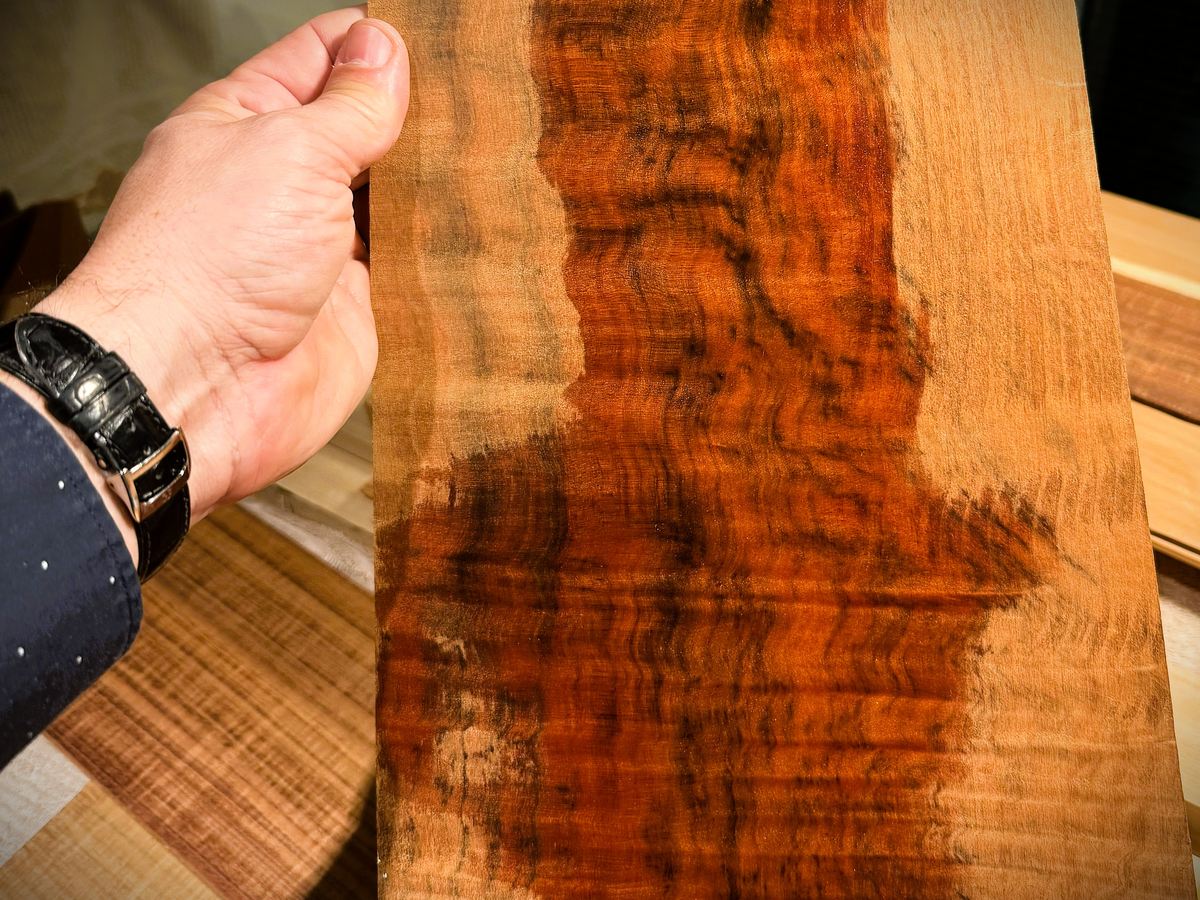
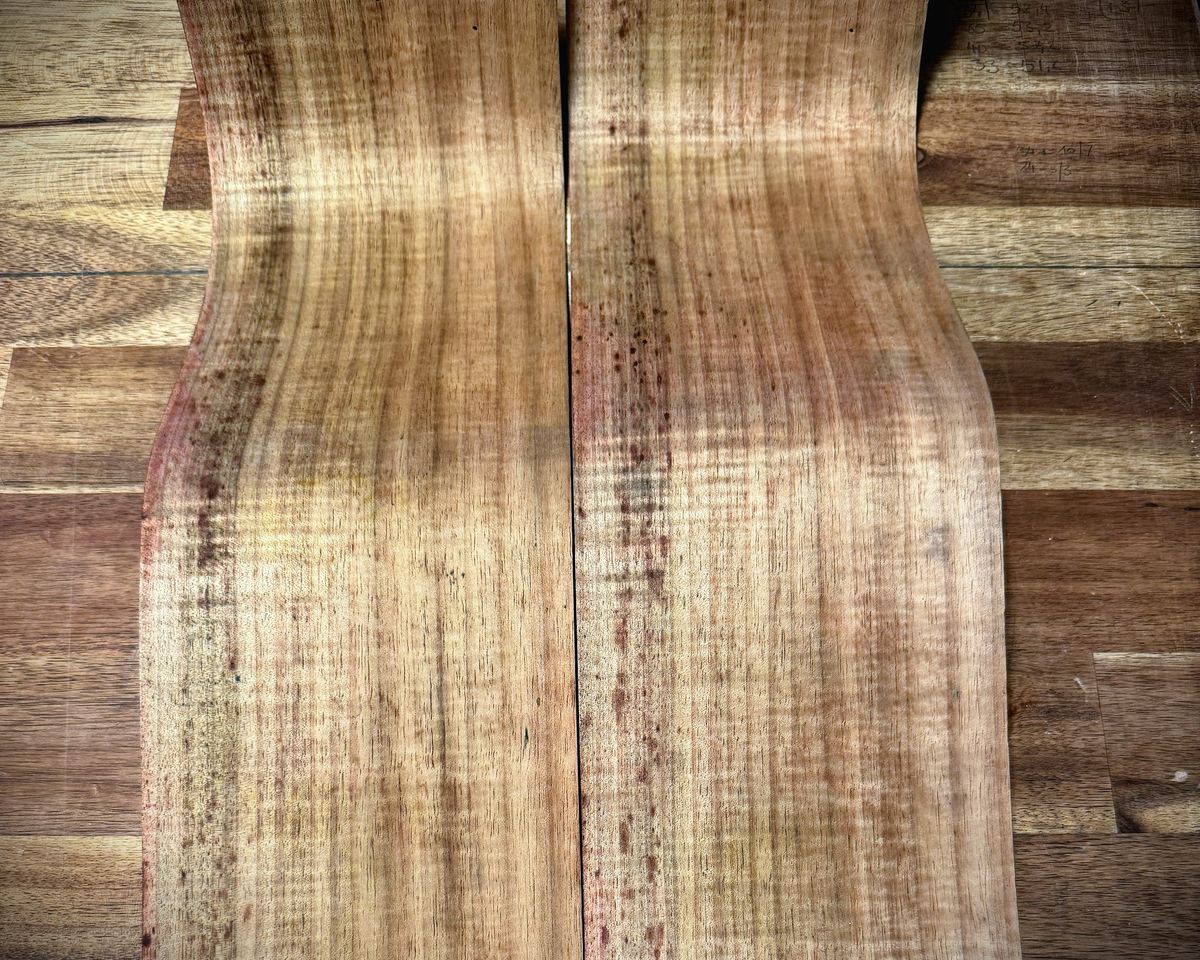
The tiger striping is fungal figure in ordinary Myrtle, not a separate species. Unrepeatable, and different on every piece. One board runs through all four.
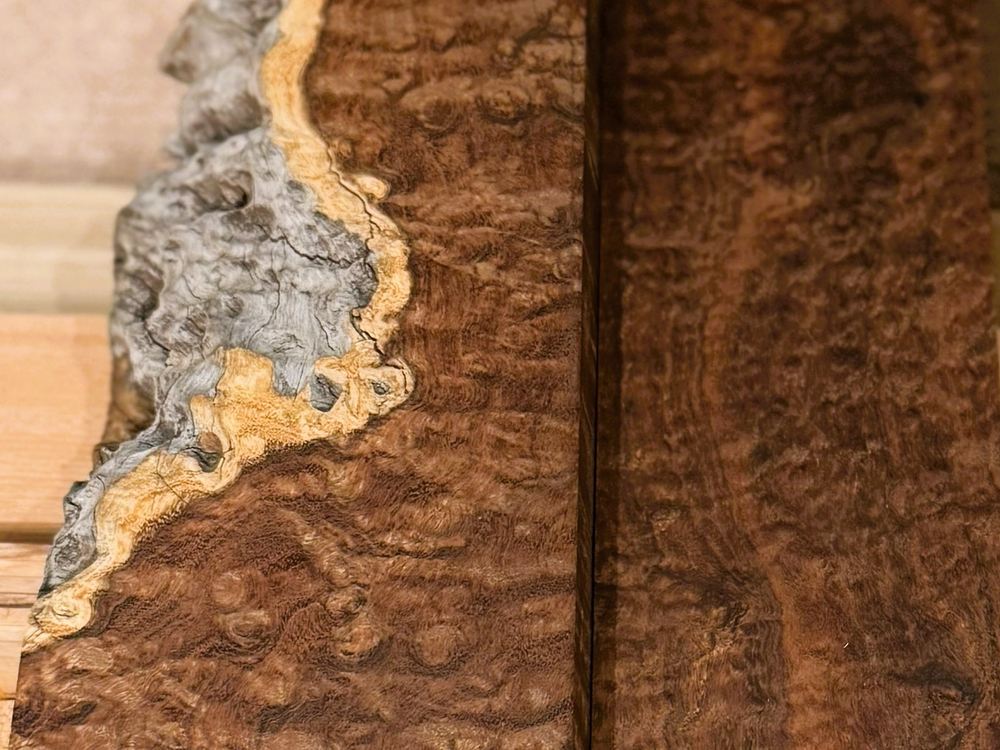
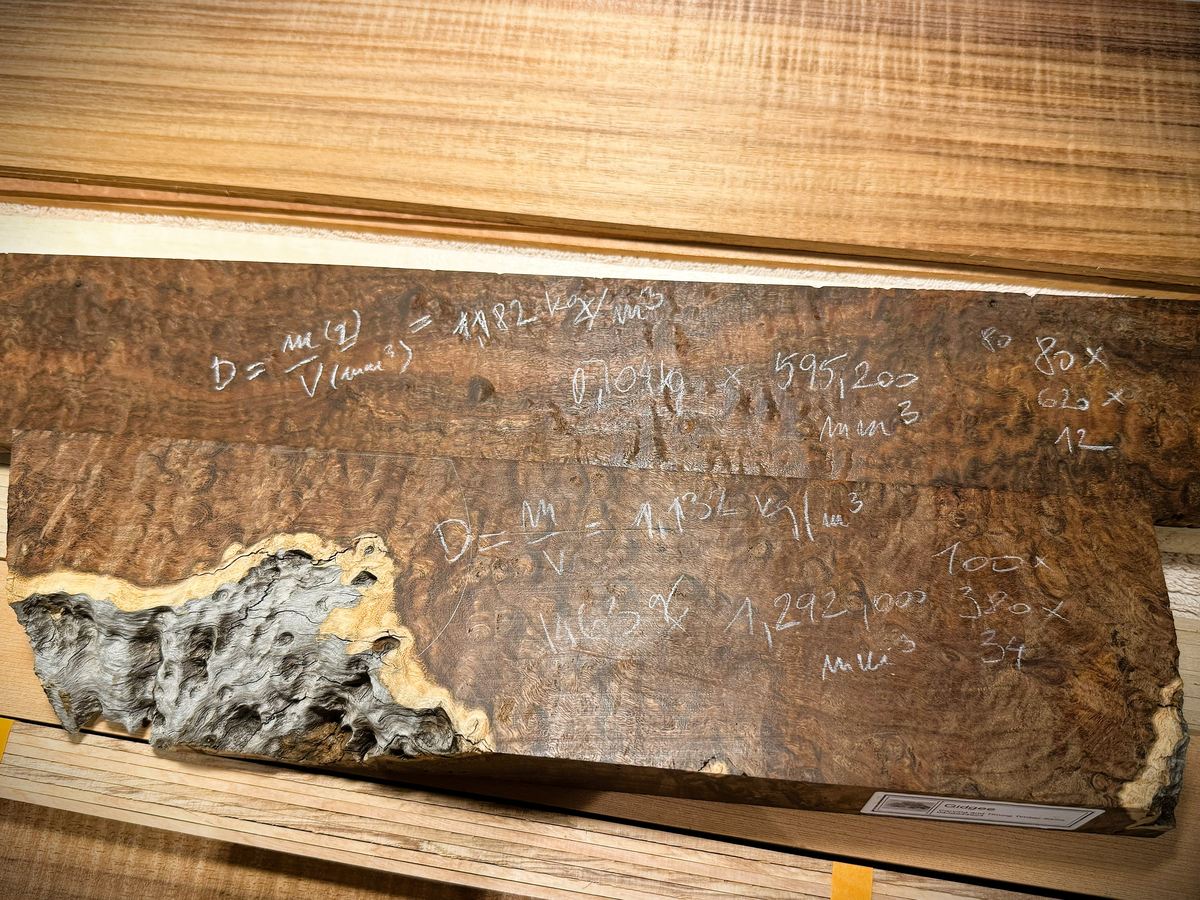
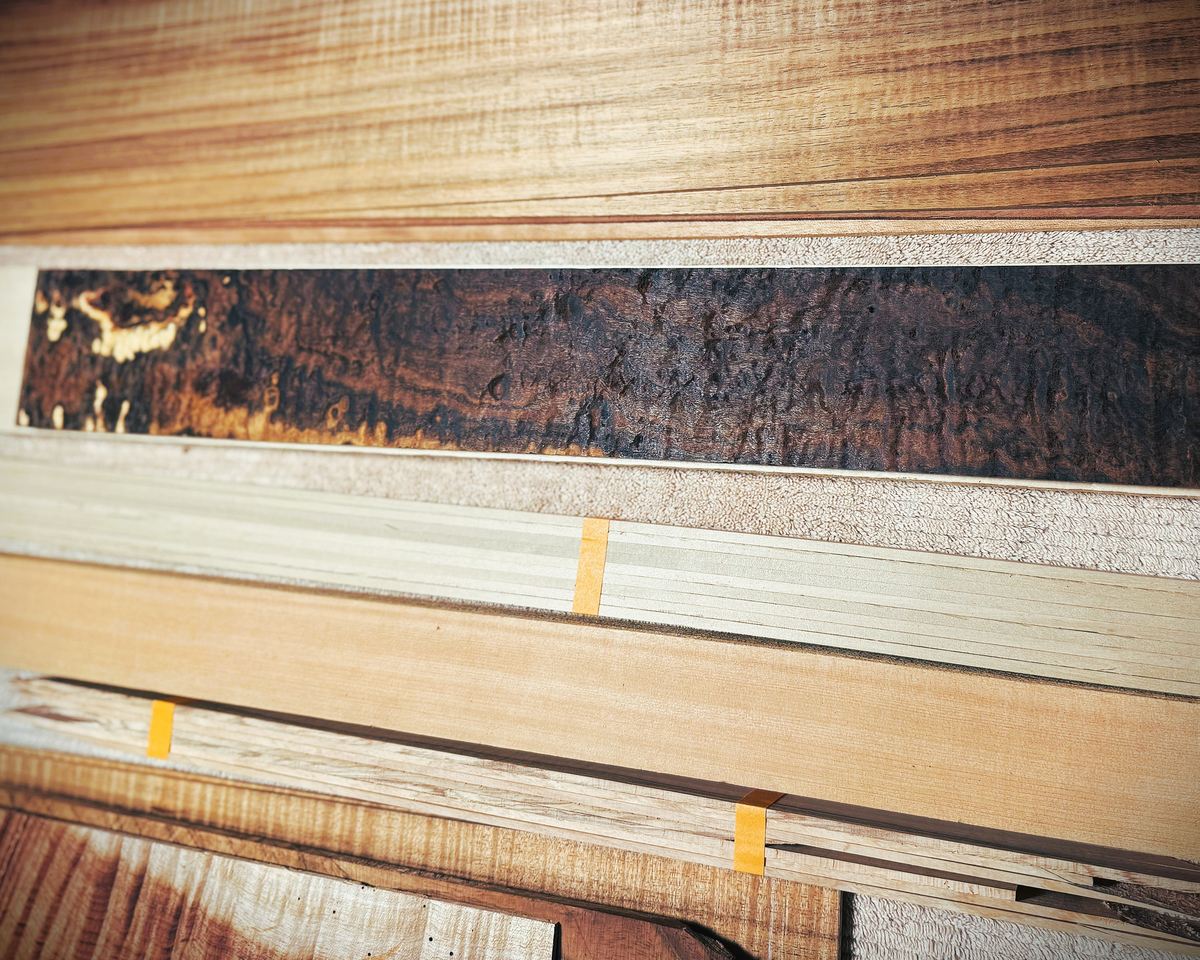
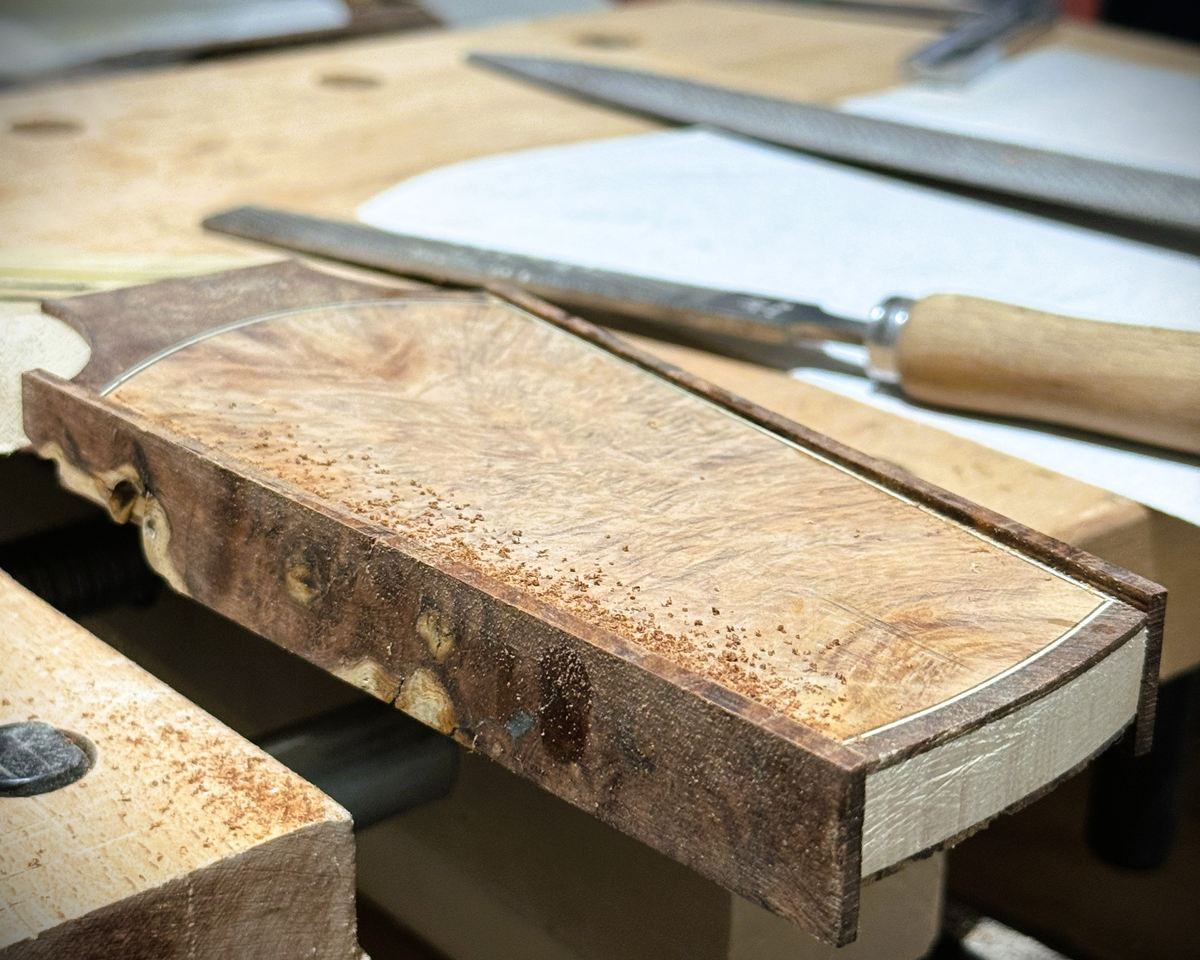
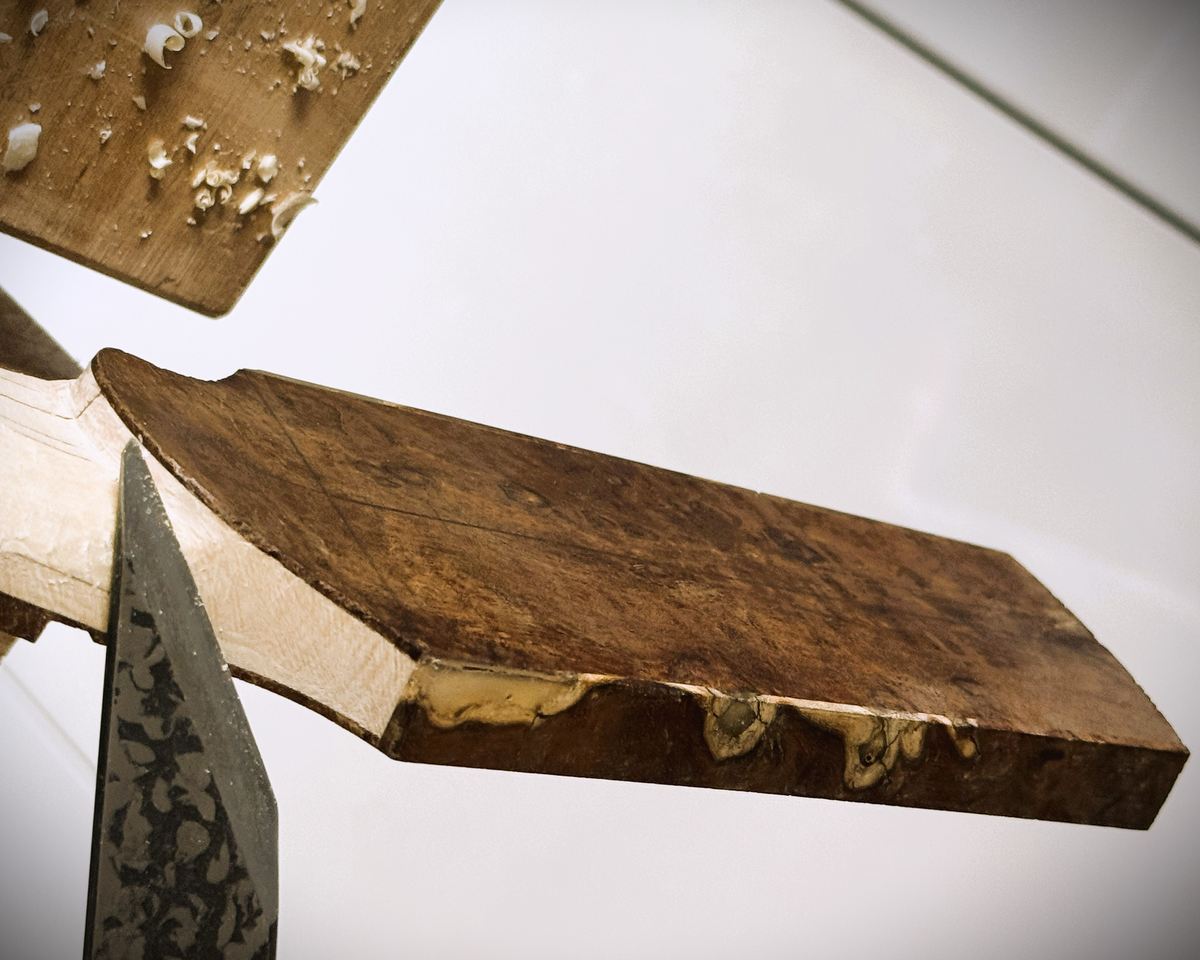
A swirling burl laid over Gidgee as the face of the head plate. Yellow box is the honey tree of the eastern plains, and its timber is hard and durable.
Boards are chosen for grain orientation, stiffness across and along the fibre, and colour under a wet rag. Quartersawn stock for plates, the soundboard is tapped and listened to before a single cut is made.
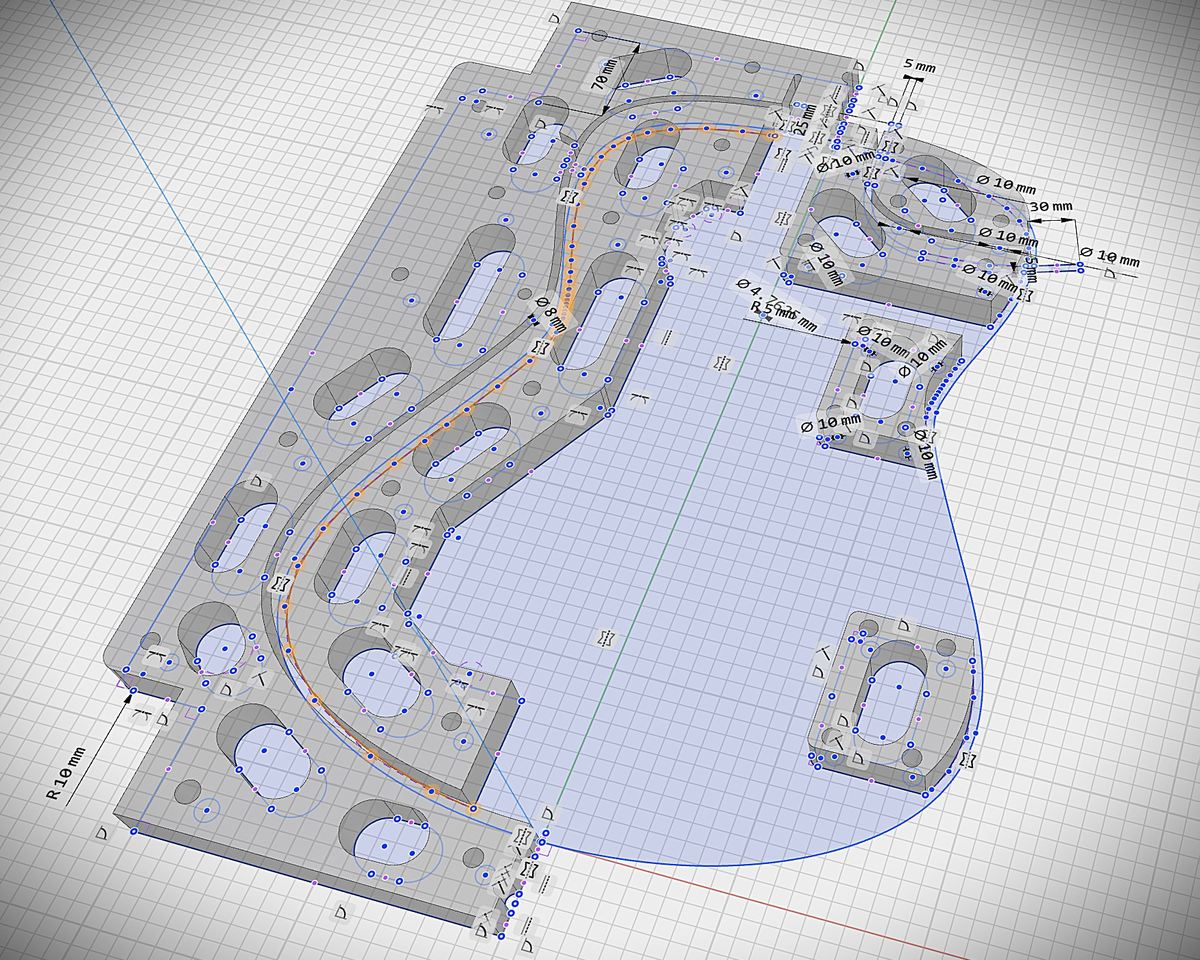
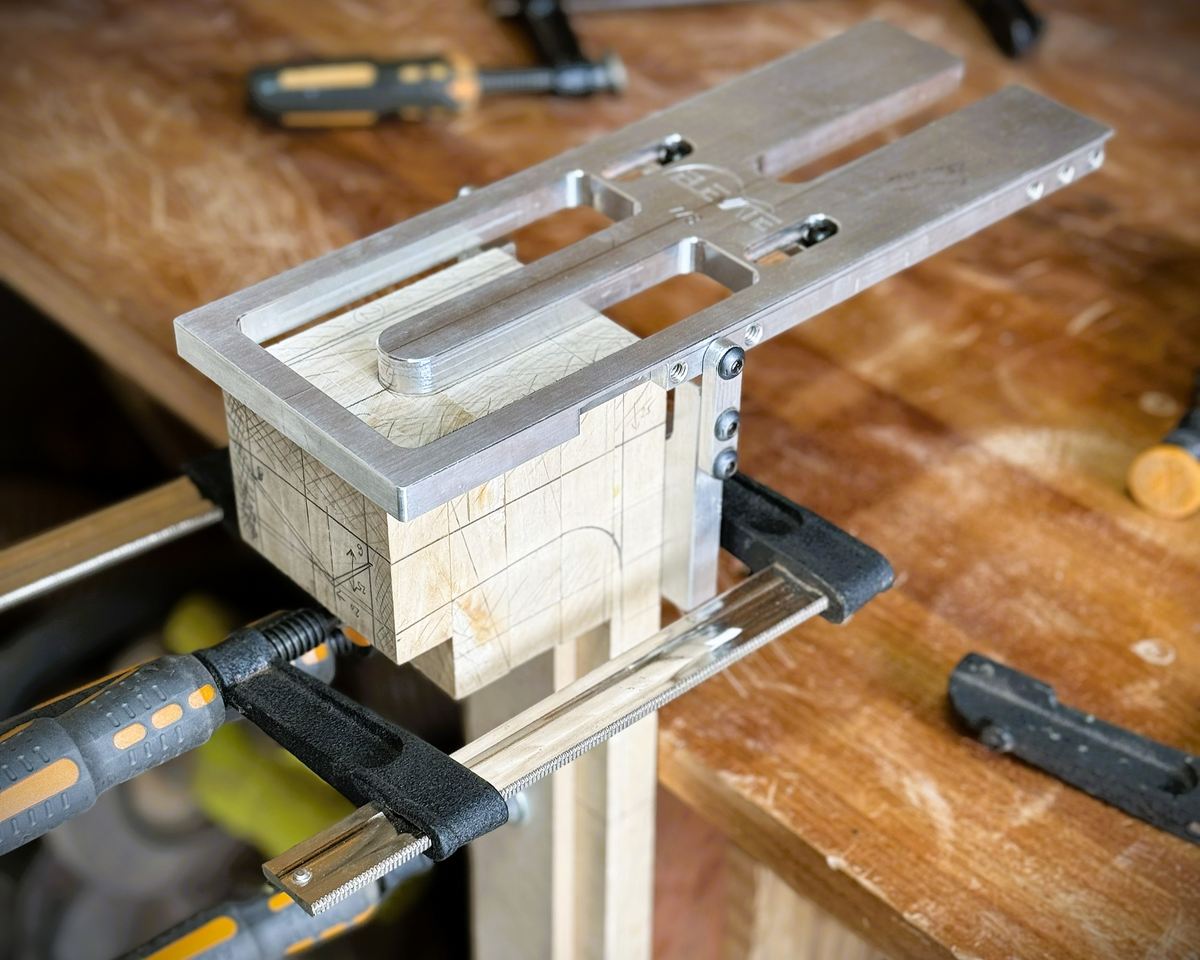
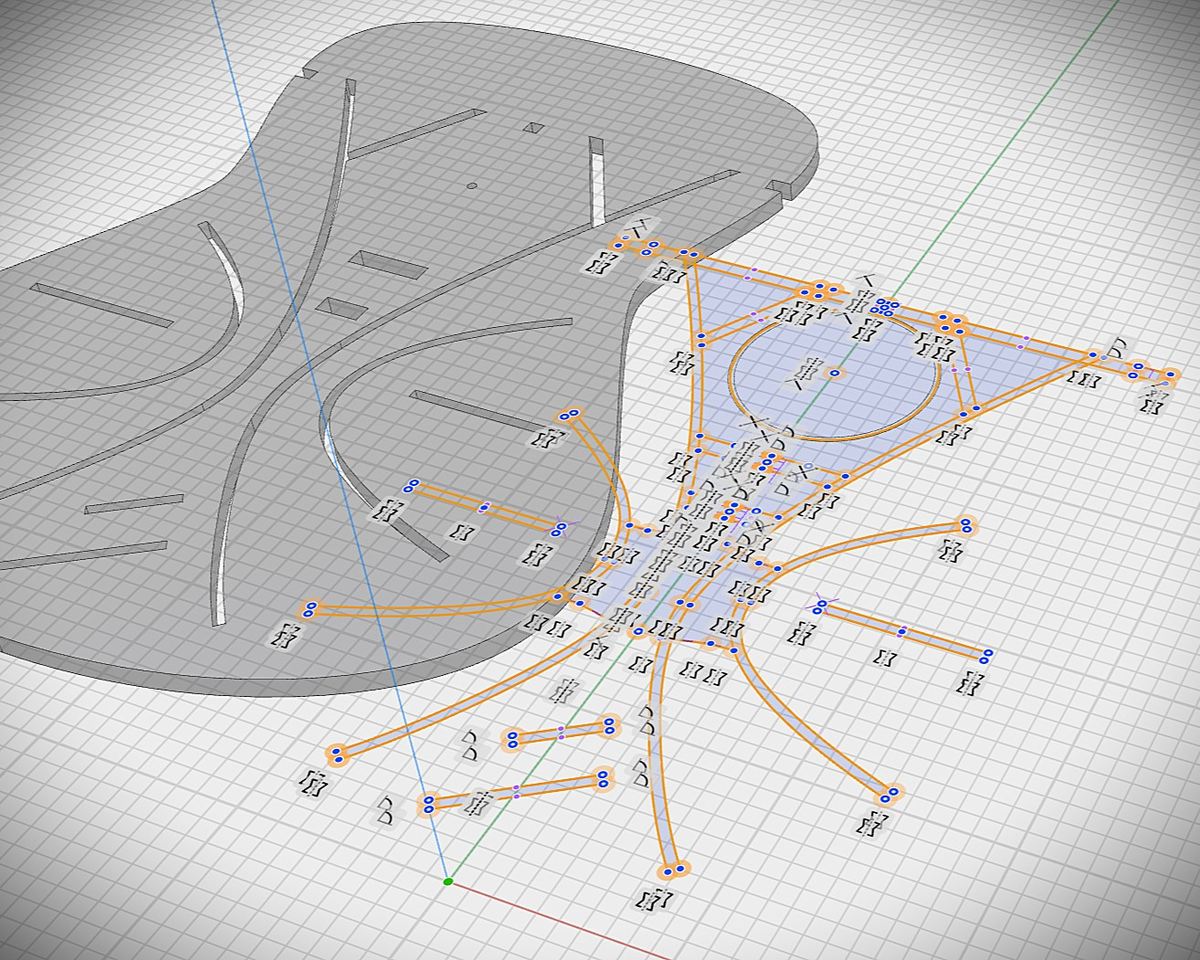
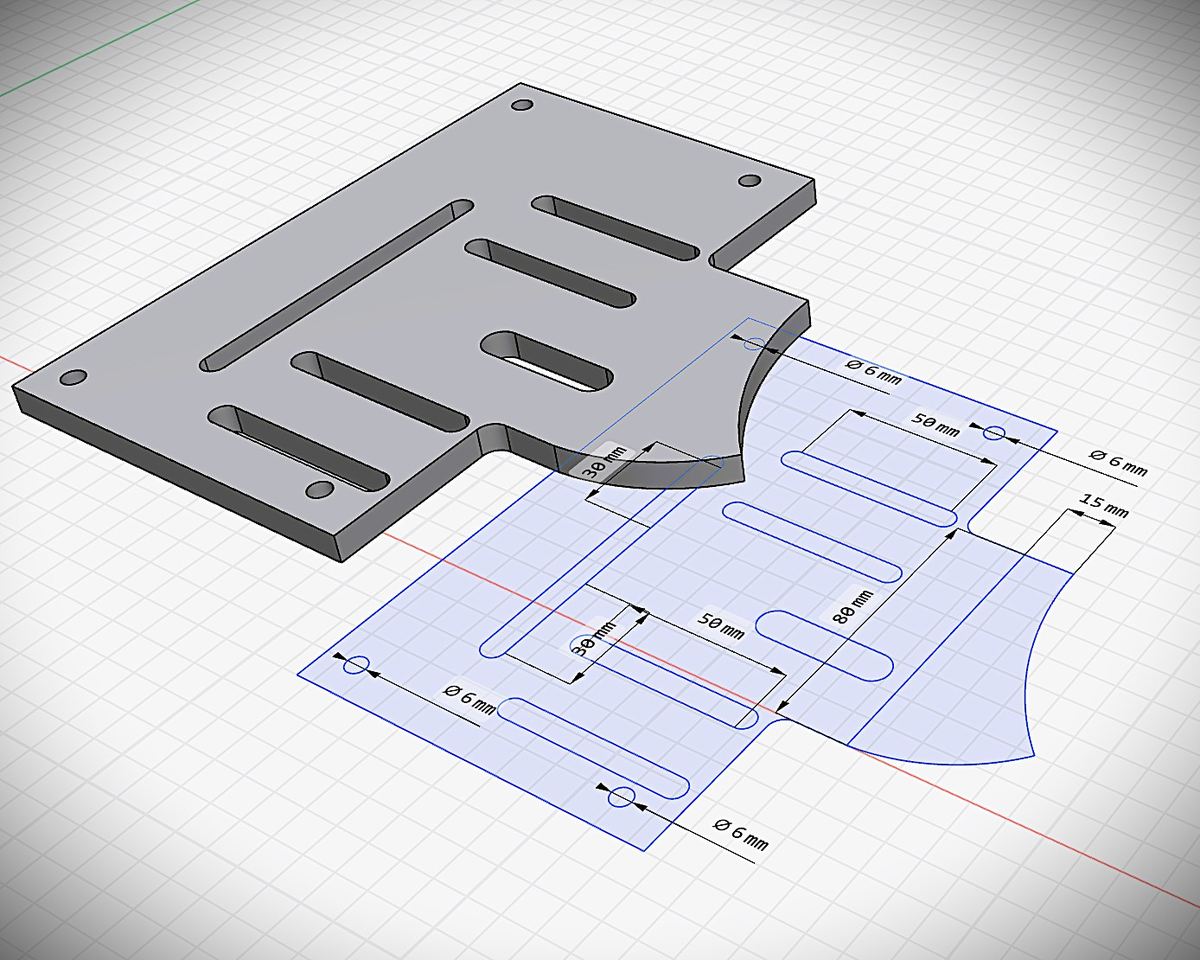
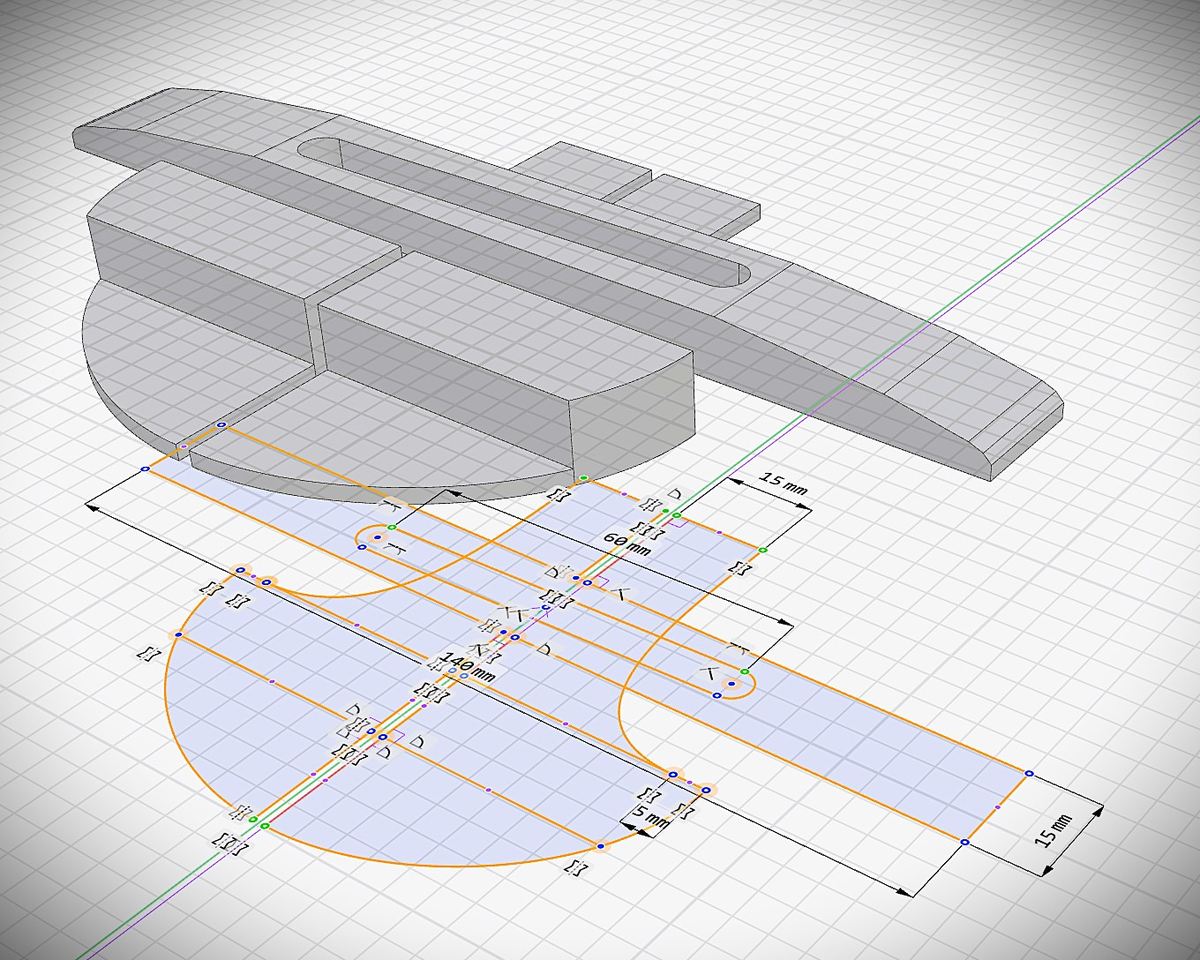
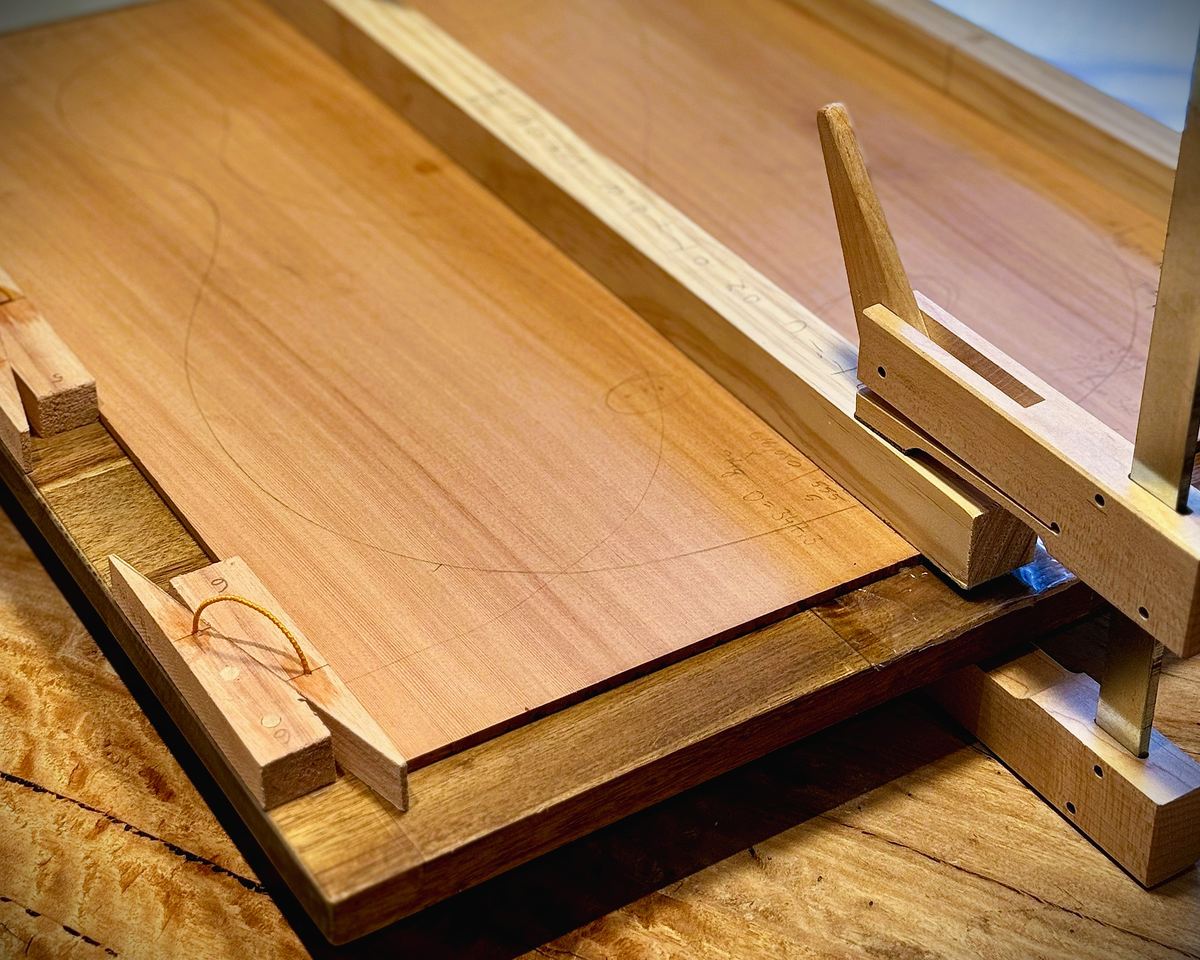
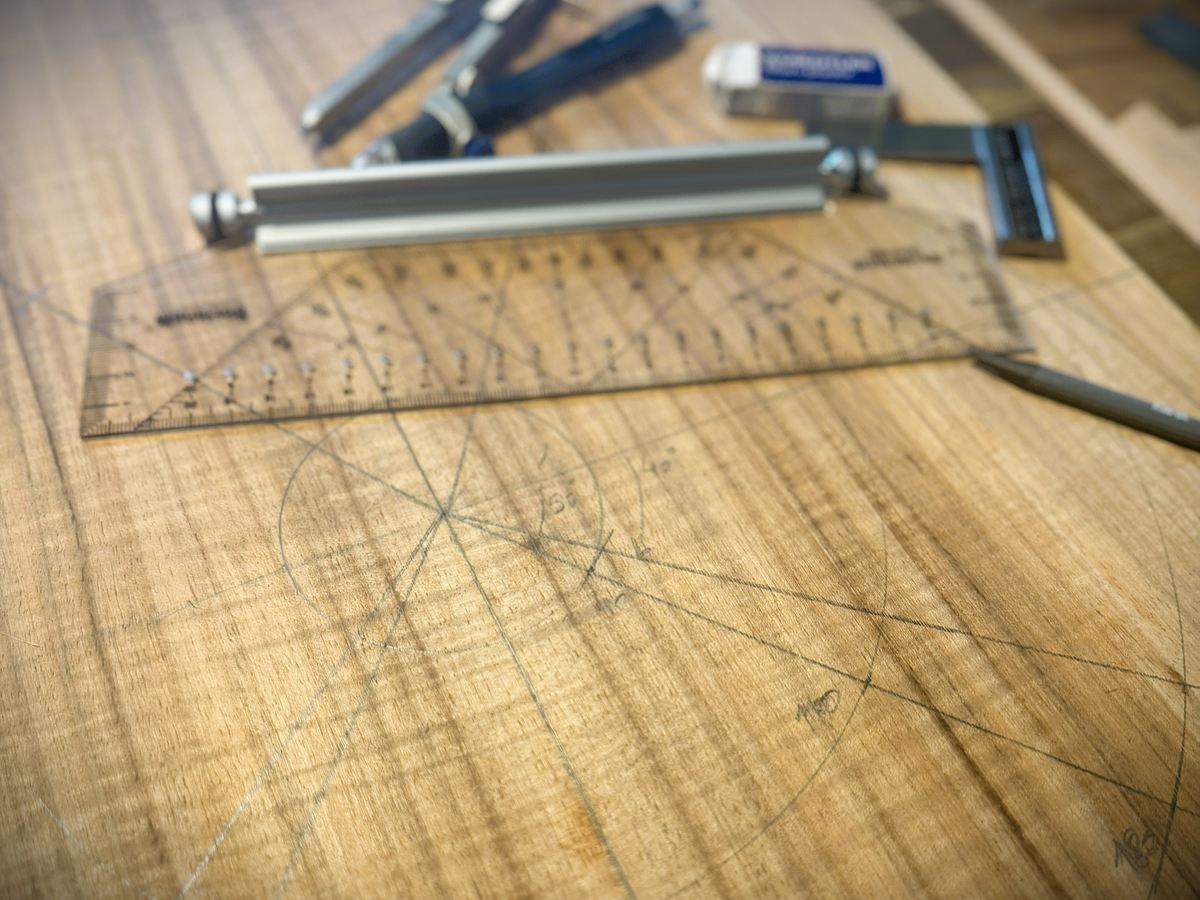
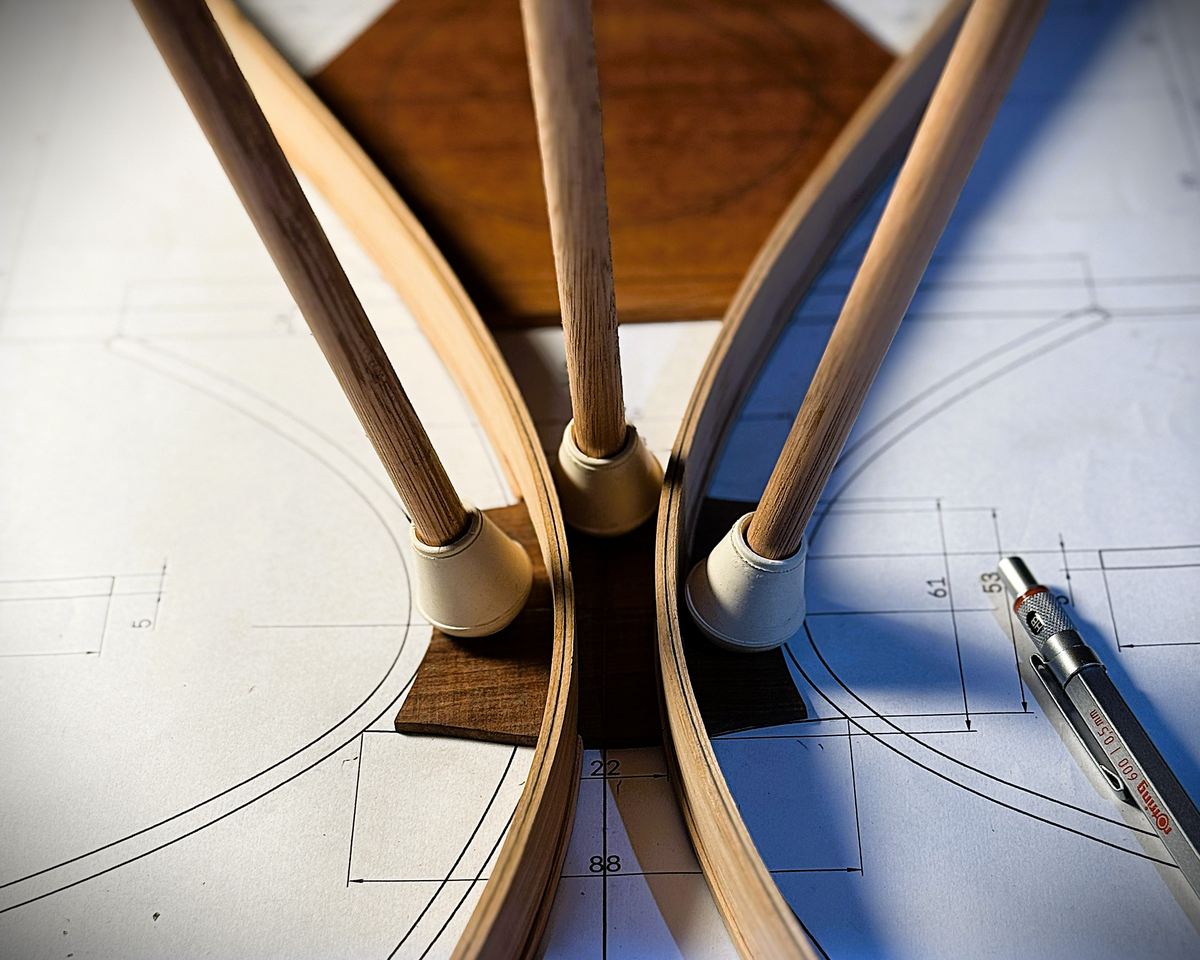
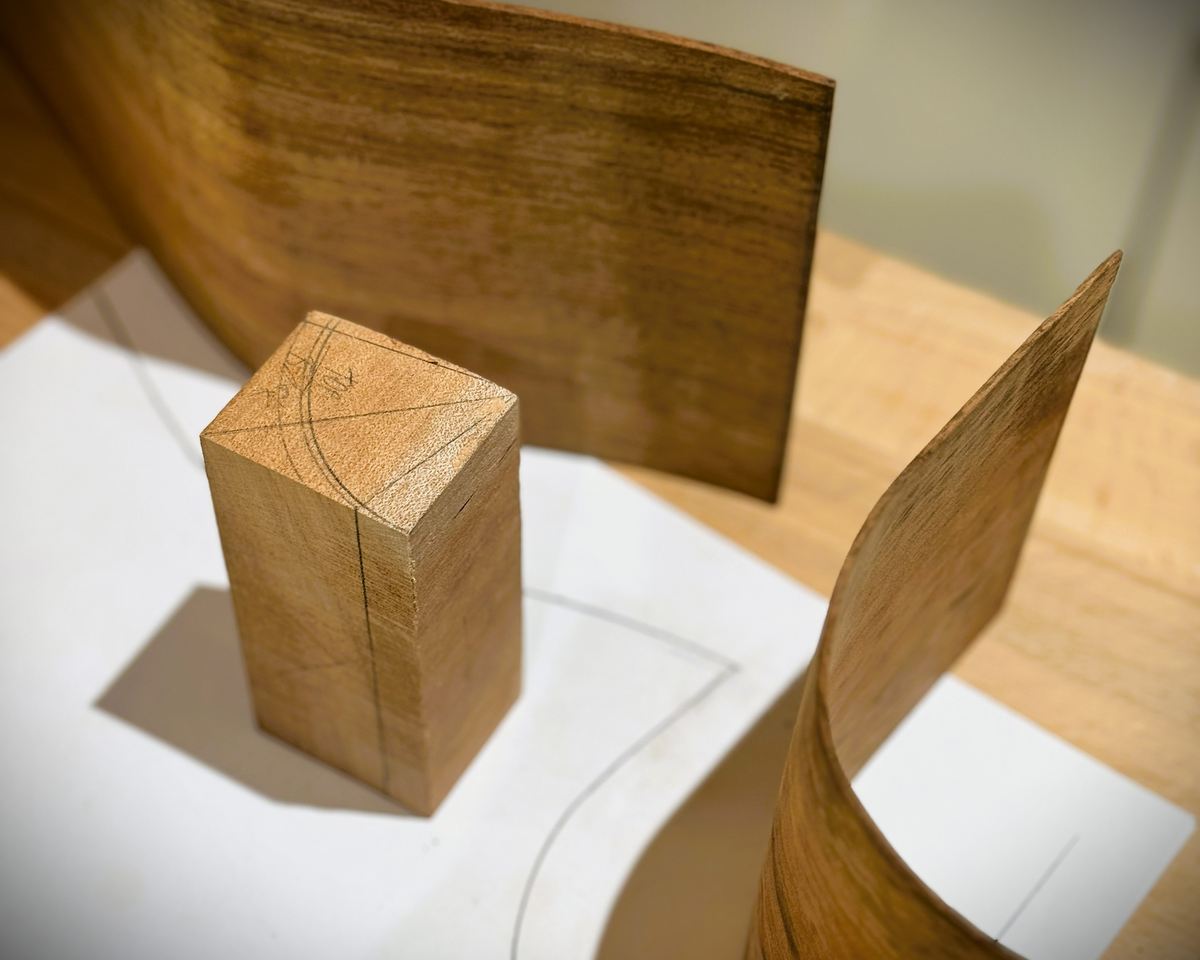
With the boards chosen, the tooling comes before any of them is cut to shape. The outline is modelled in CAD to the phi proportions that govern the instrument, the same ratios that fix the body length, the lower bout, the waist and the placement of the soundhole, so the curve carries the geometry exactly rather than approximately.
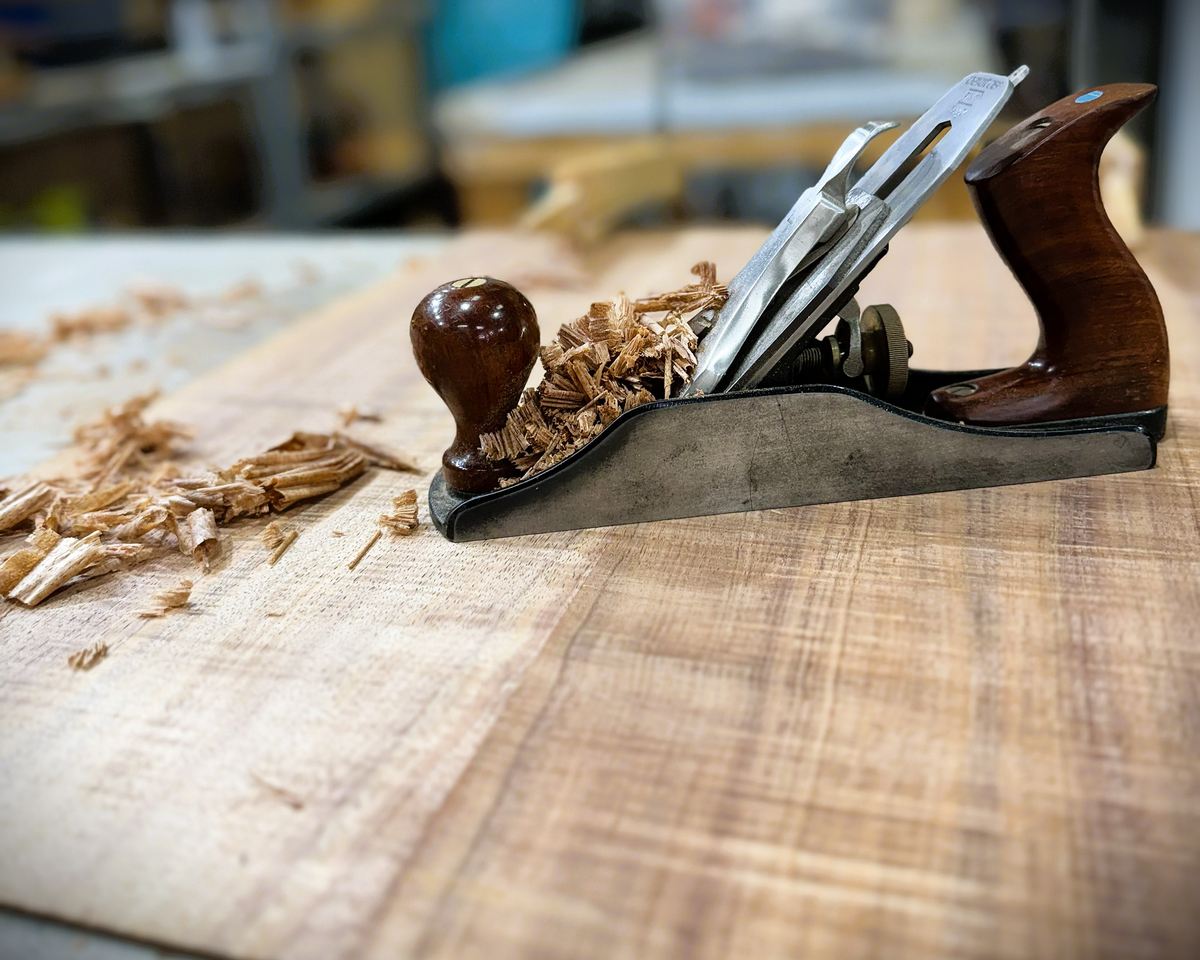
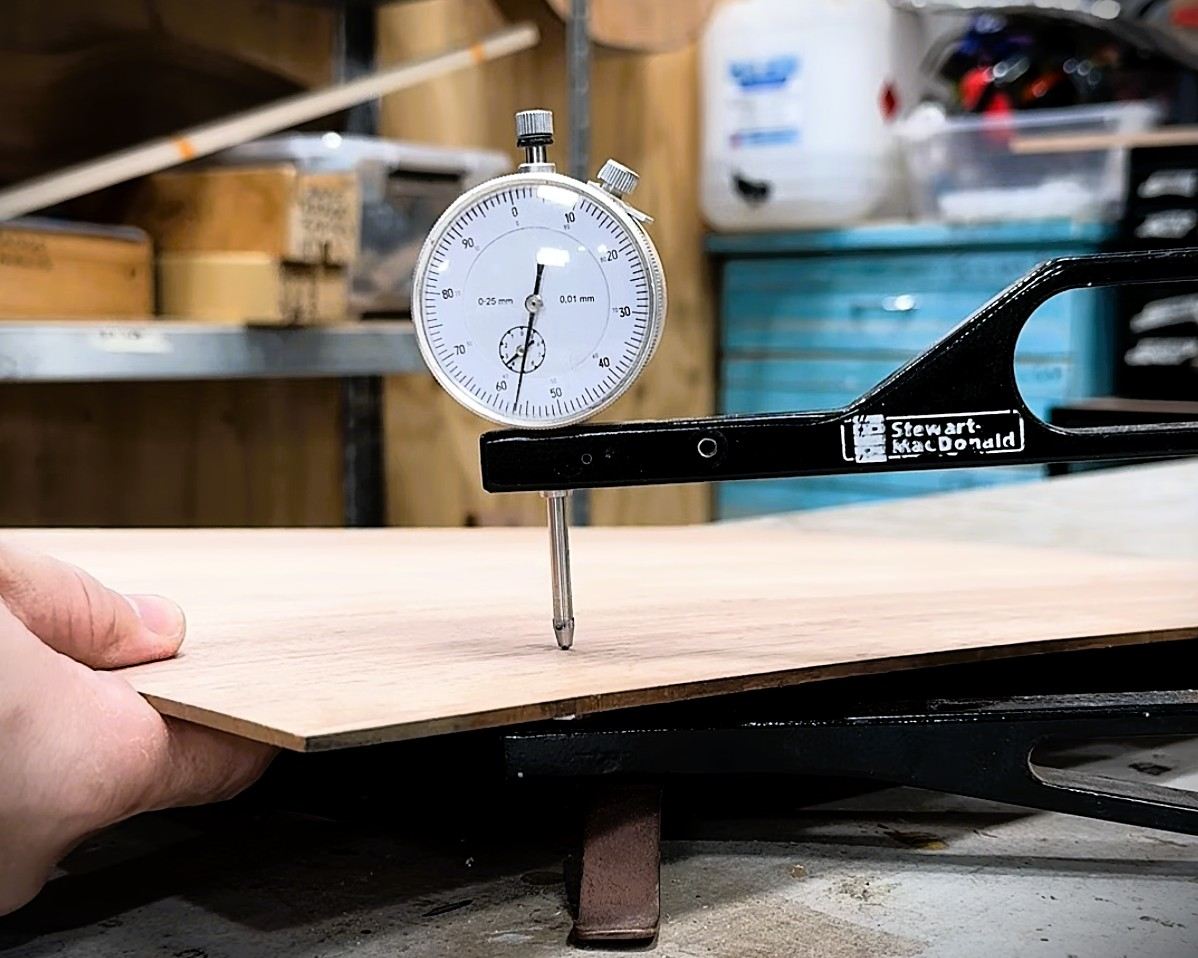
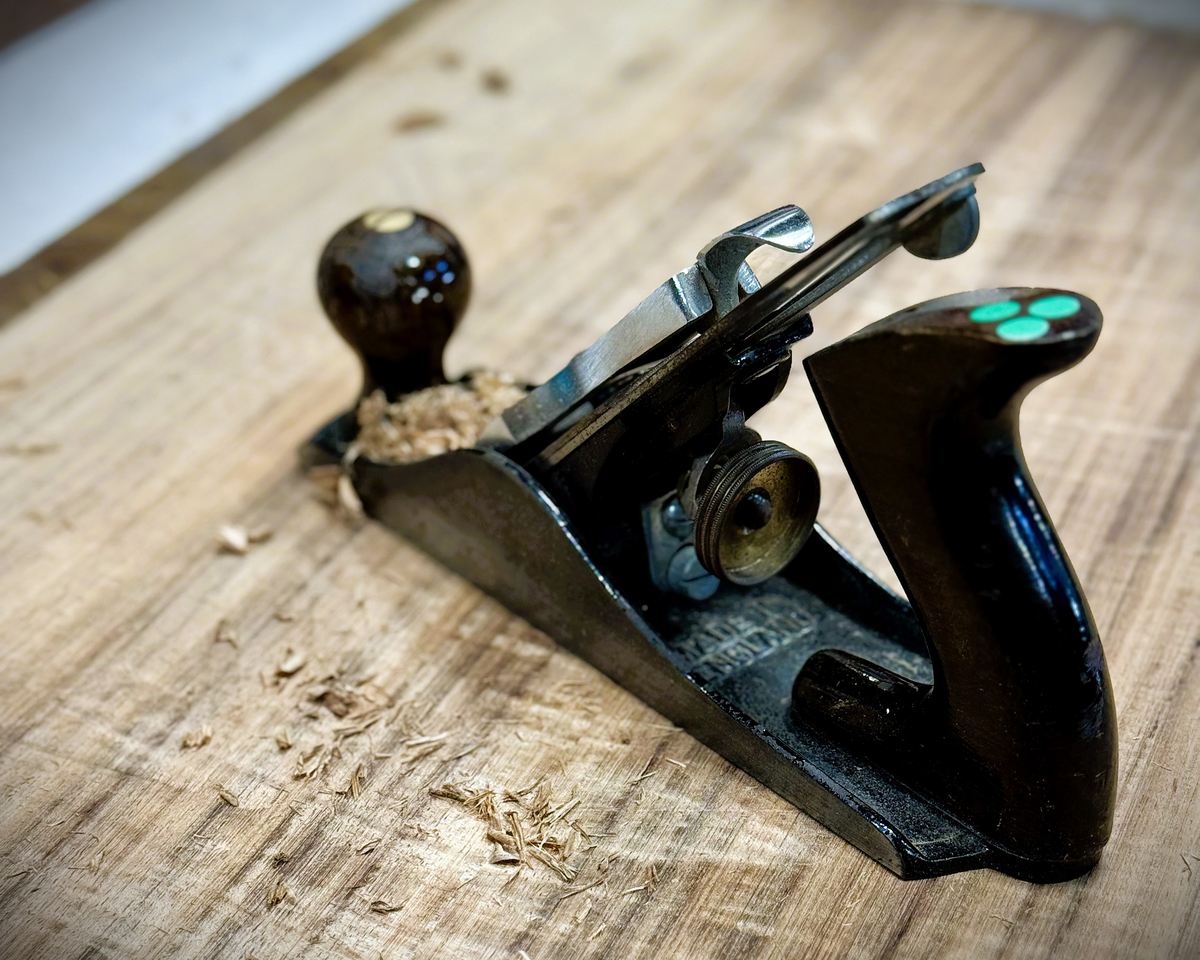
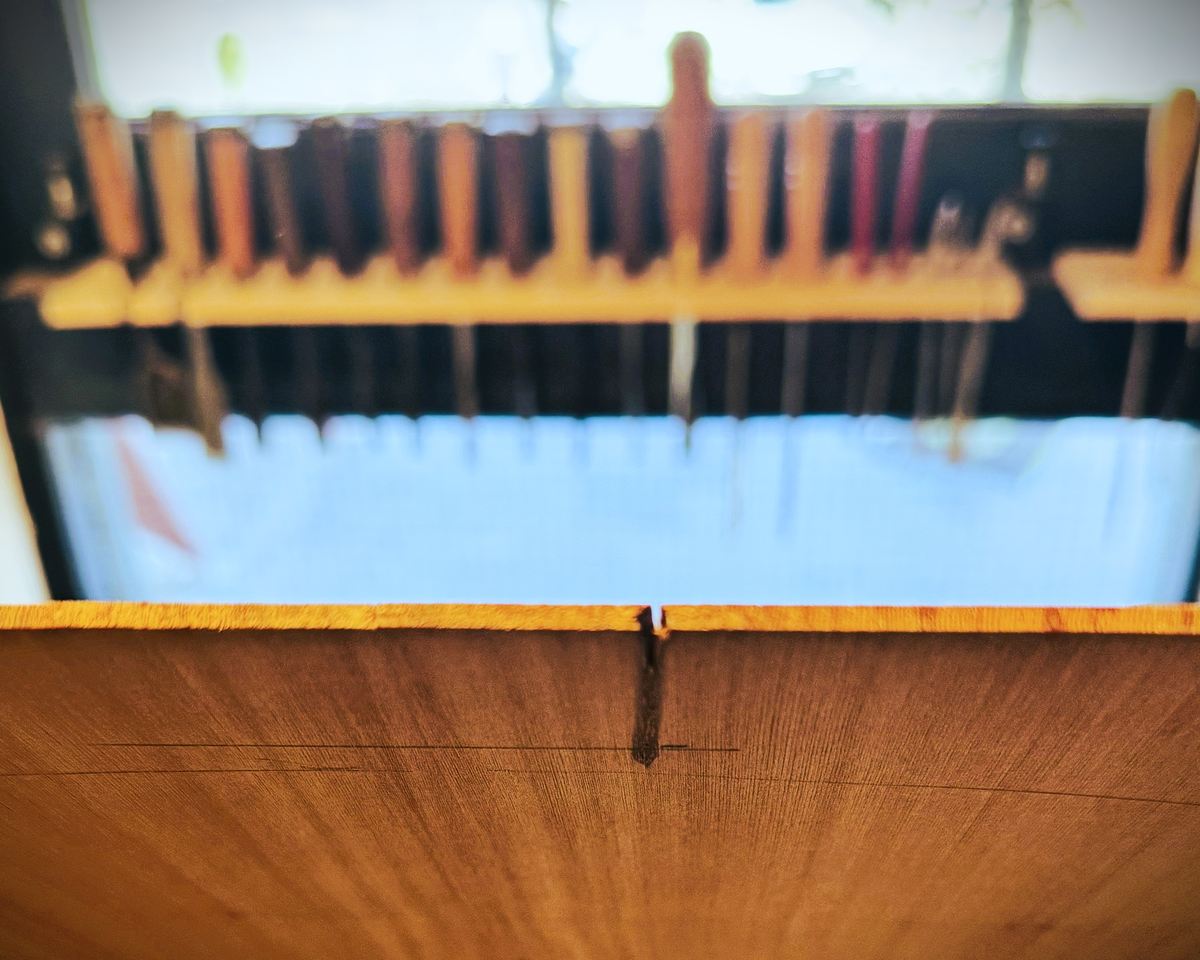
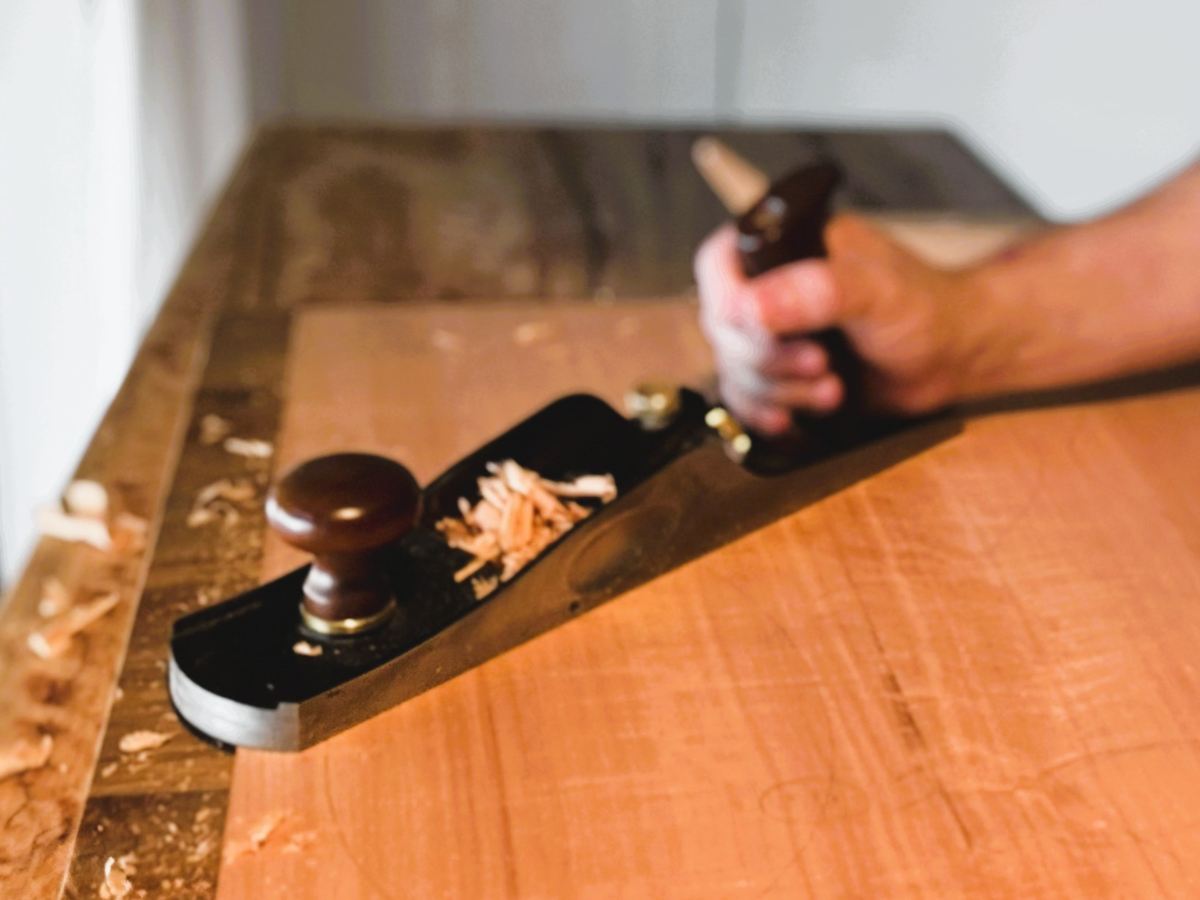
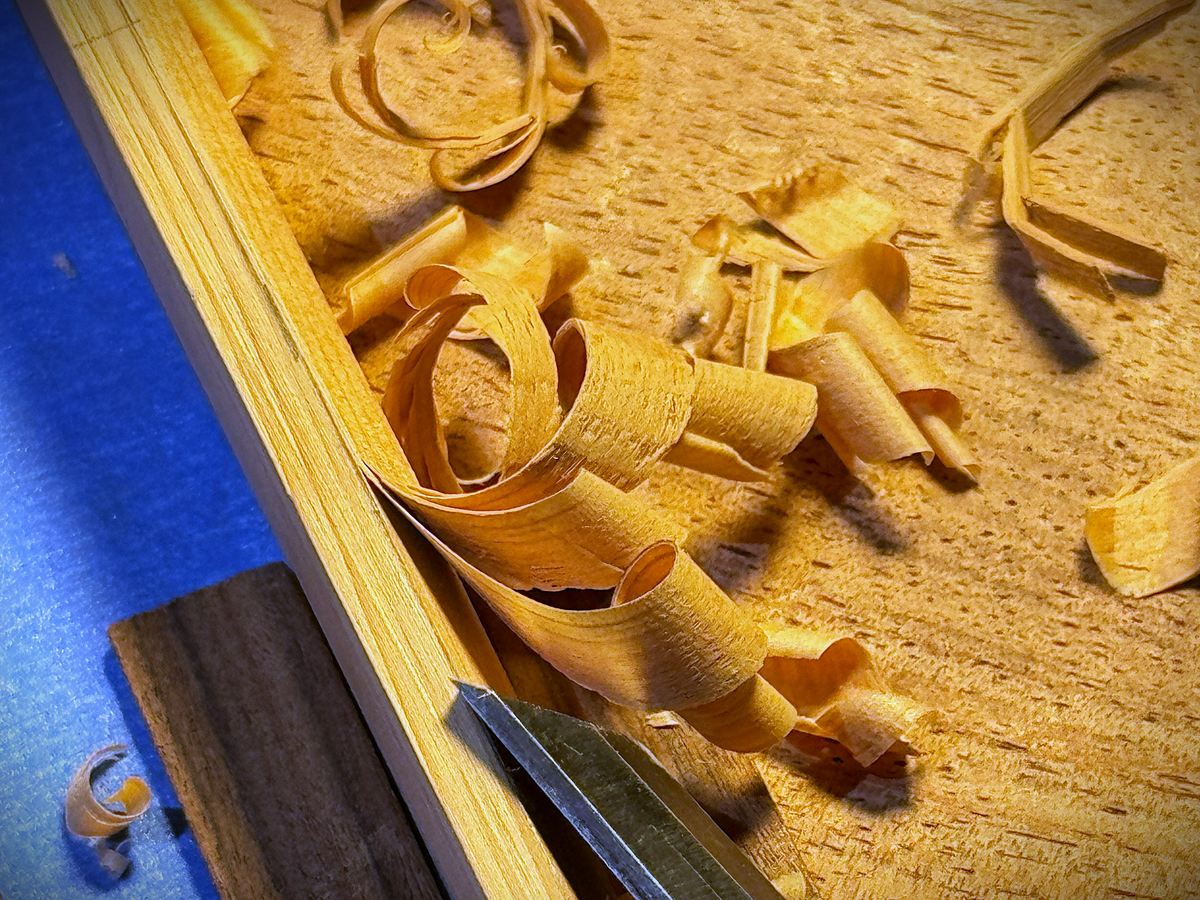
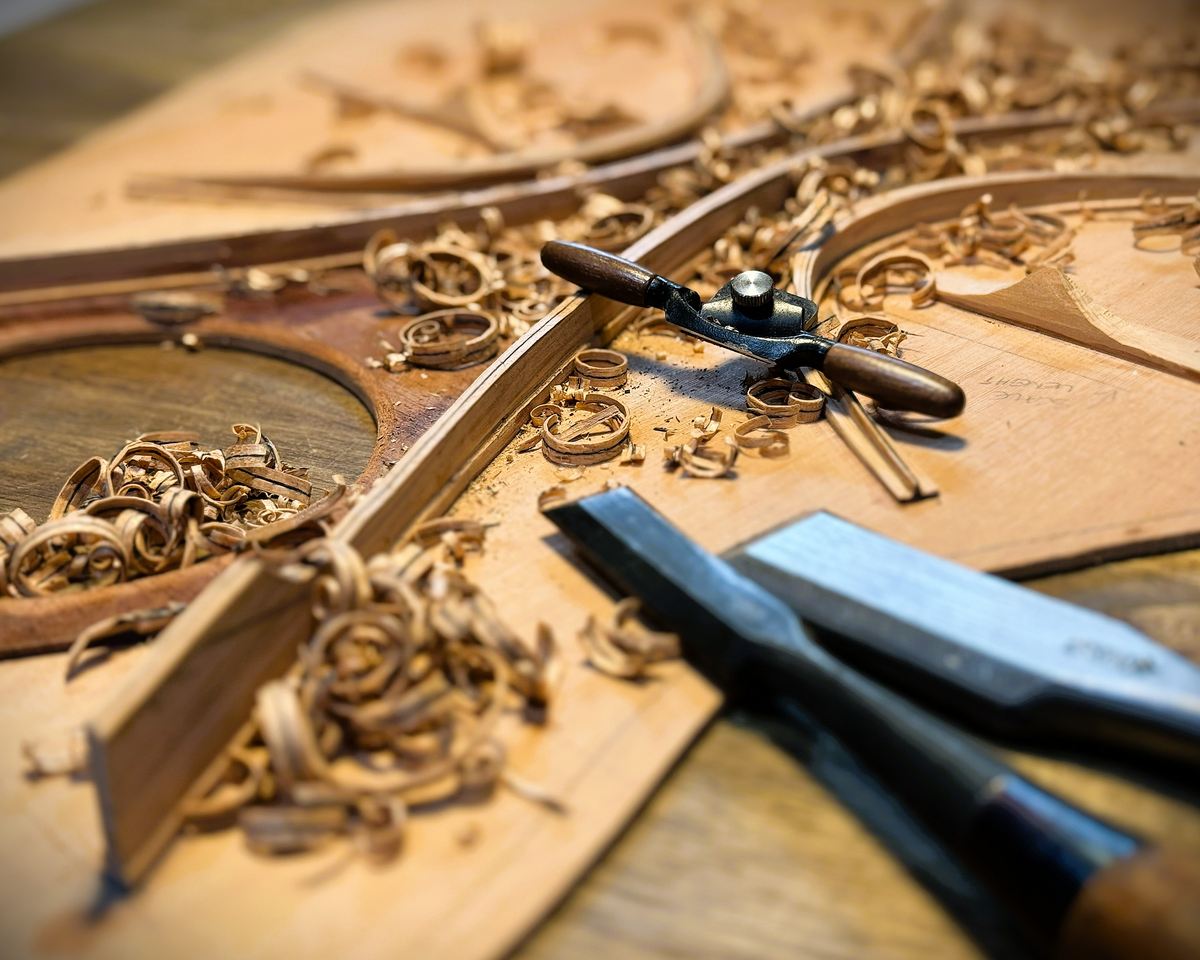
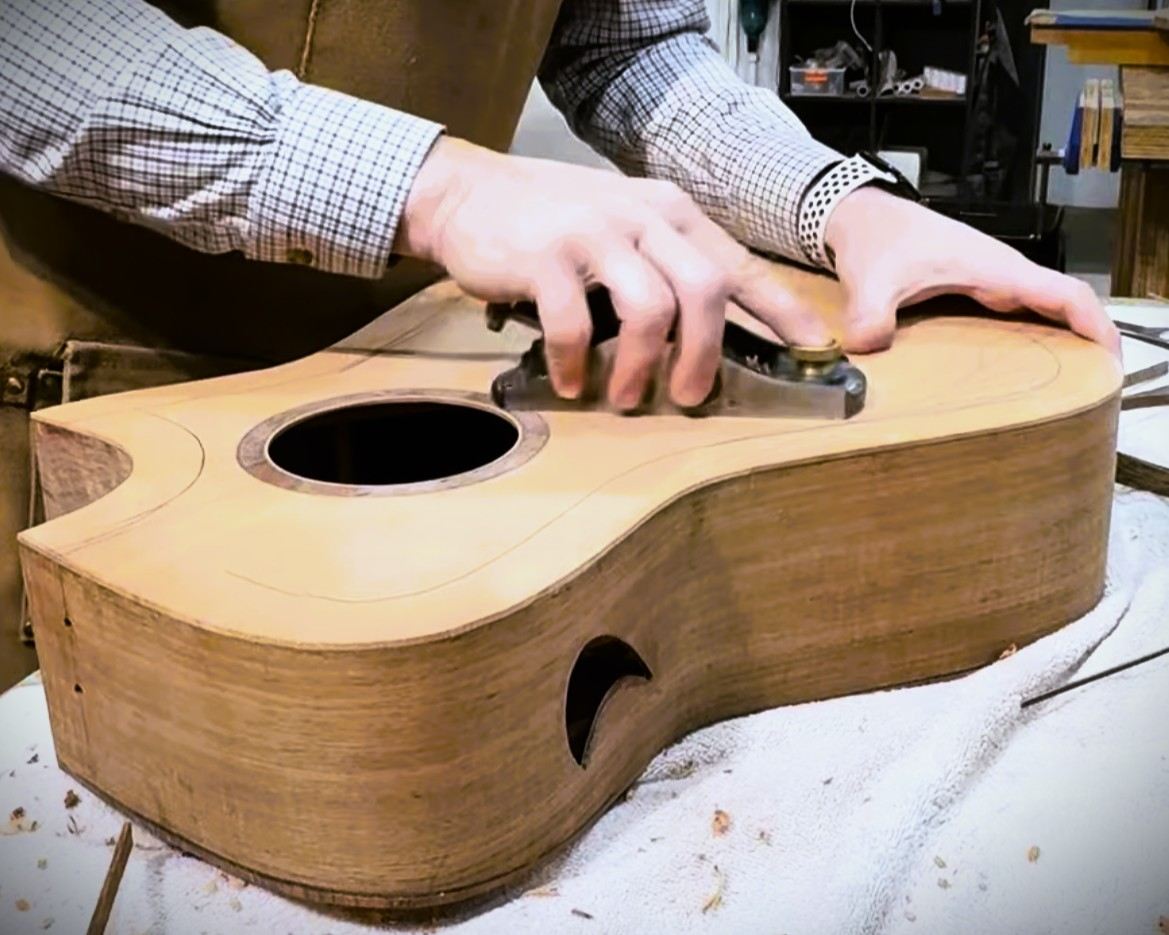
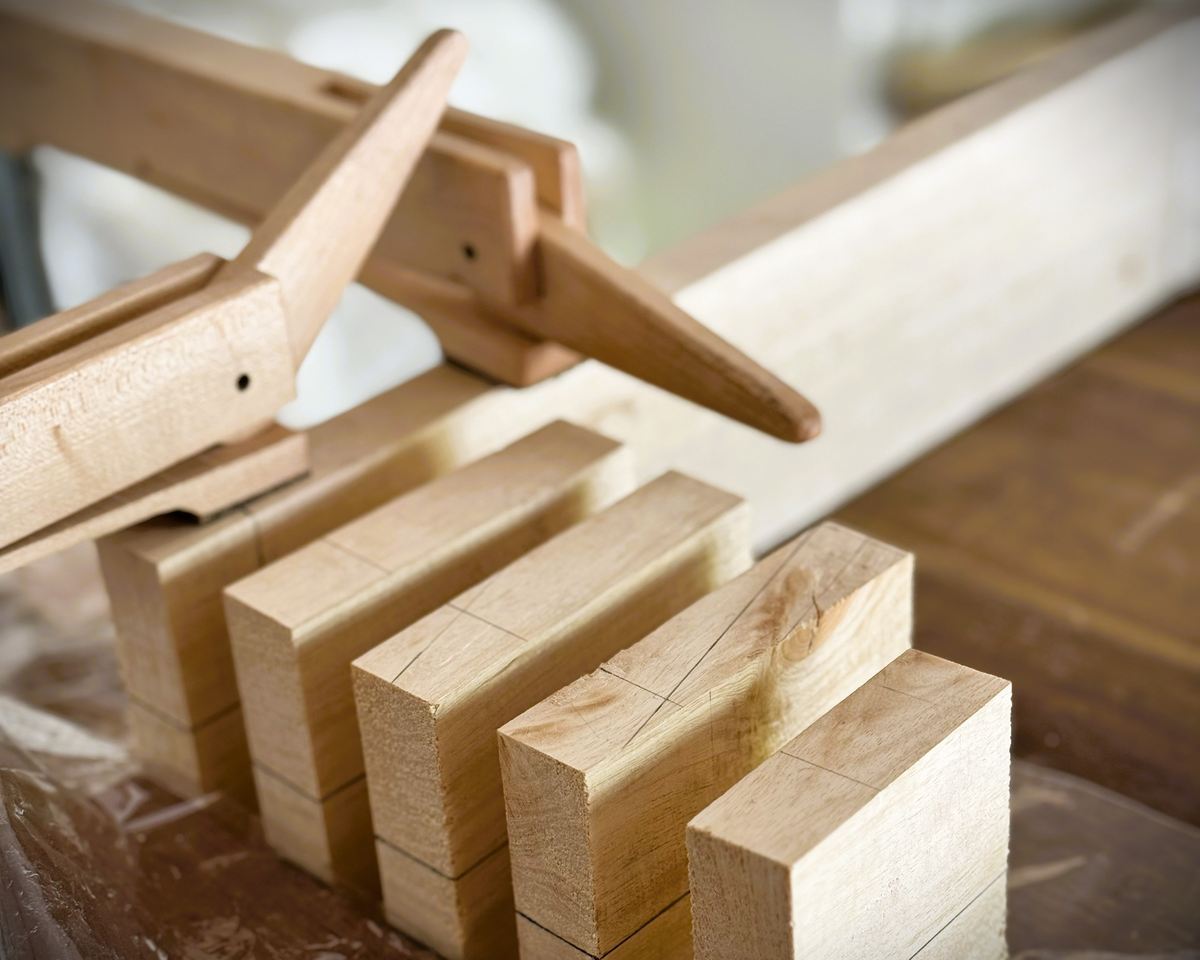
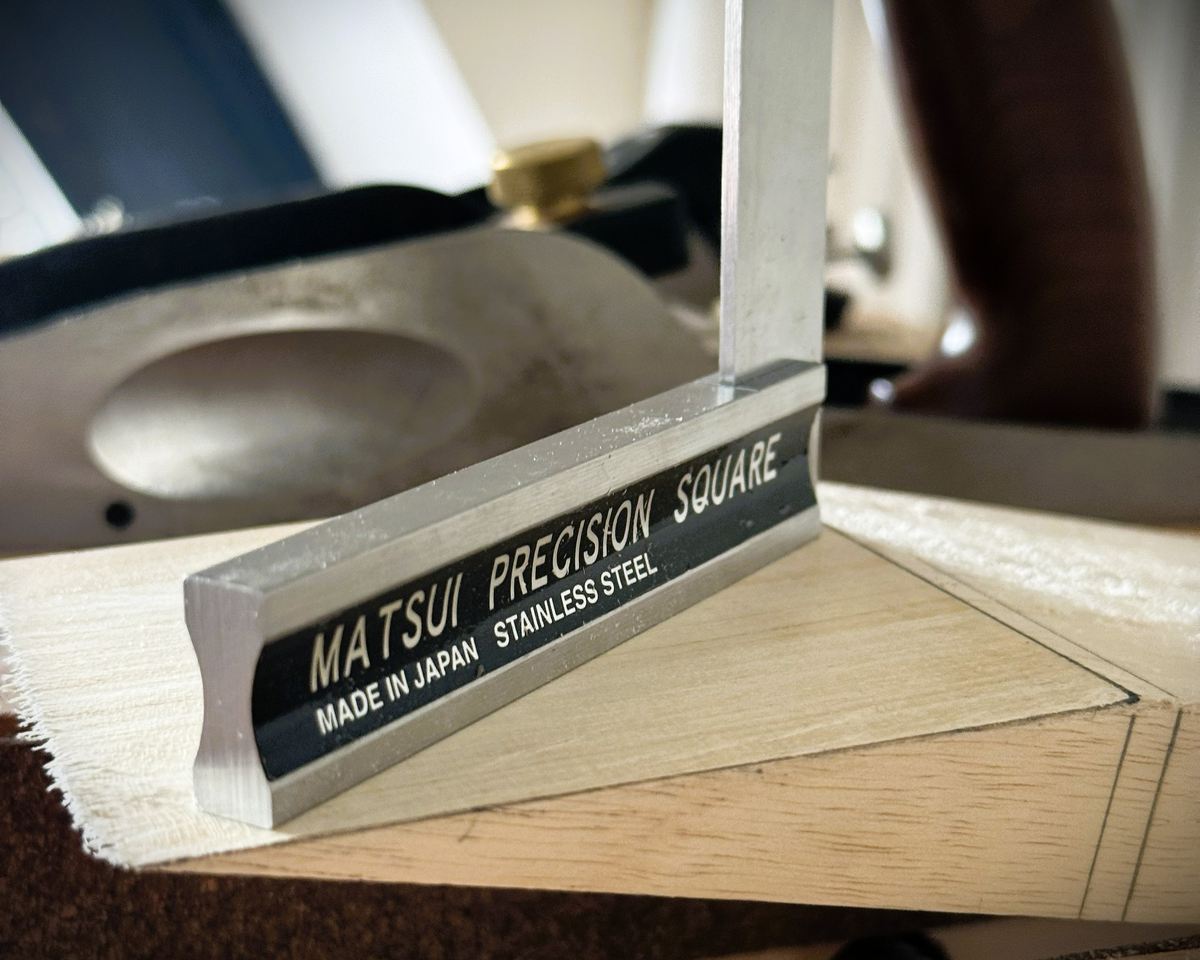
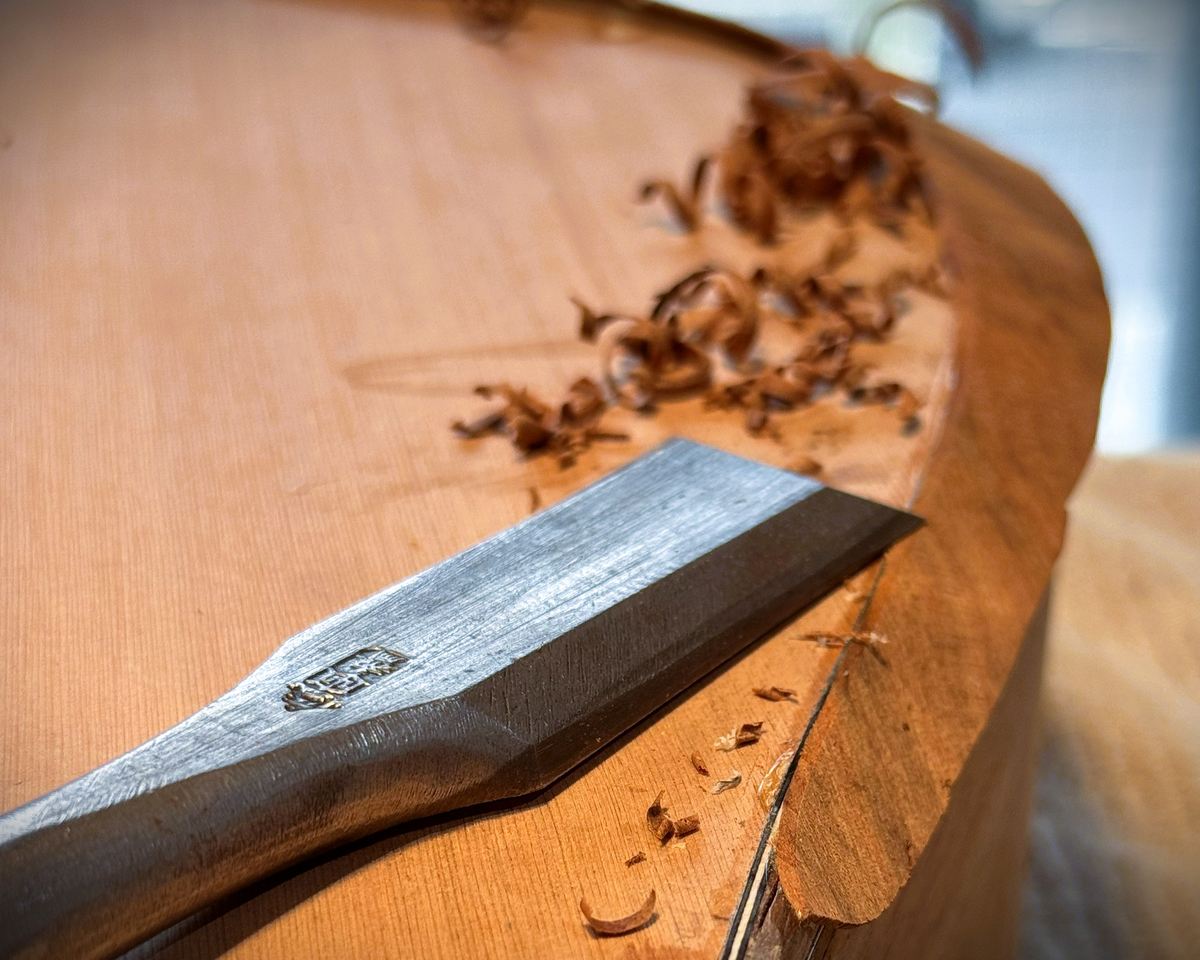
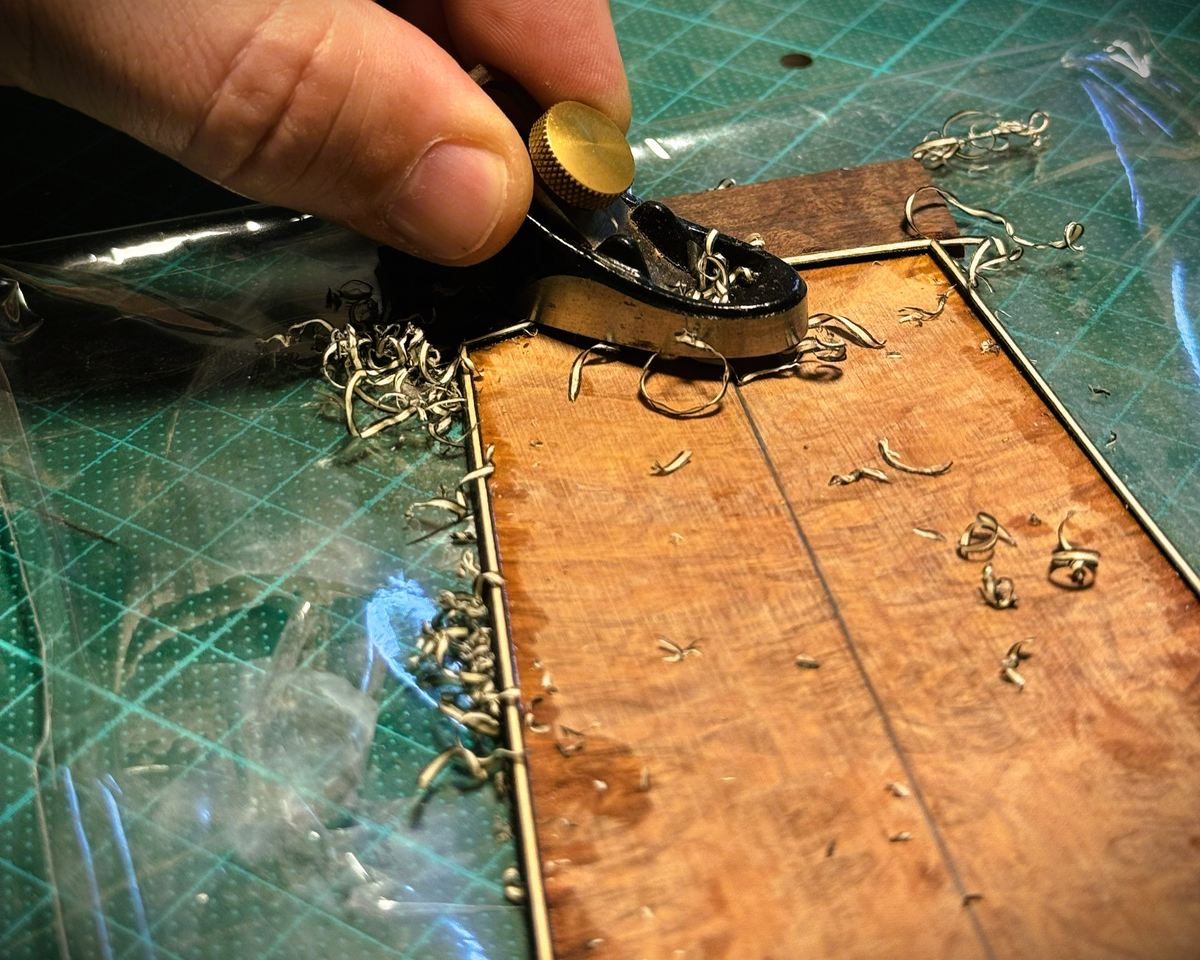
The two halves of the soundboard and the back are shot on a jointer plane until the seam disappears under a straightedge, then glued. Plates are brought down to thickness gradually, testing deflection and tap tone as material comes off.
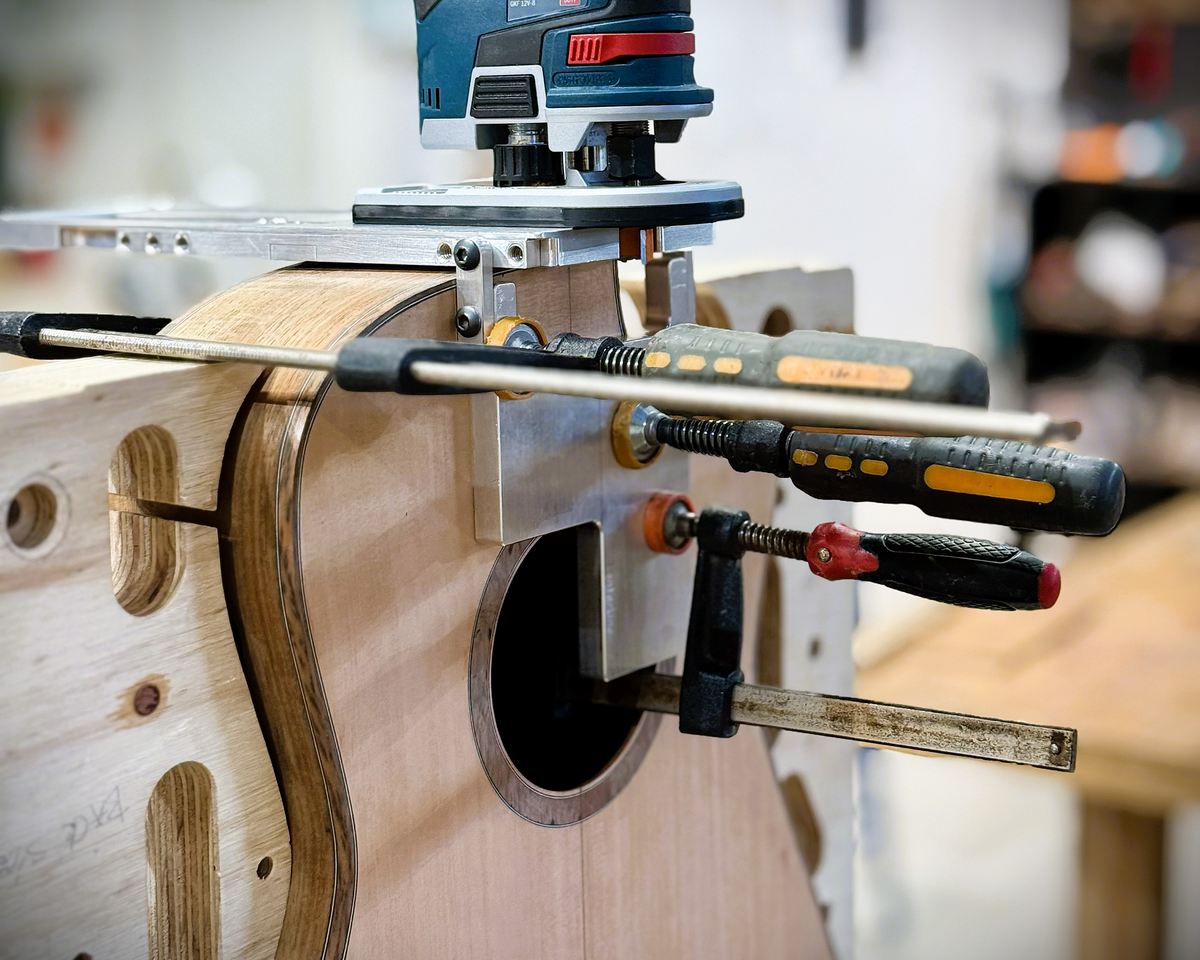
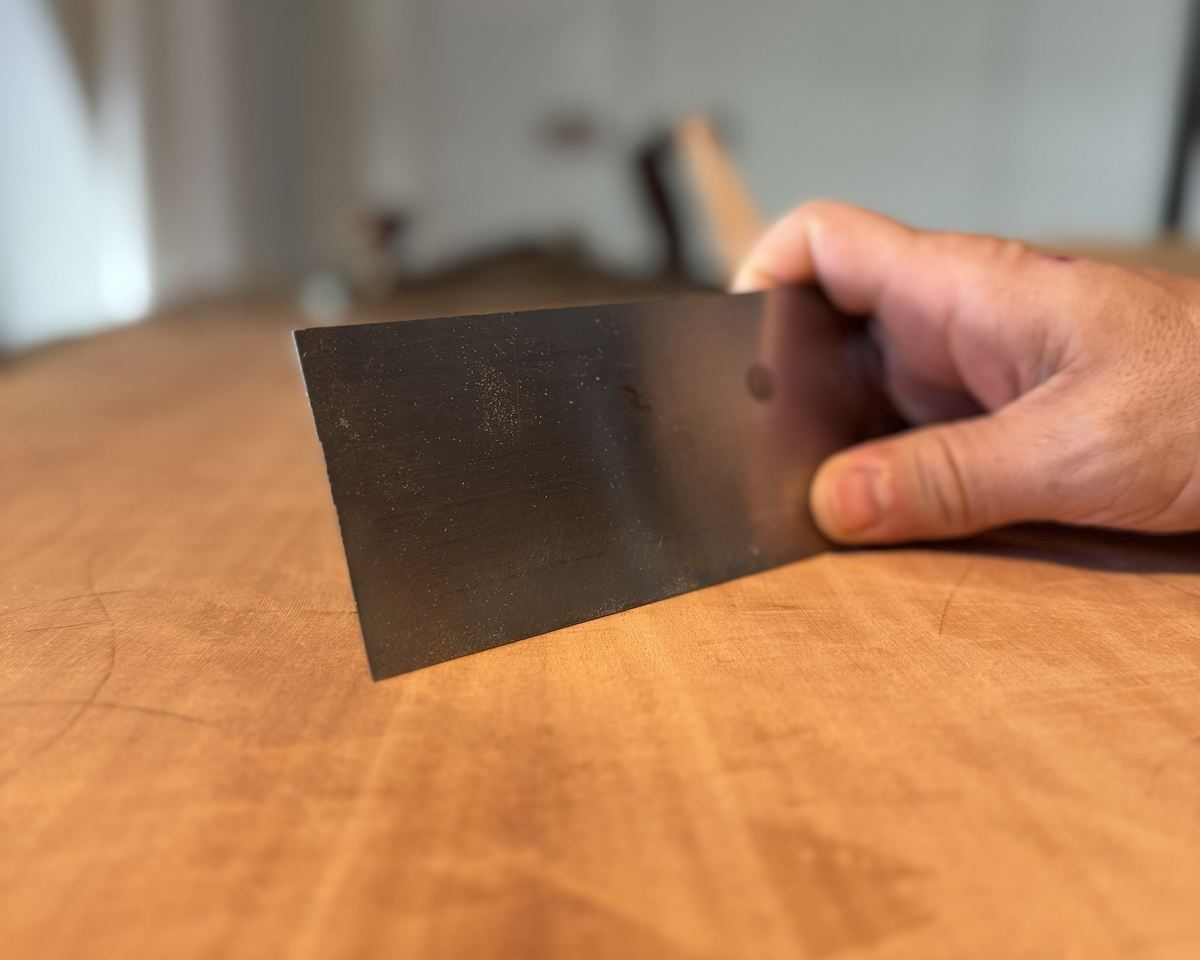
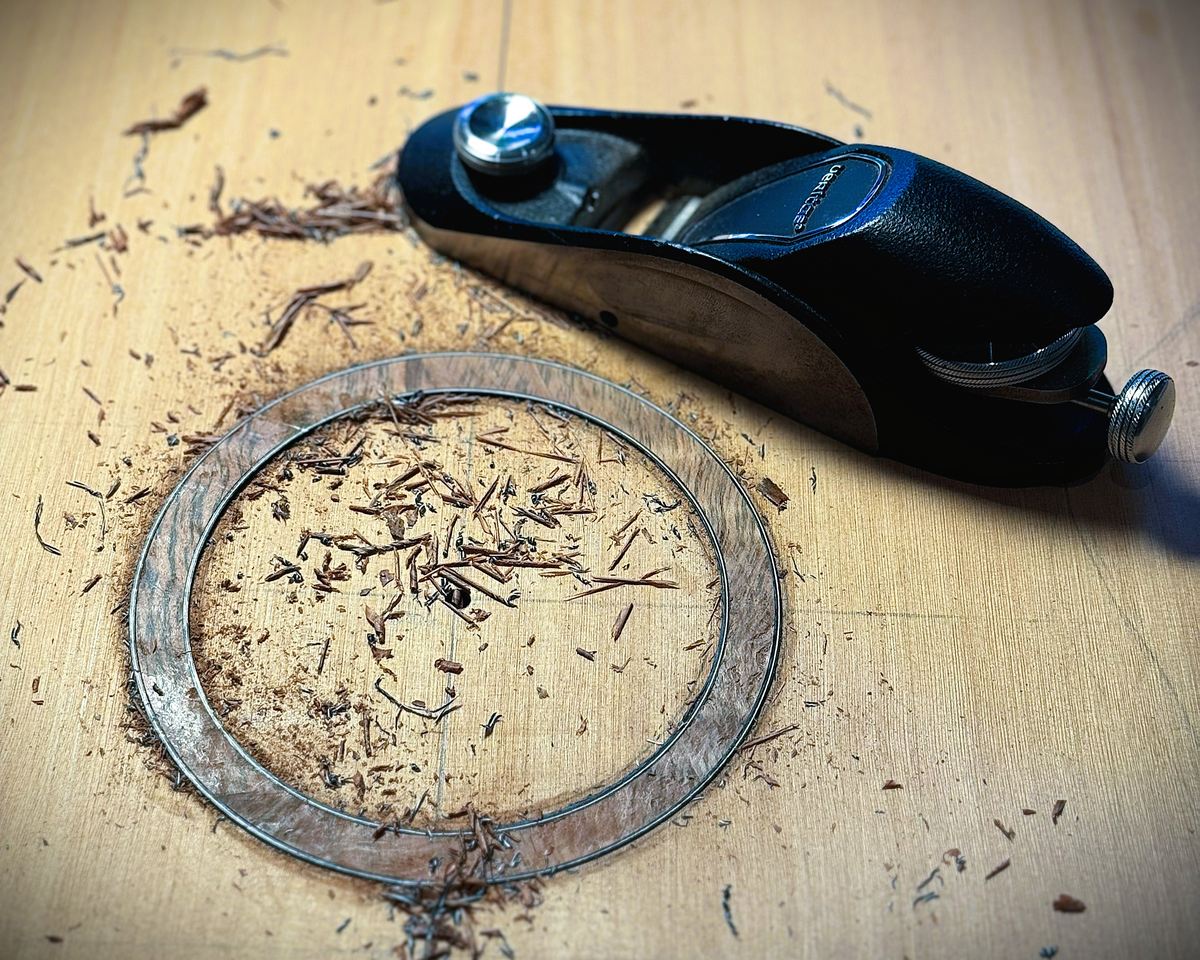
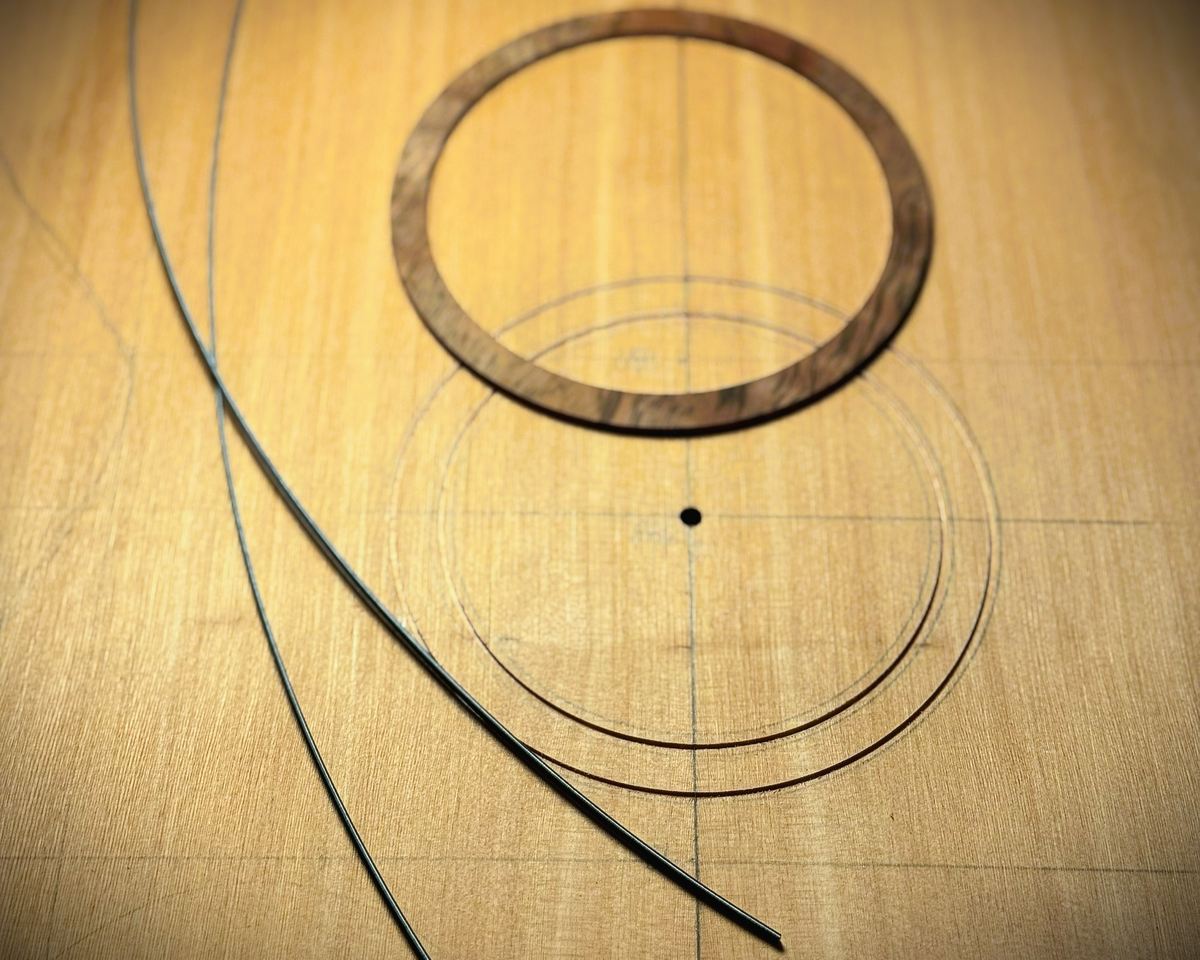
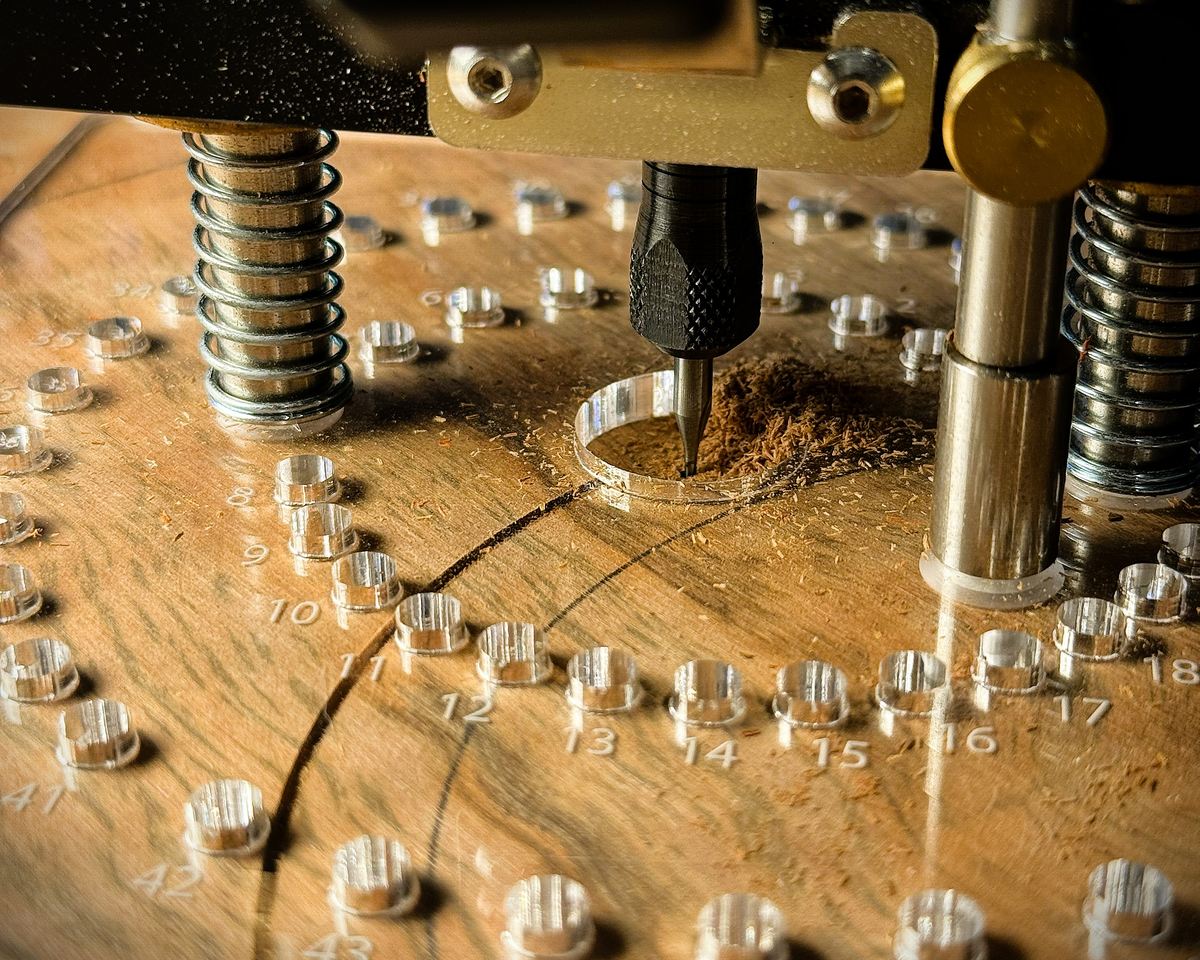
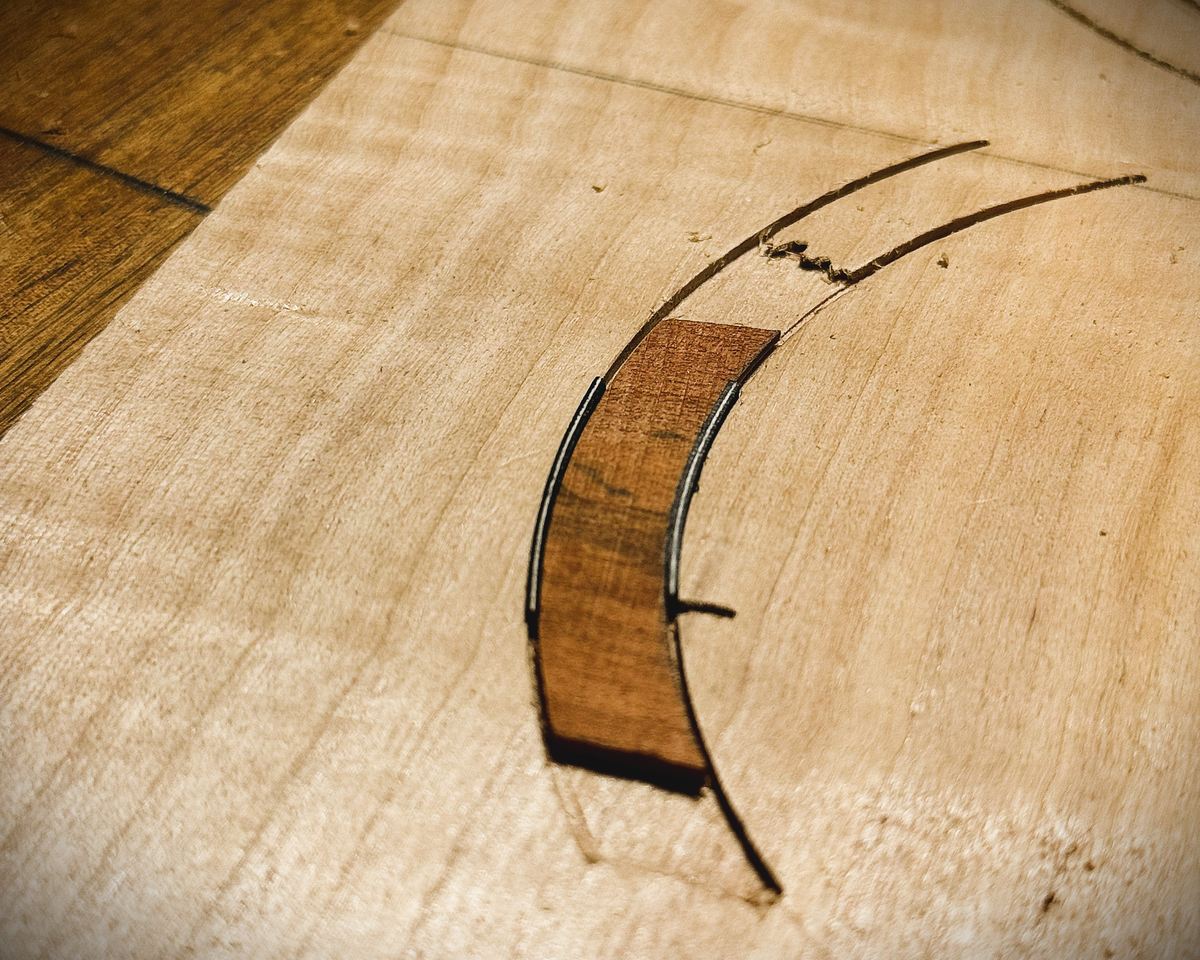
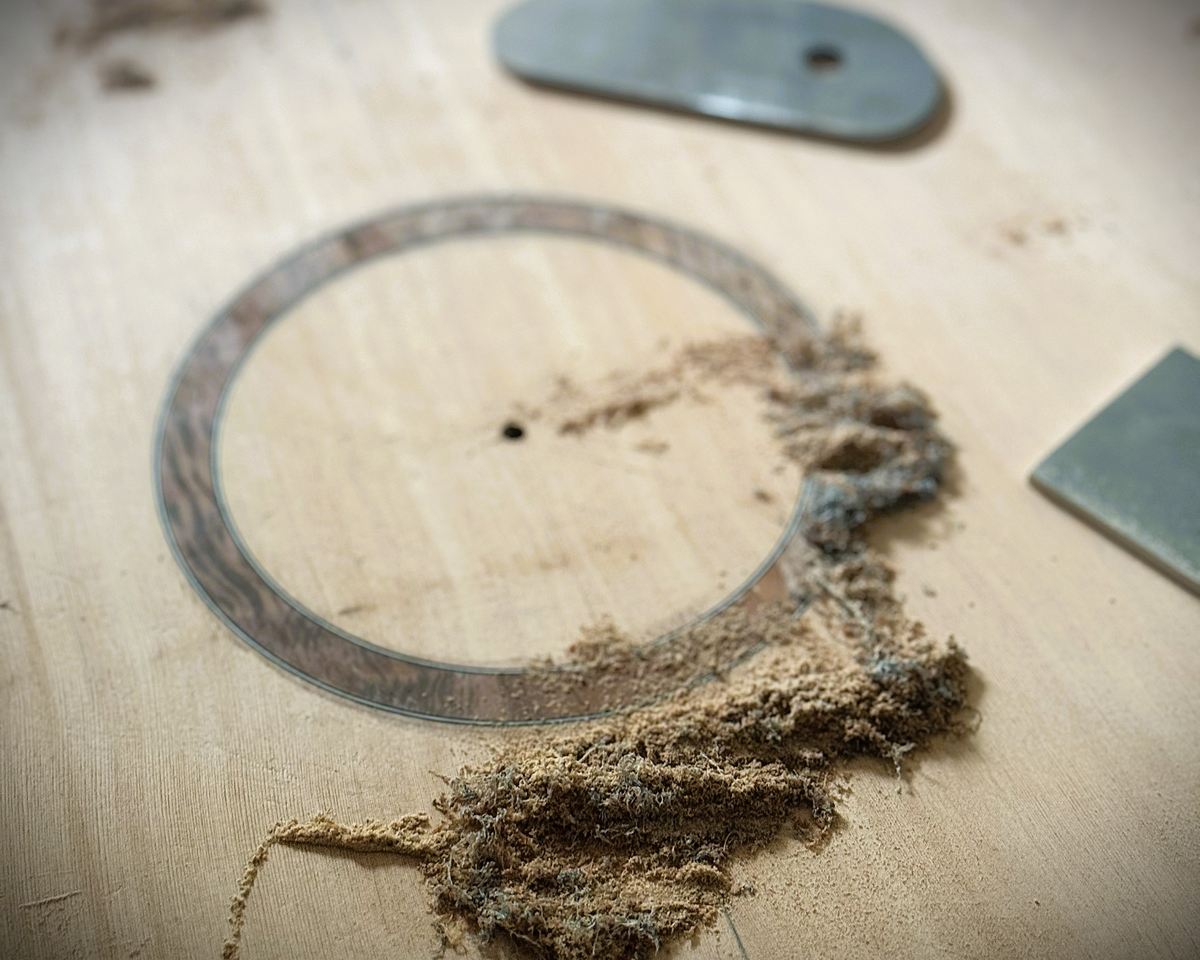
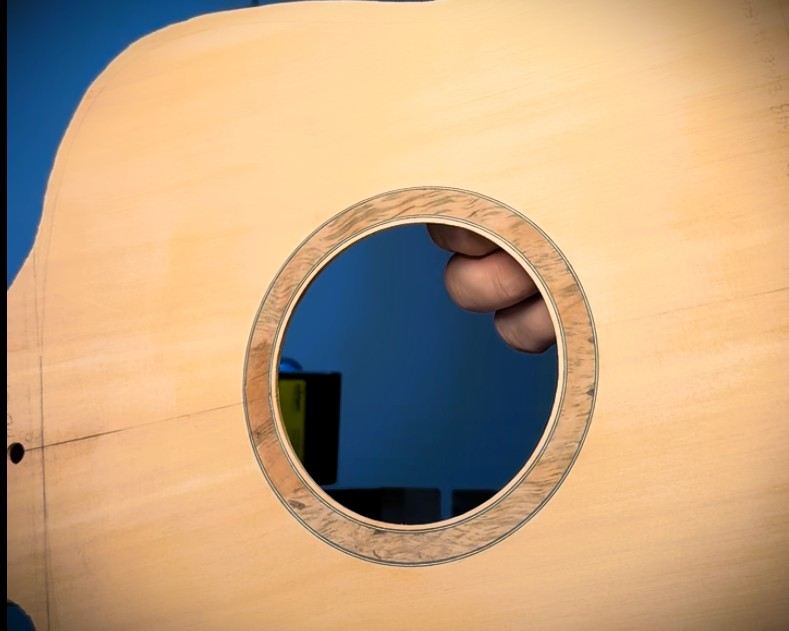
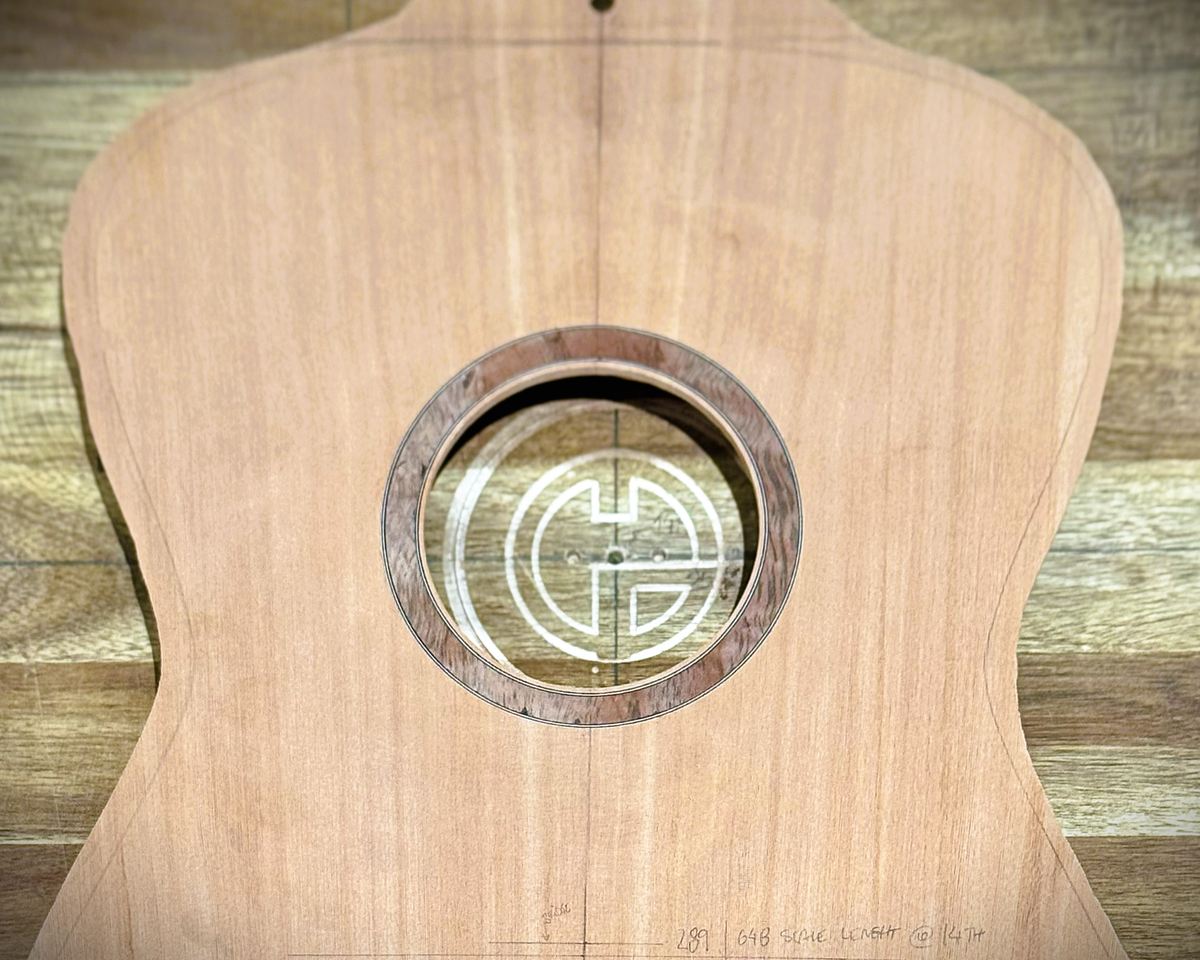
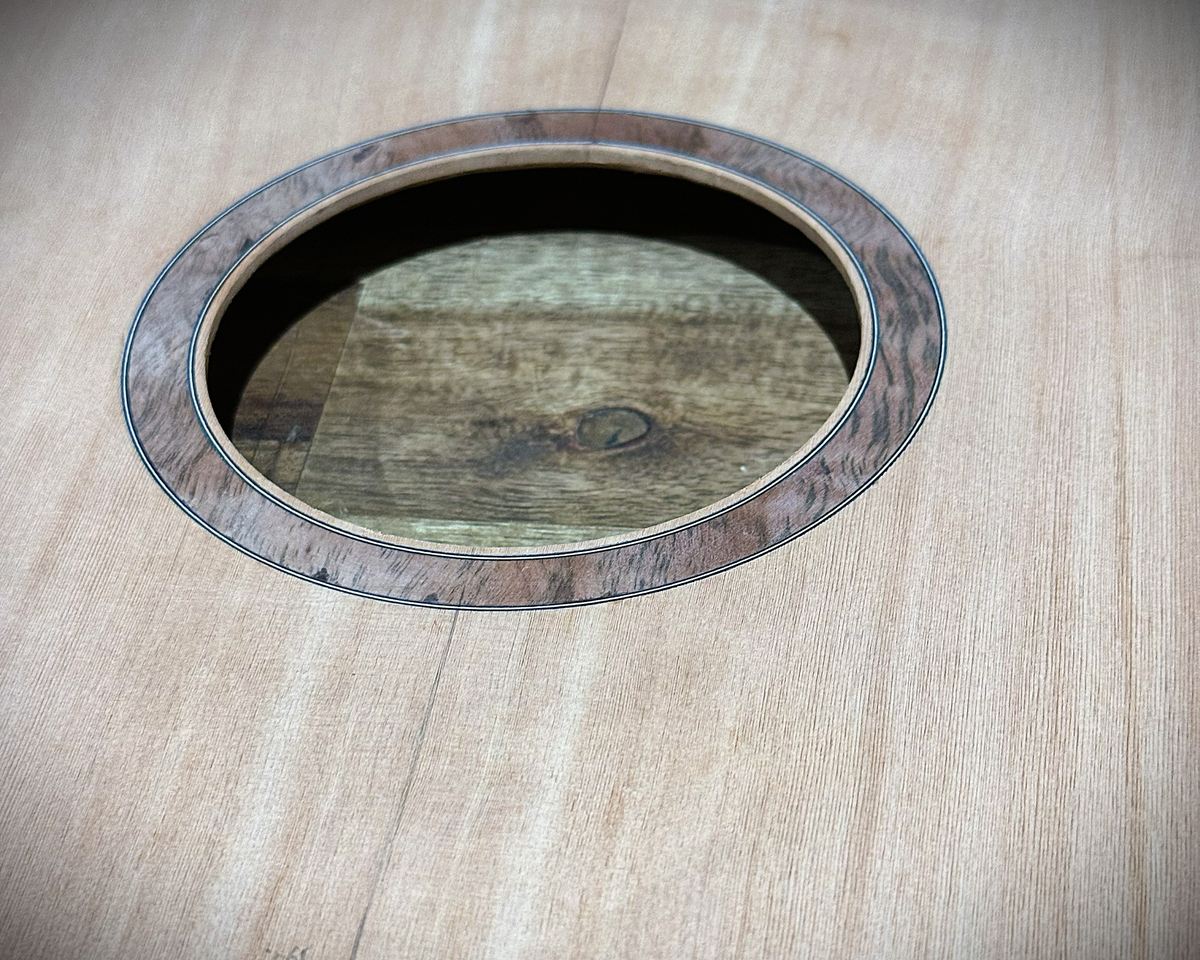
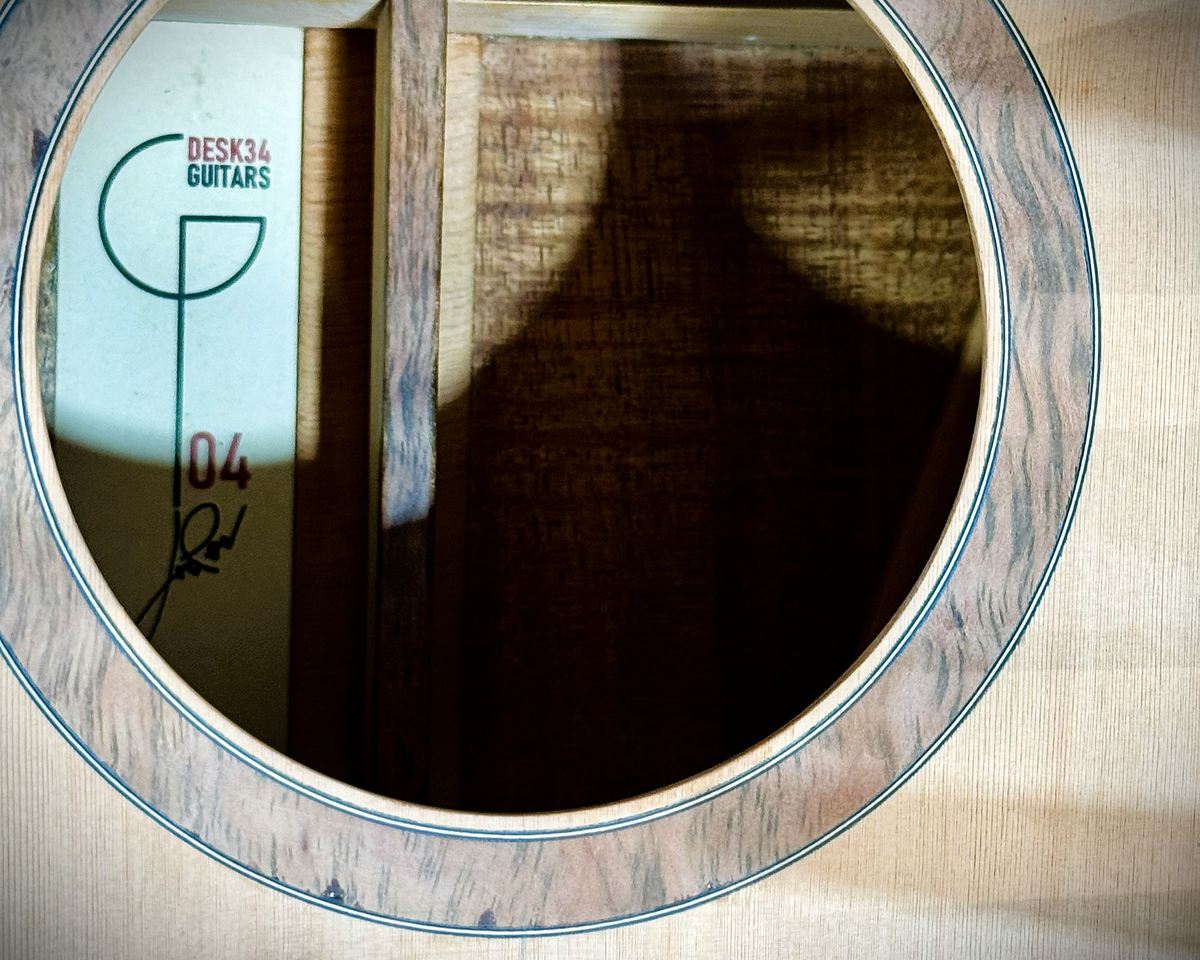
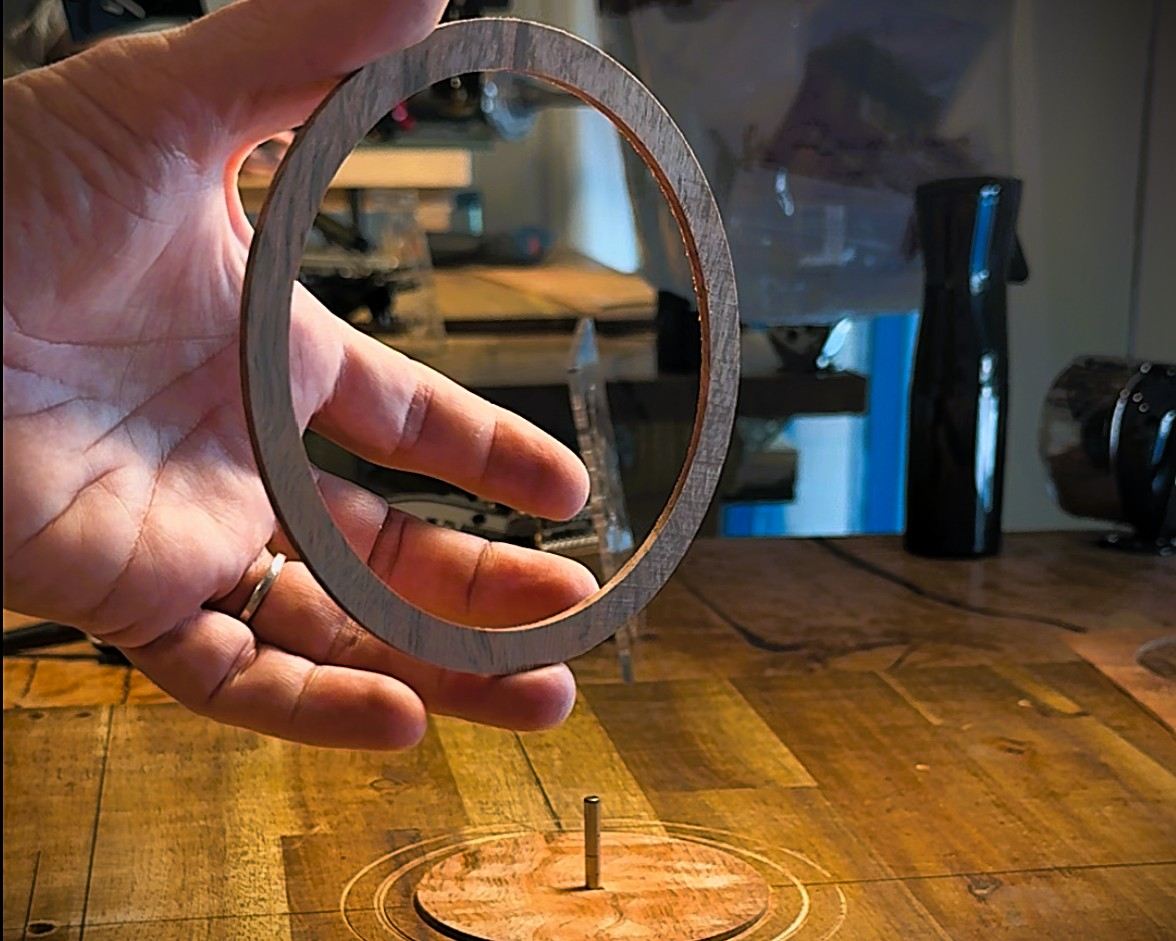
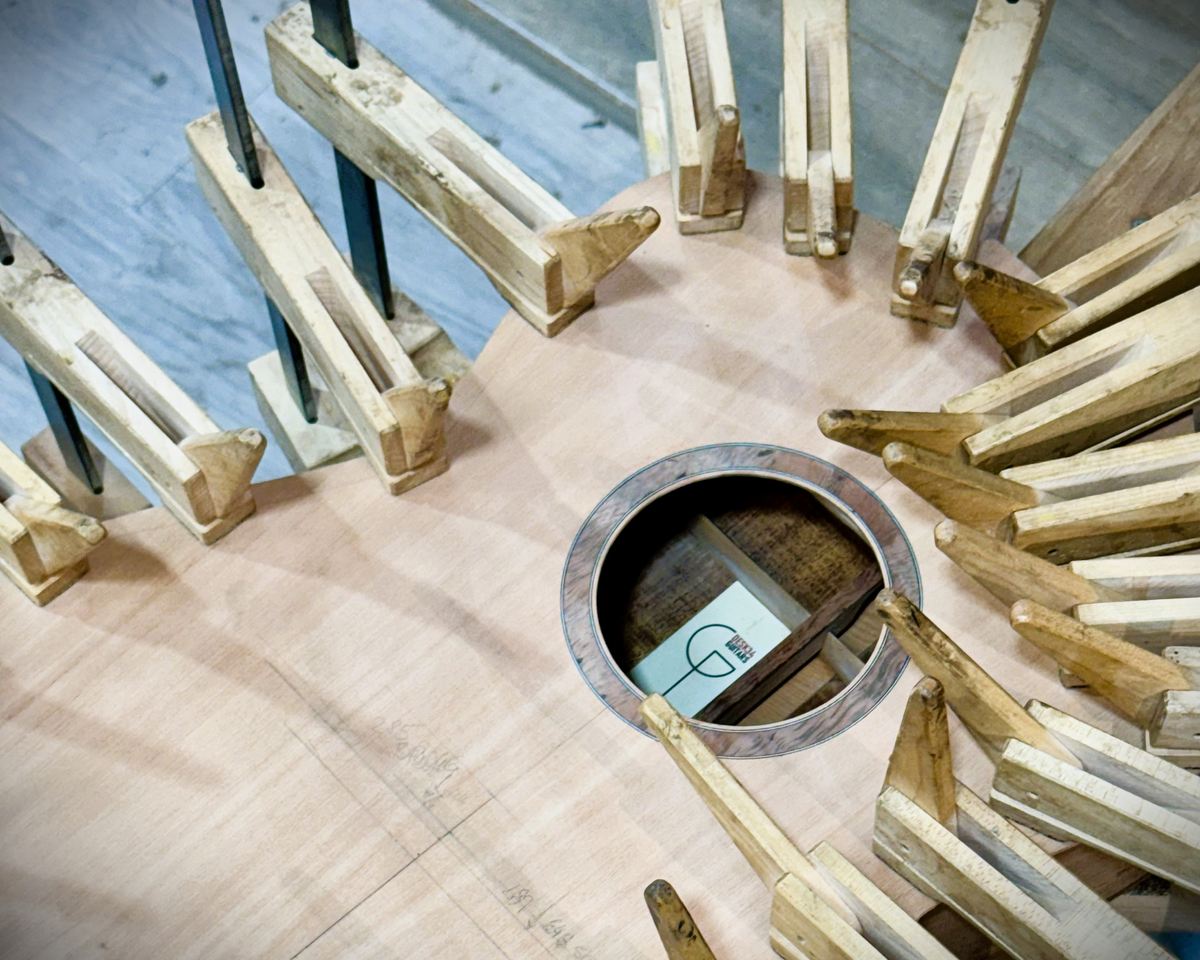
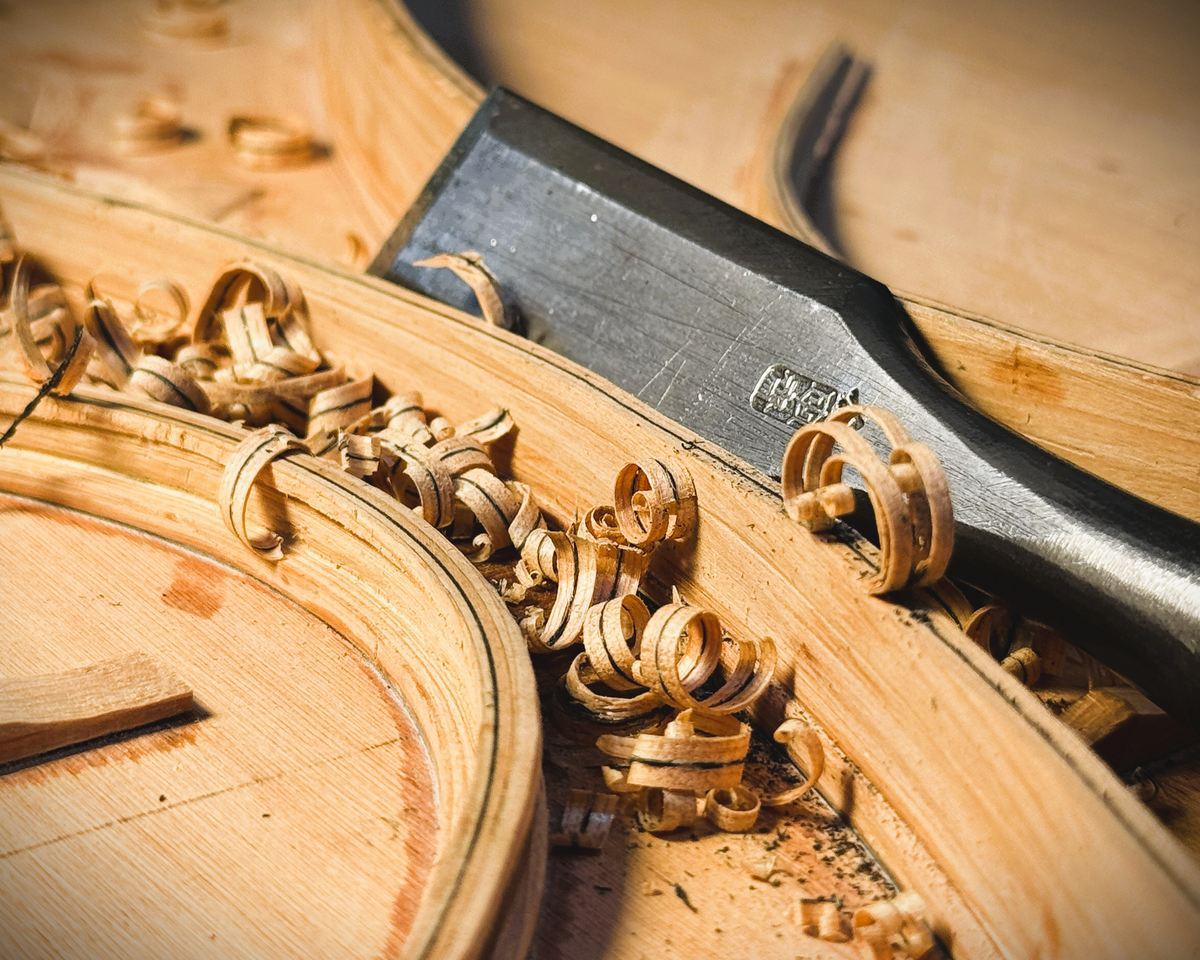
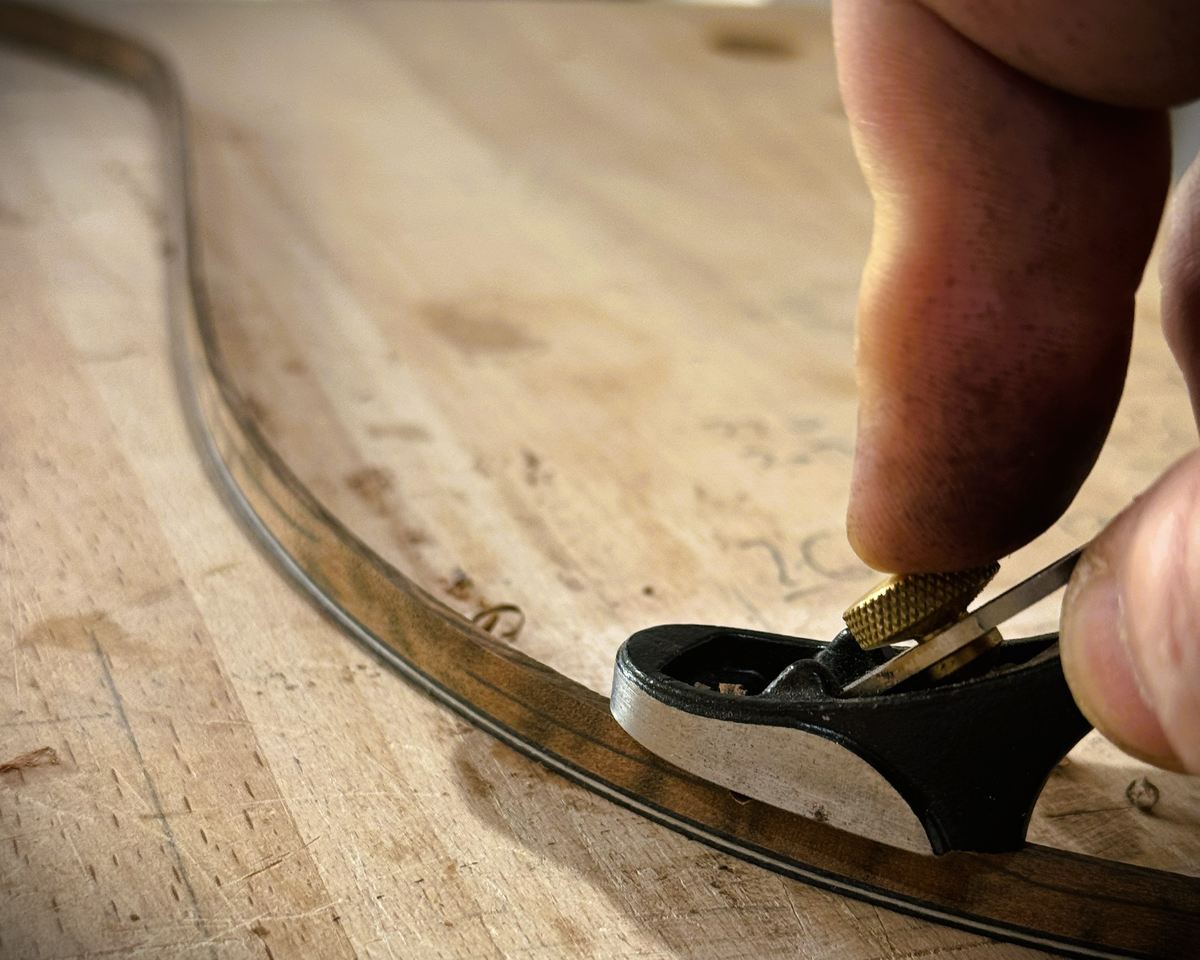
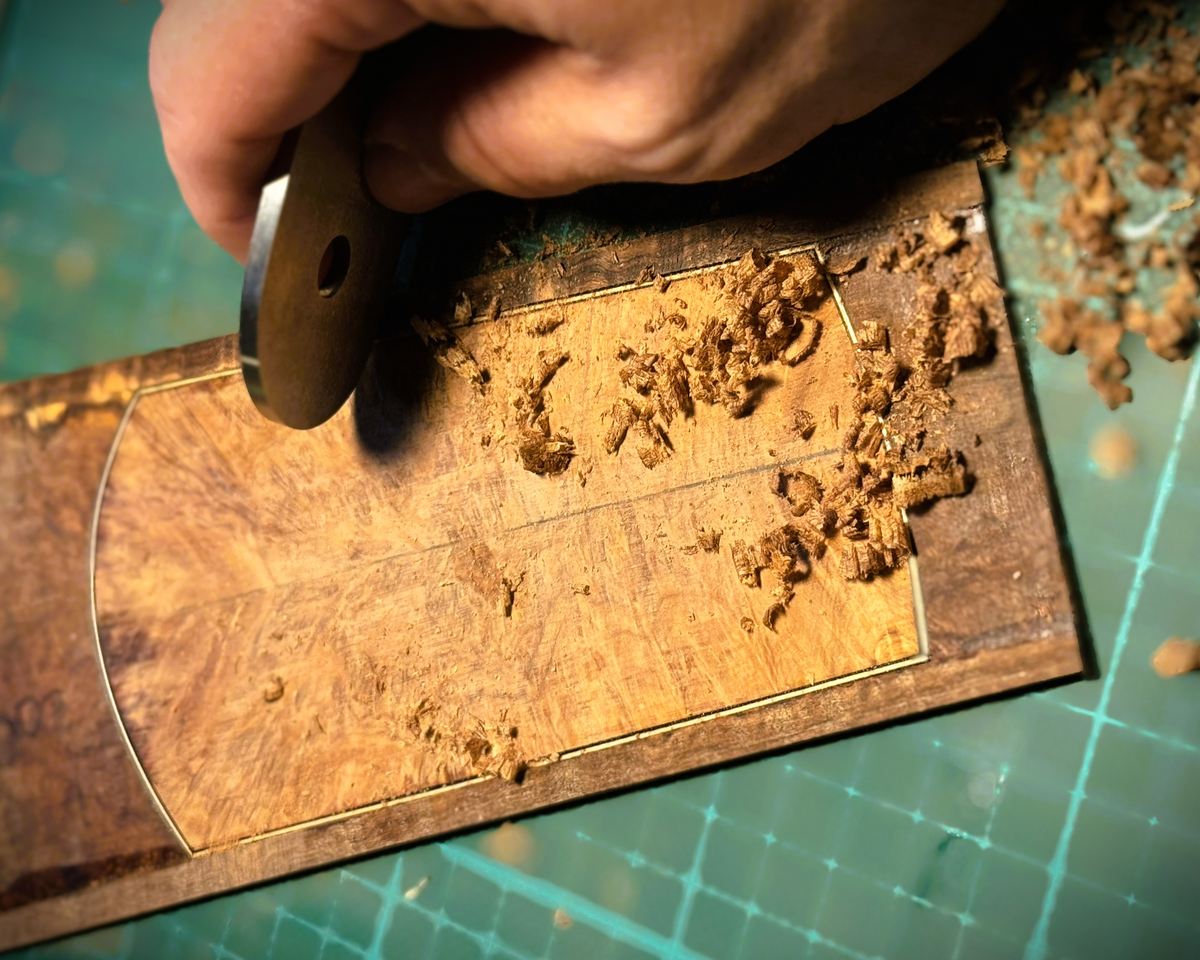
A channel is routed around the soundhole and the Tiger Myrtle rosette ring is set into it, cut from the same material as the binding and the end graft, then levelled flush with a scraper. The soundhole is cut last.
The back is built to work rather than to reflect. In most guitars the back is stiff enough to act as a wall behind the soundboard; here it is thicknessed and braced so that it moves with the air in the box and radiates in its own right, which is what an active back means.
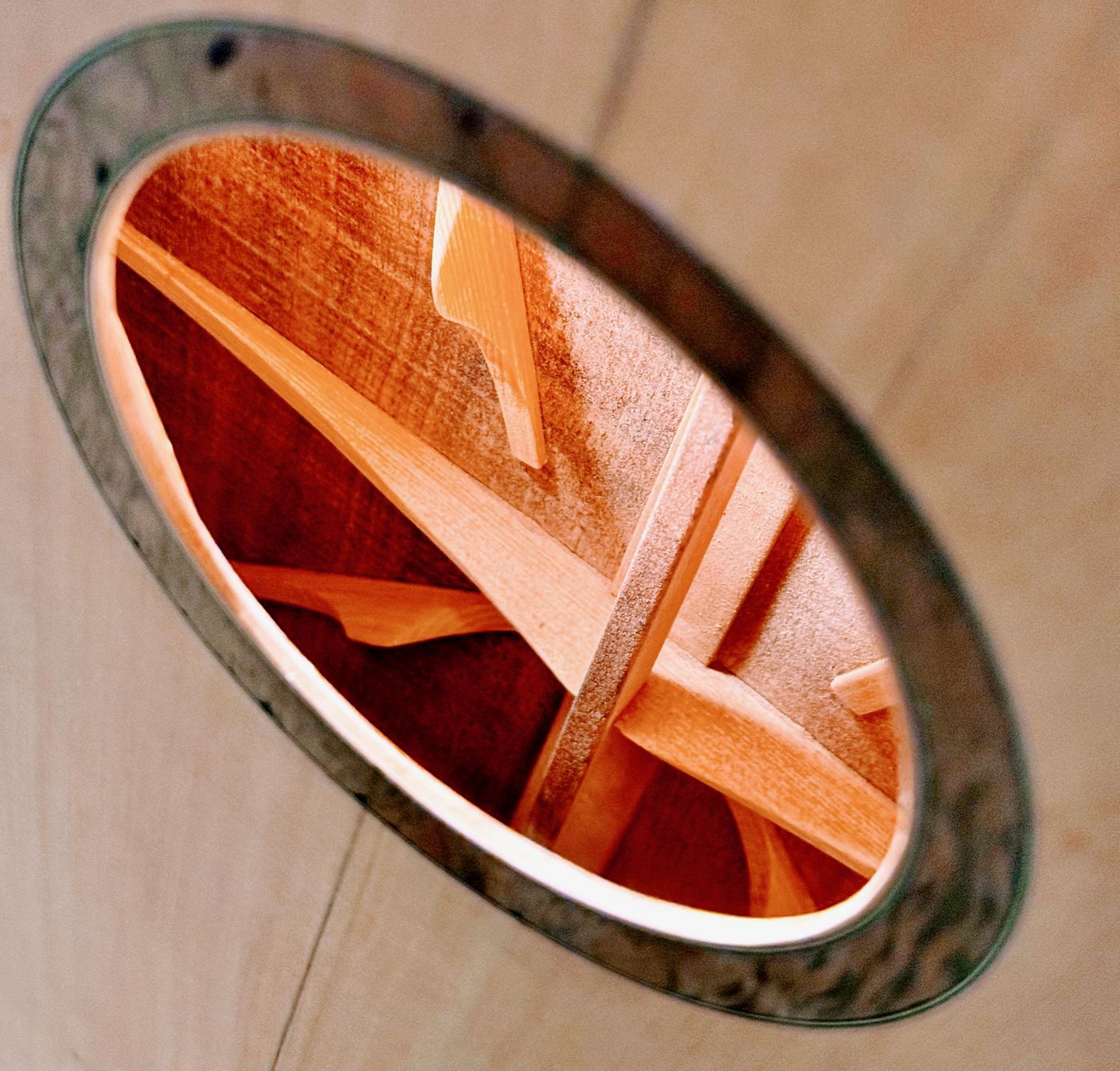
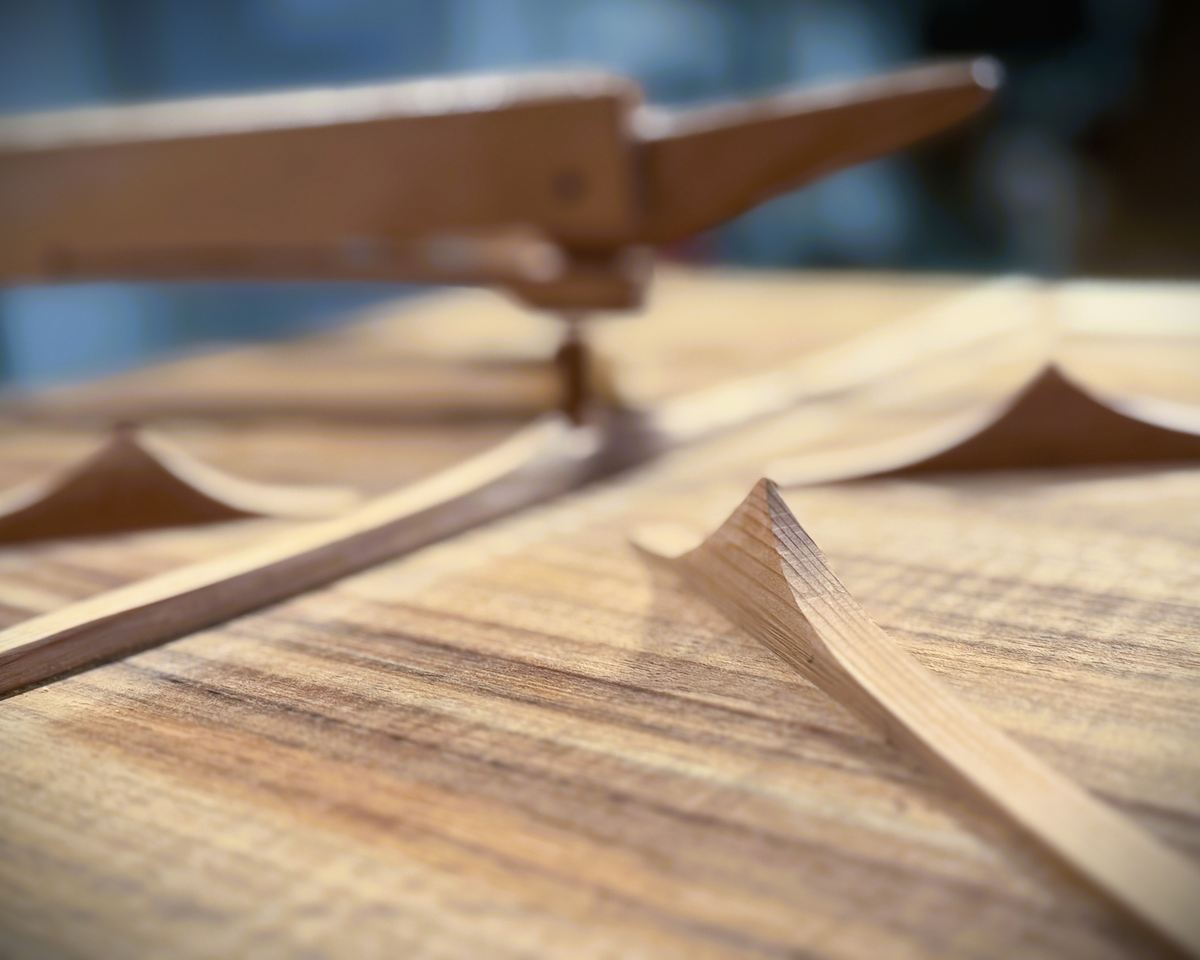
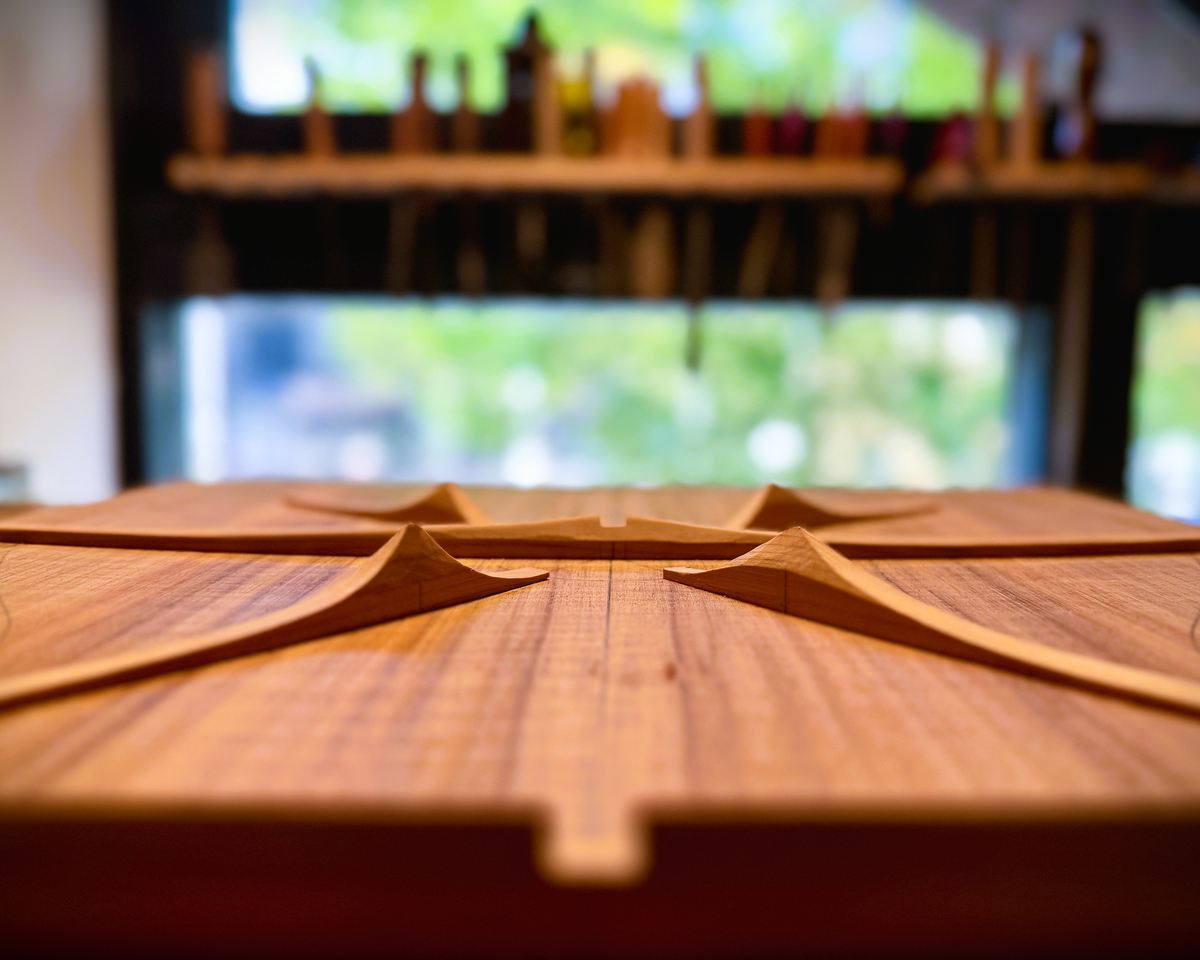
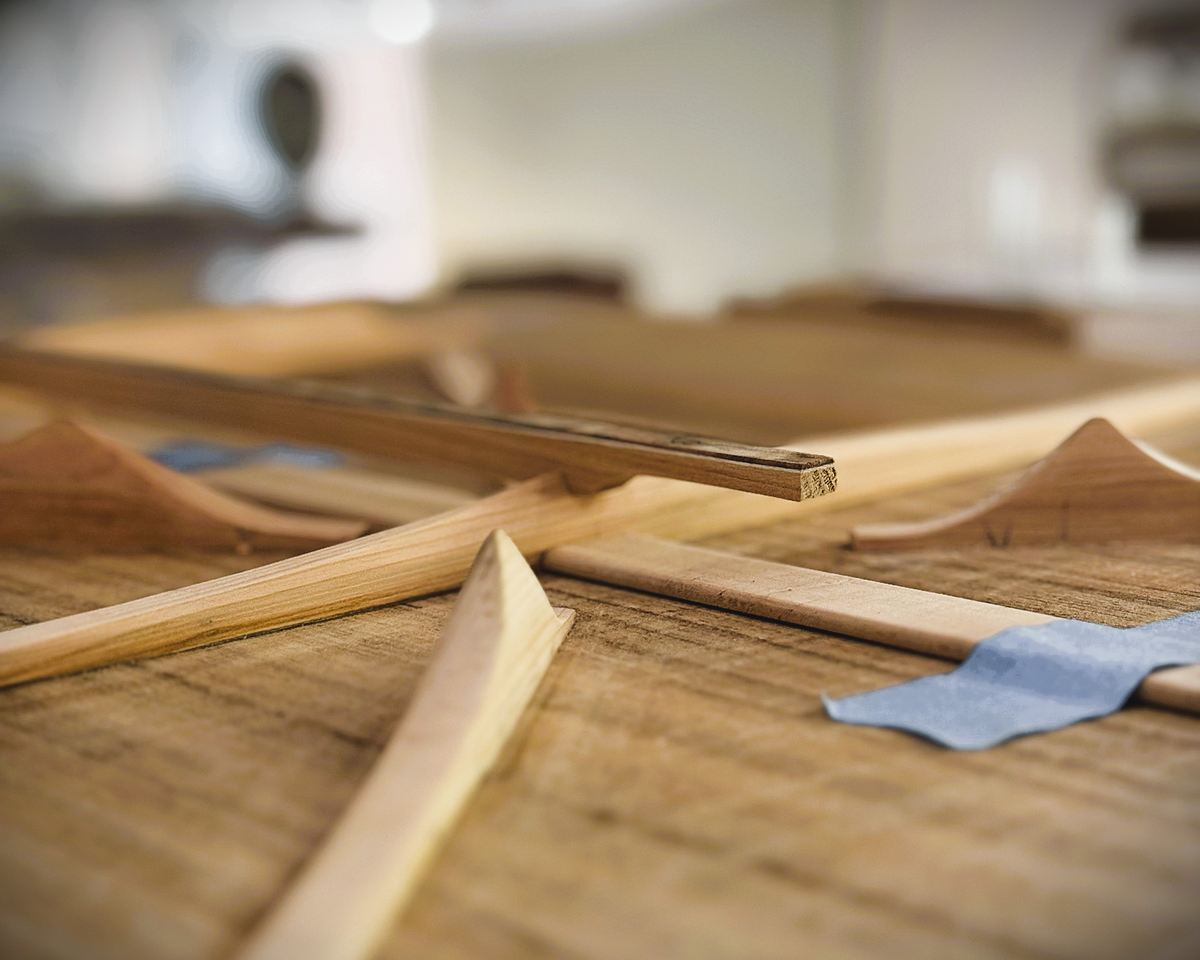
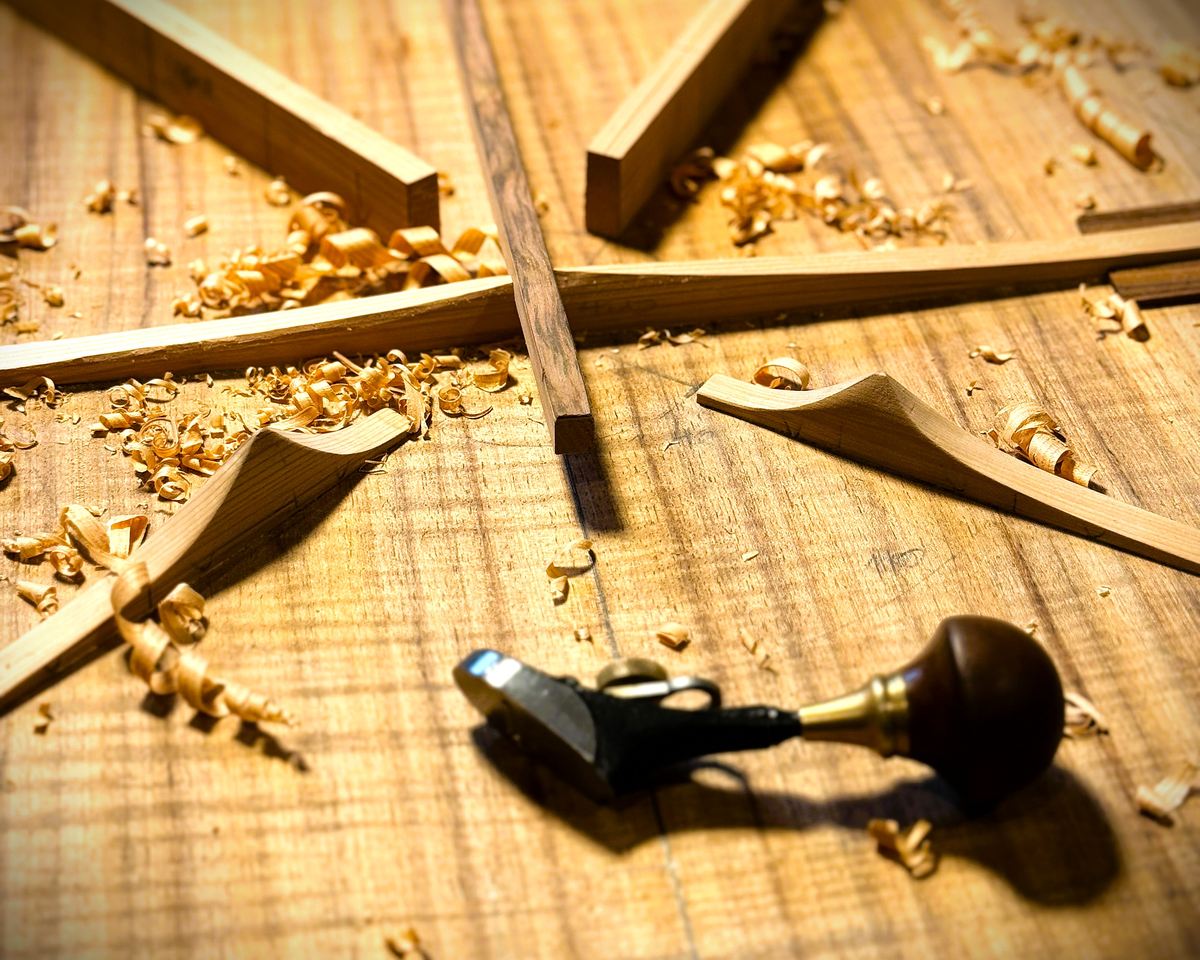
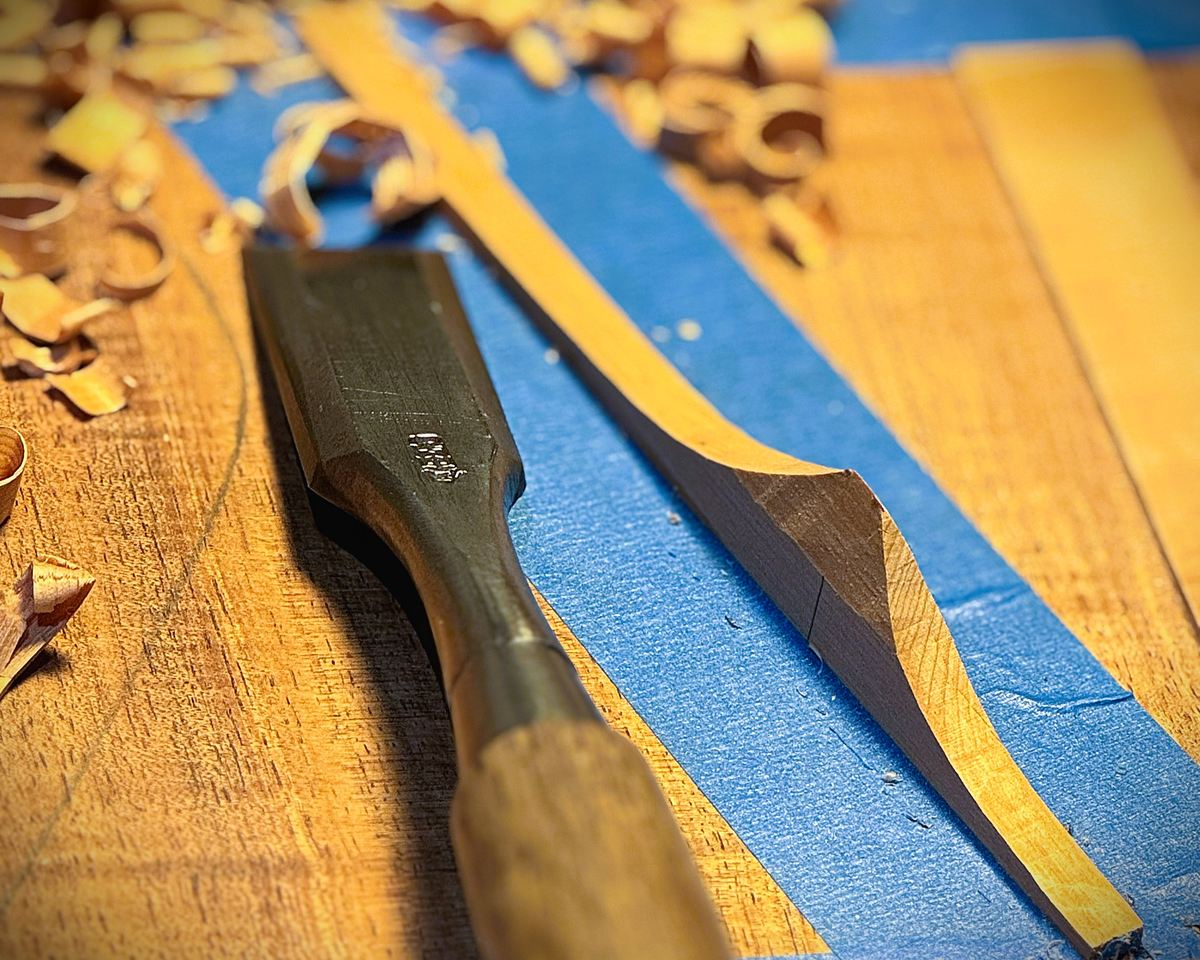
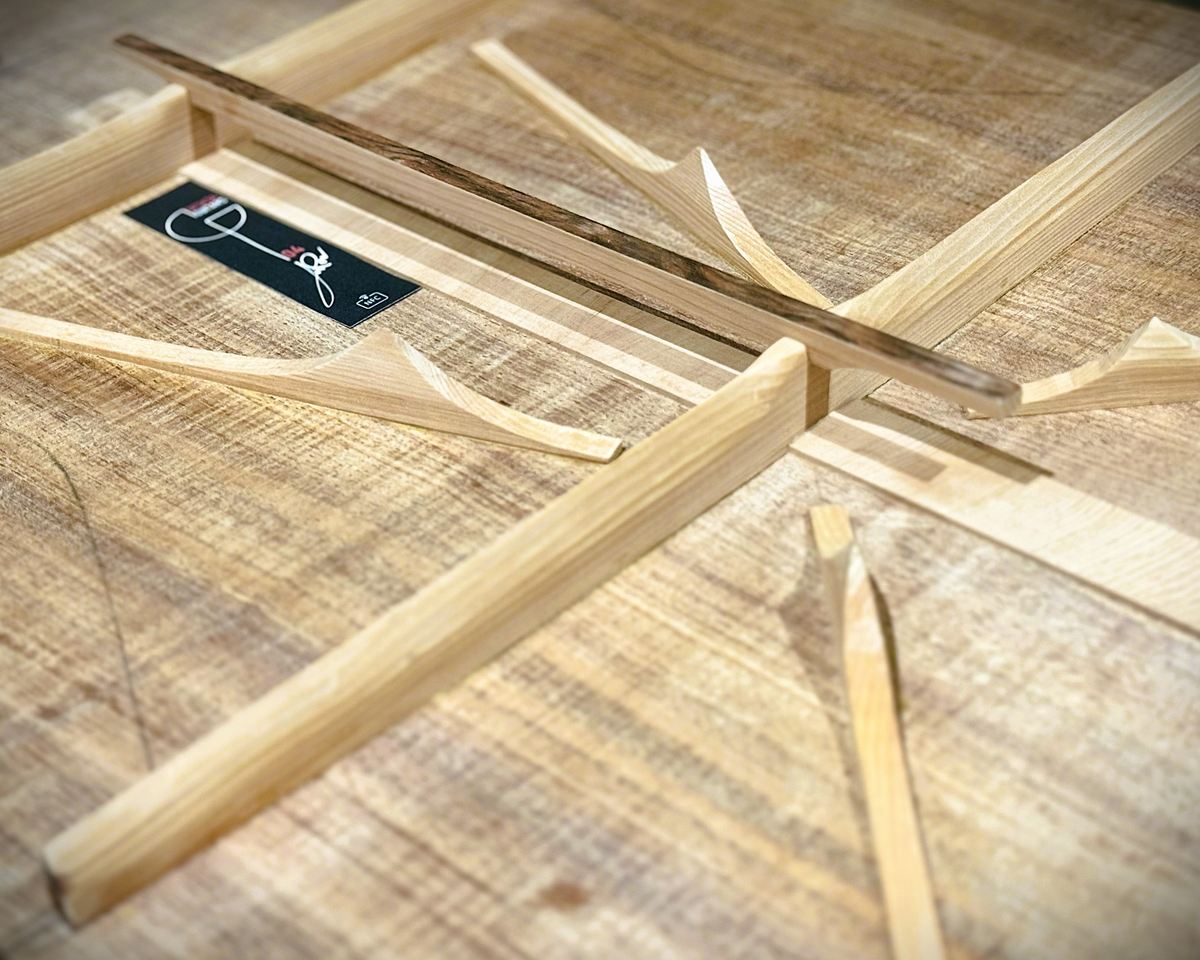
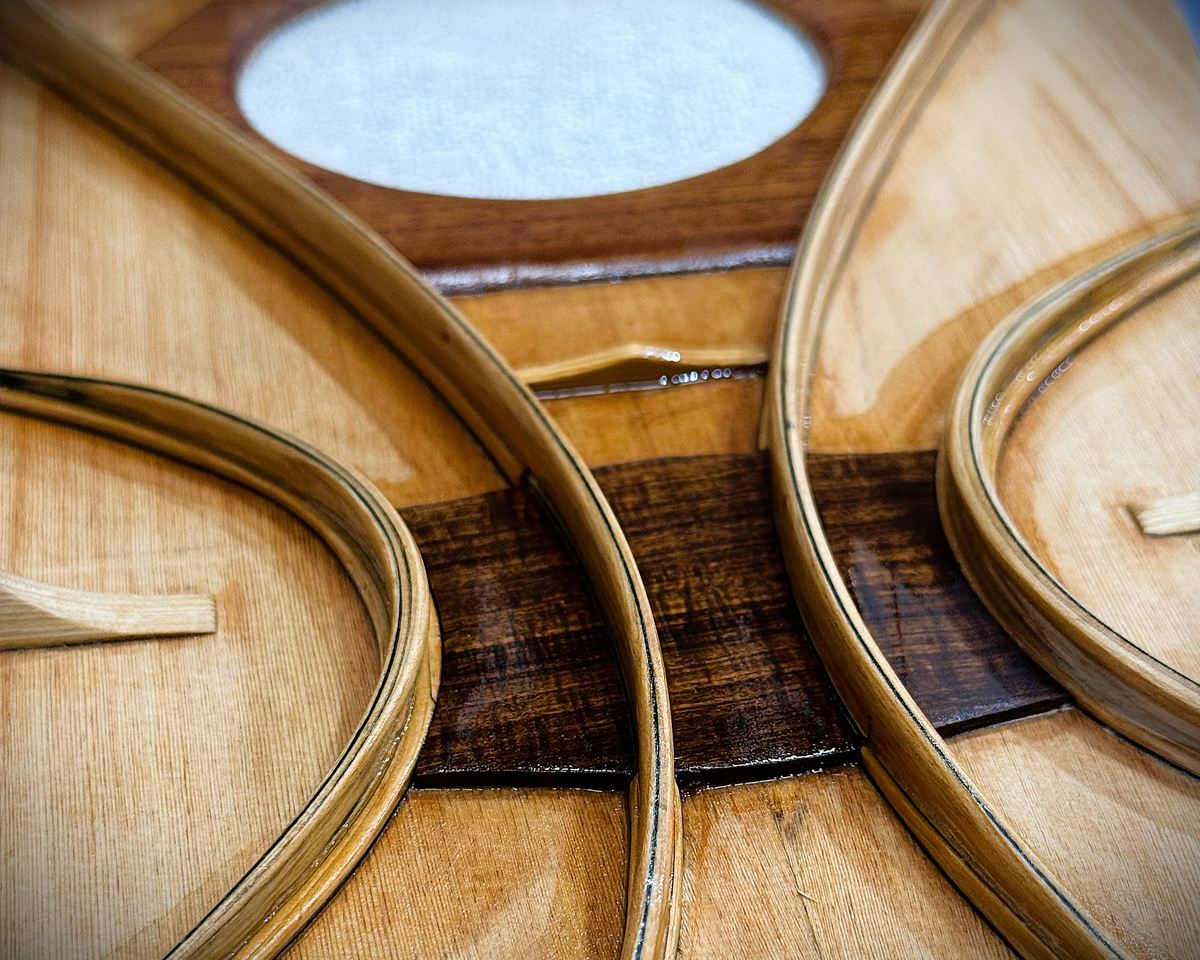
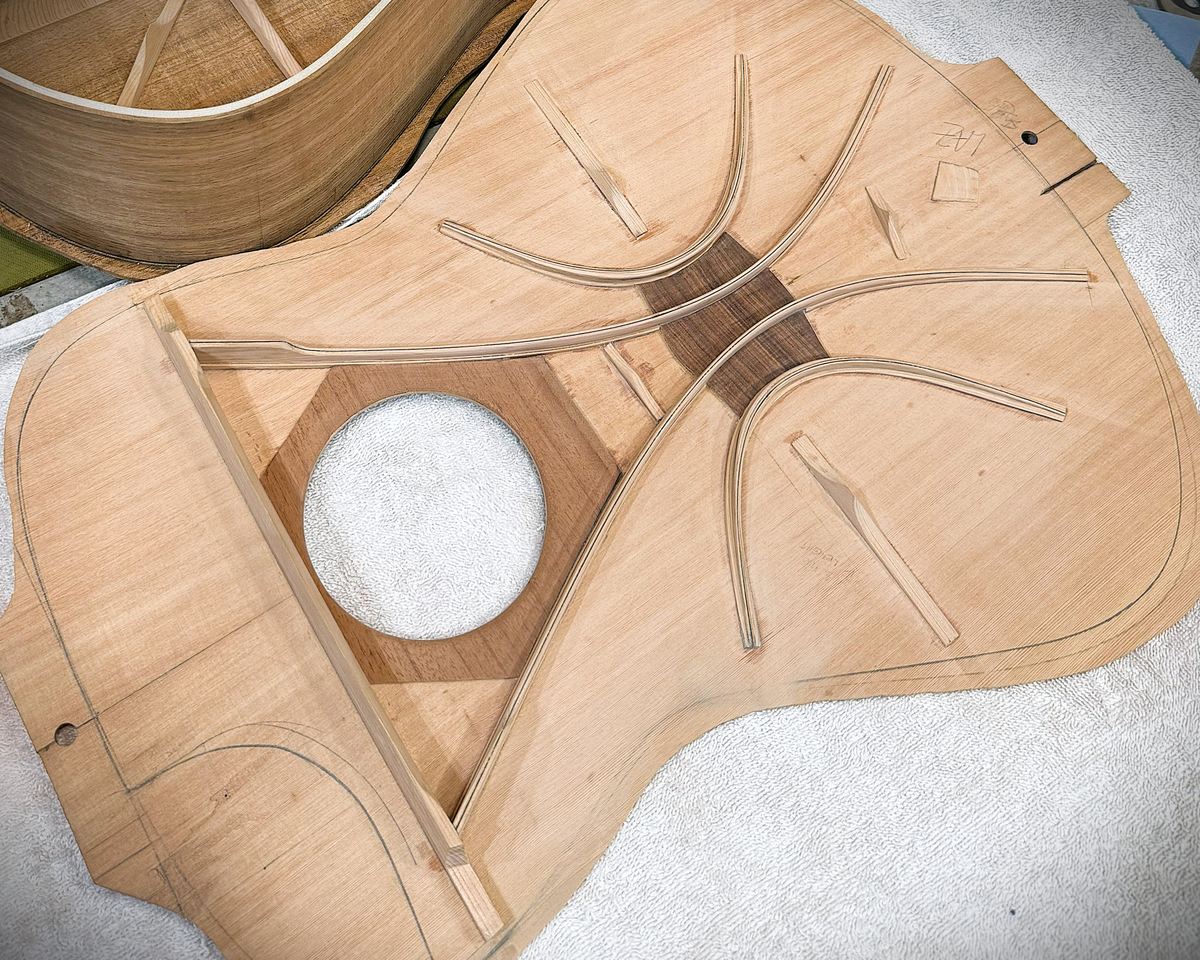
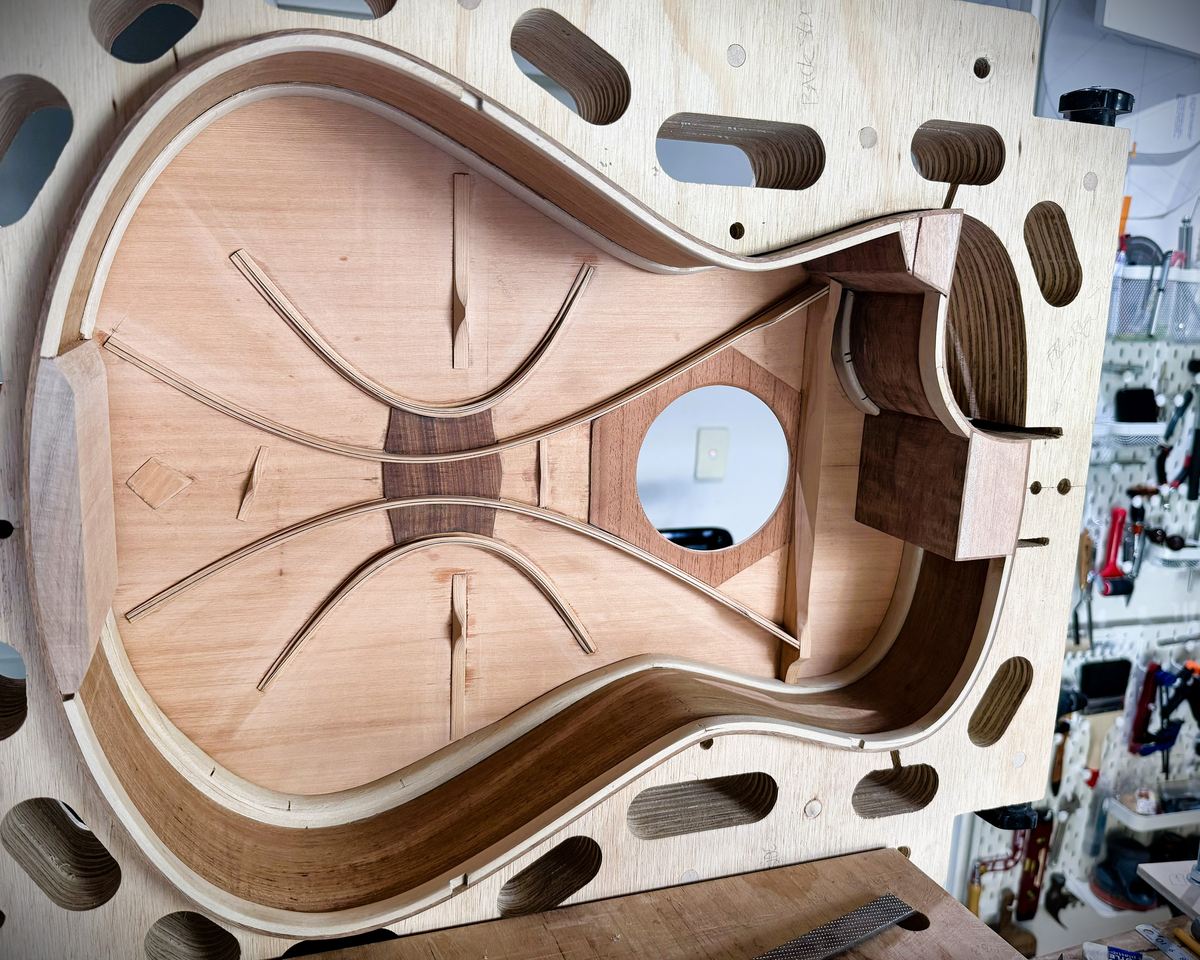
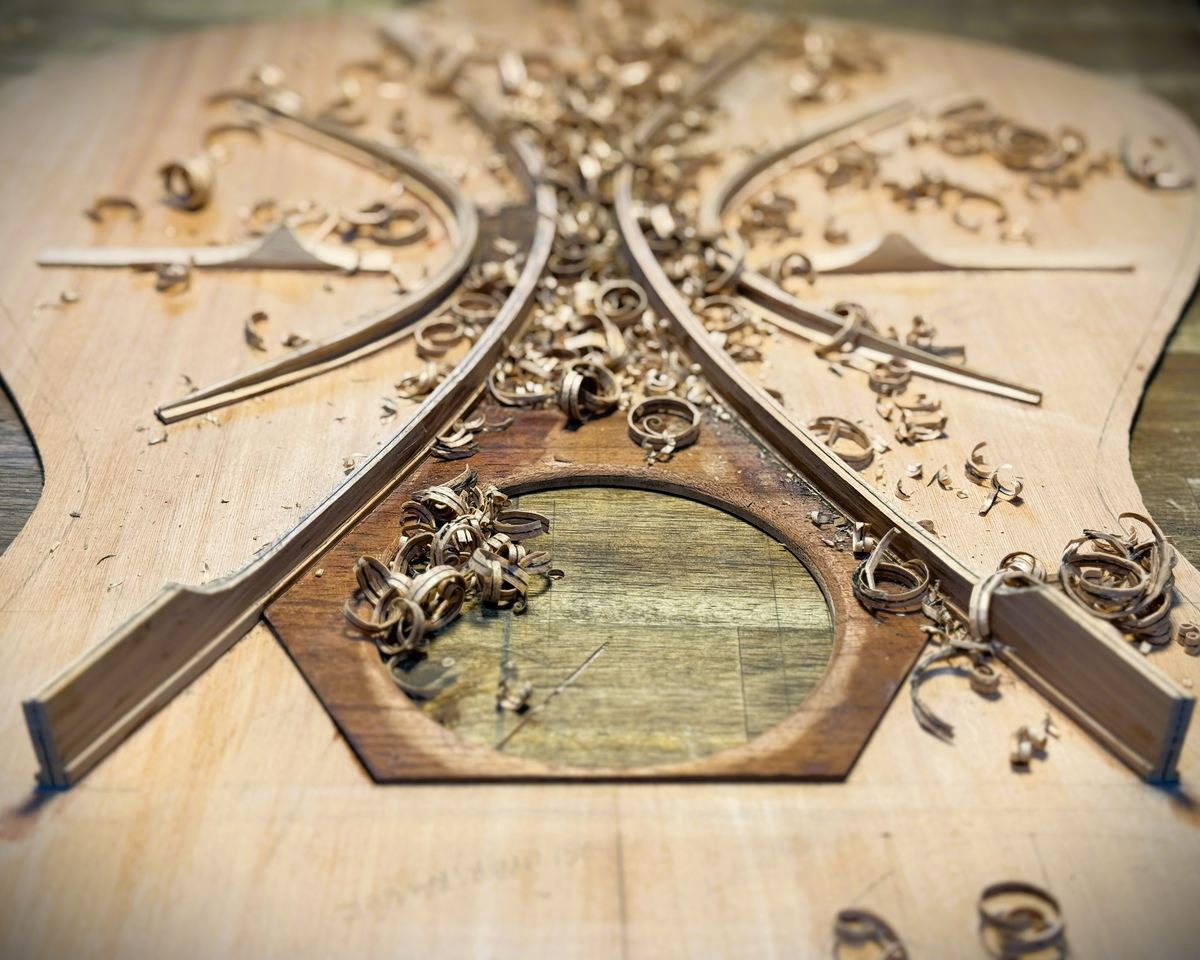
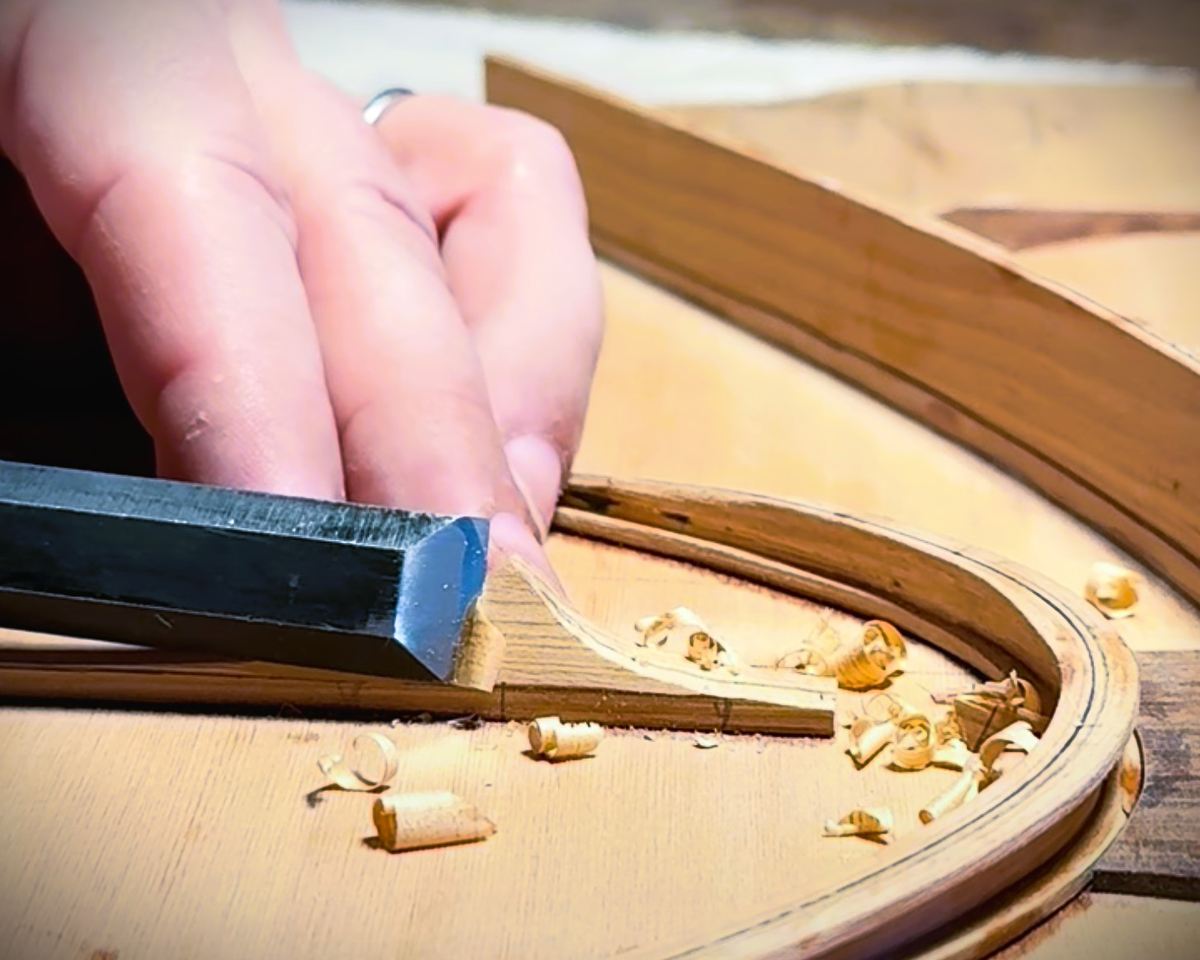
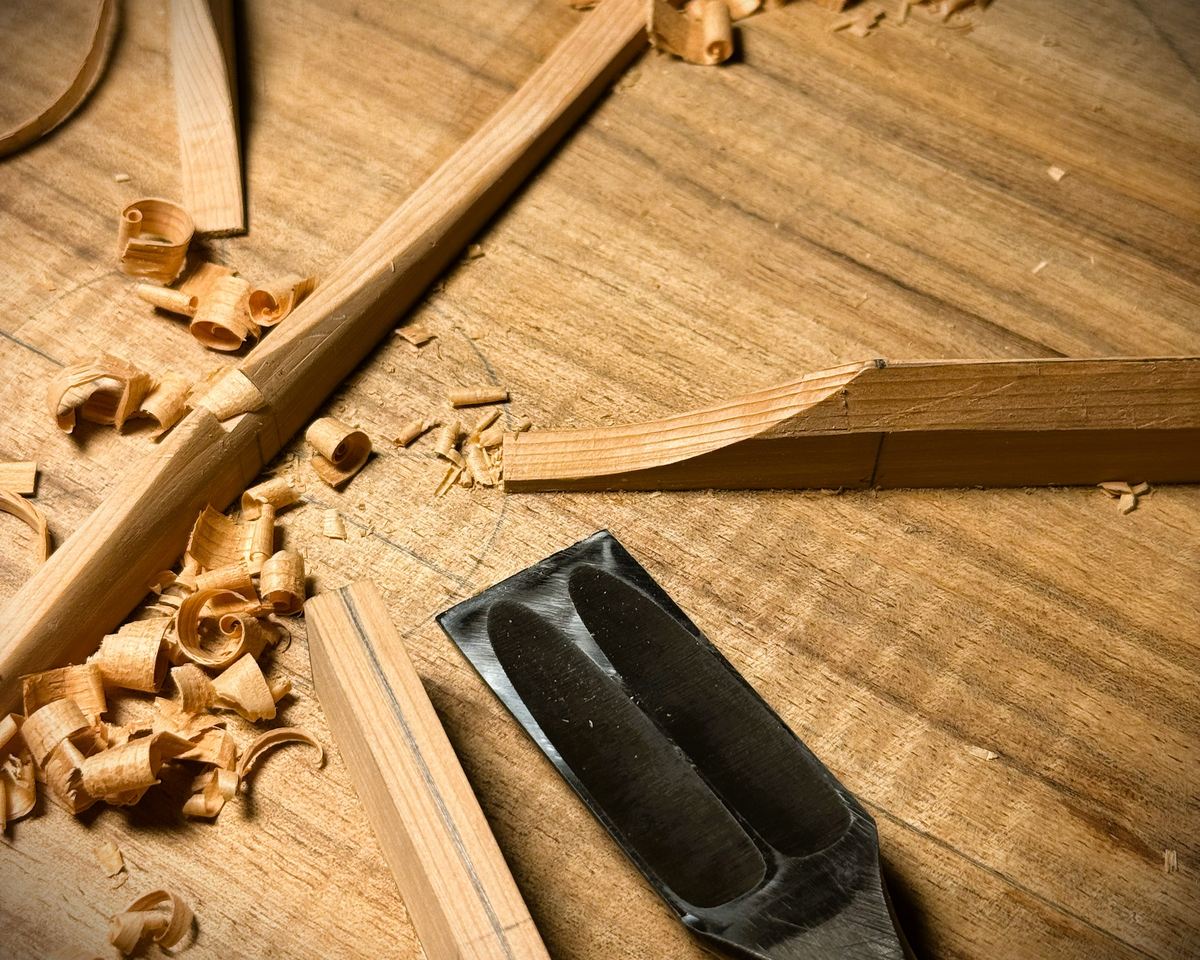
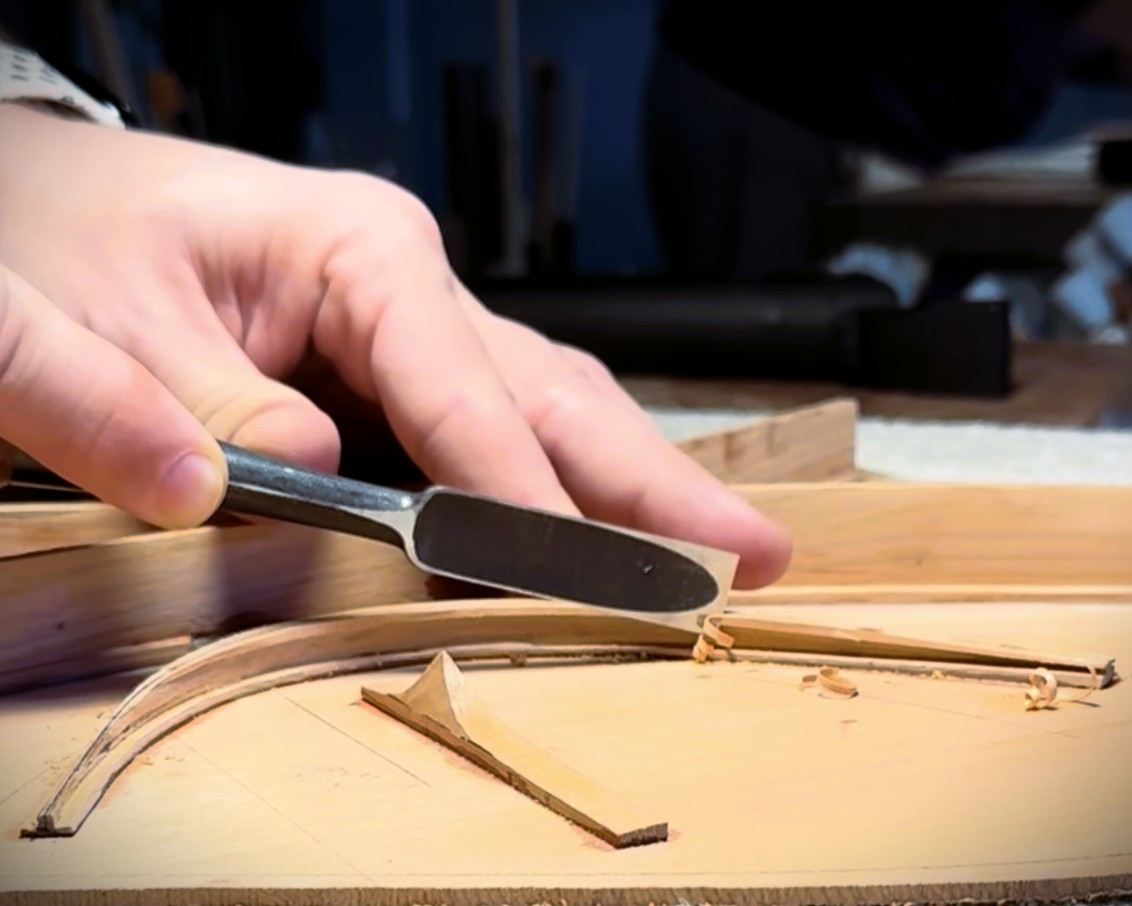
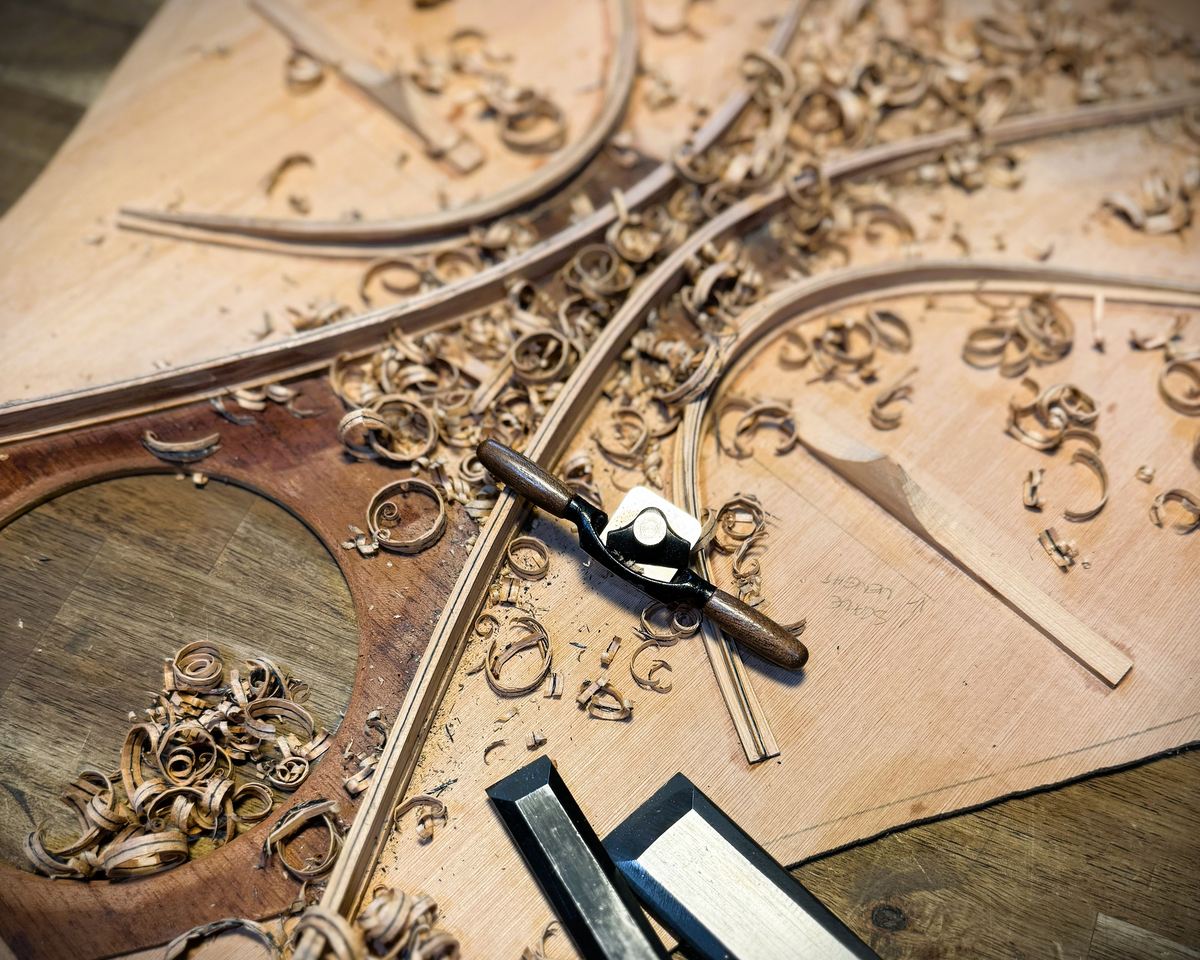
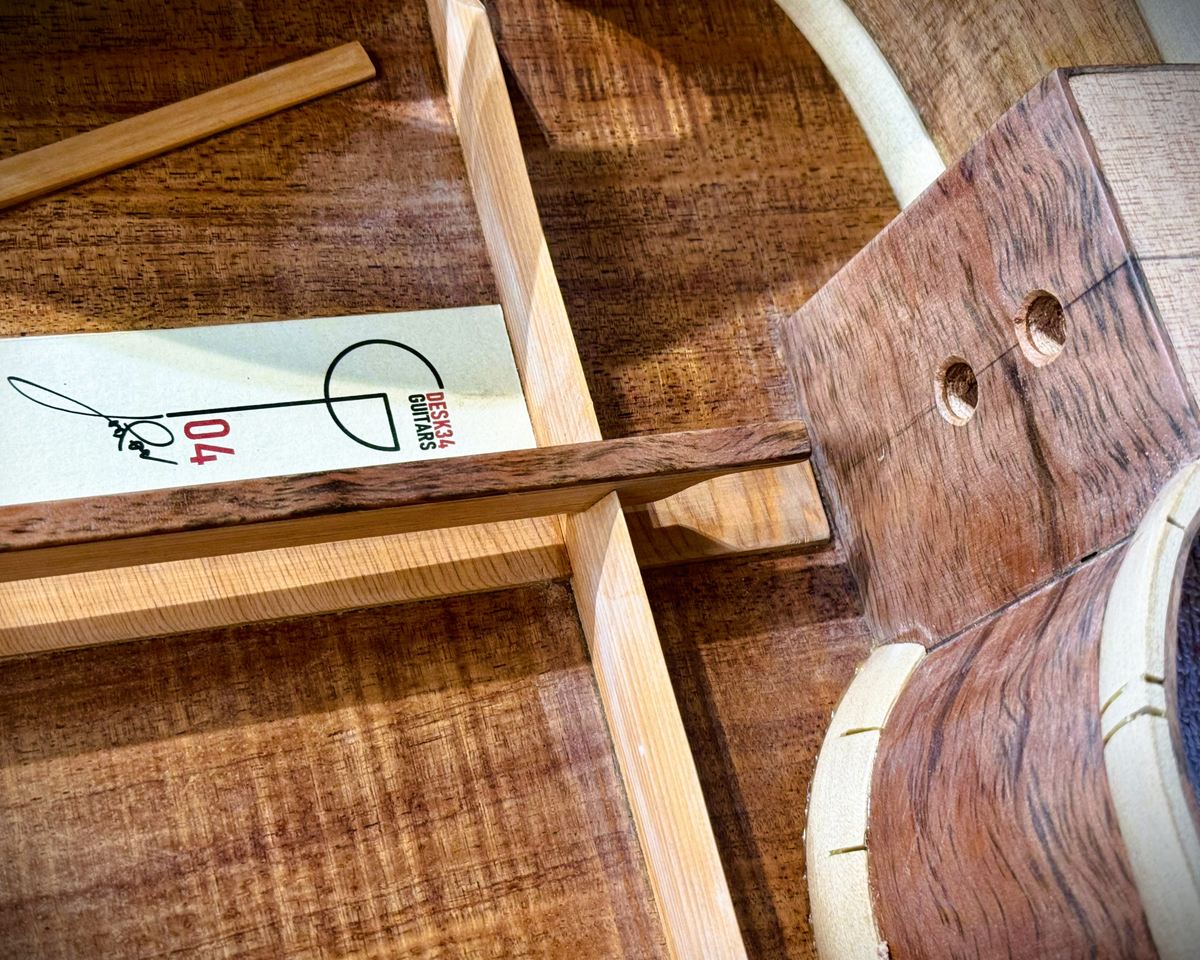
The soundboard is falcate braced, the system set out by Trevor Gore with Gerard Gilet in Contemporary Acoustic Guitar Design and Build. Falcate means sickle shaped: rather than a straight X, the braces are long curves that sweep out of the upper bout and around the bridge in crossing pairs.
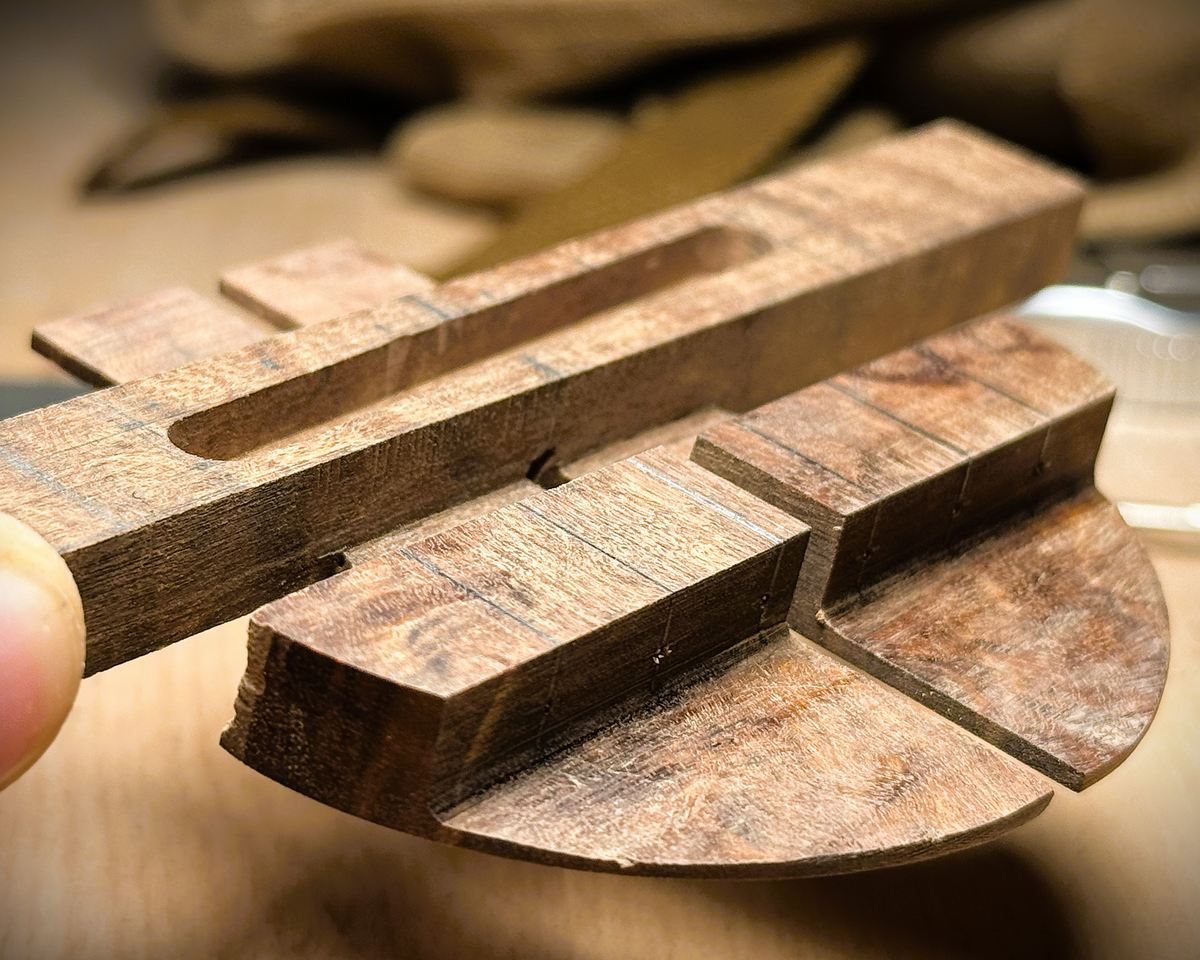
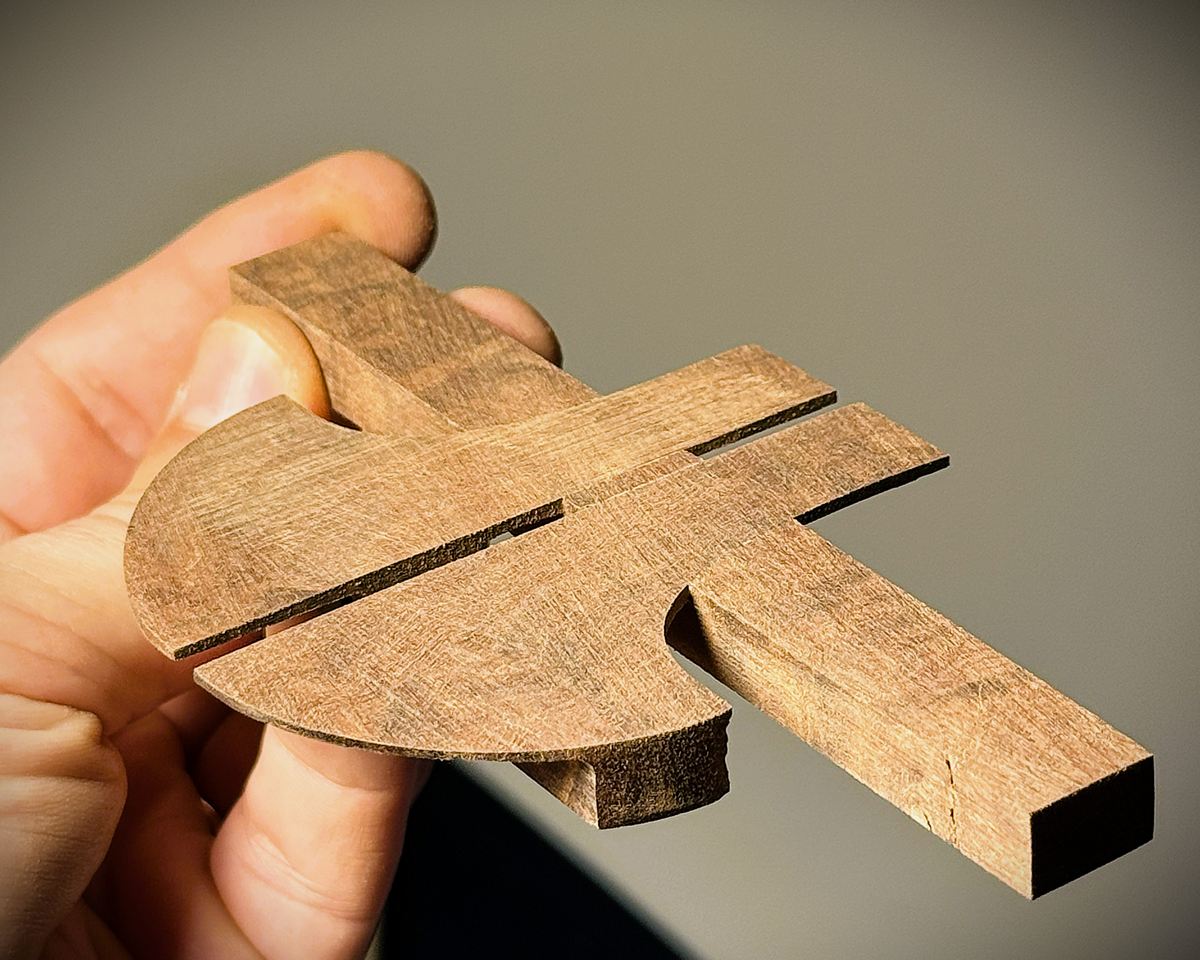
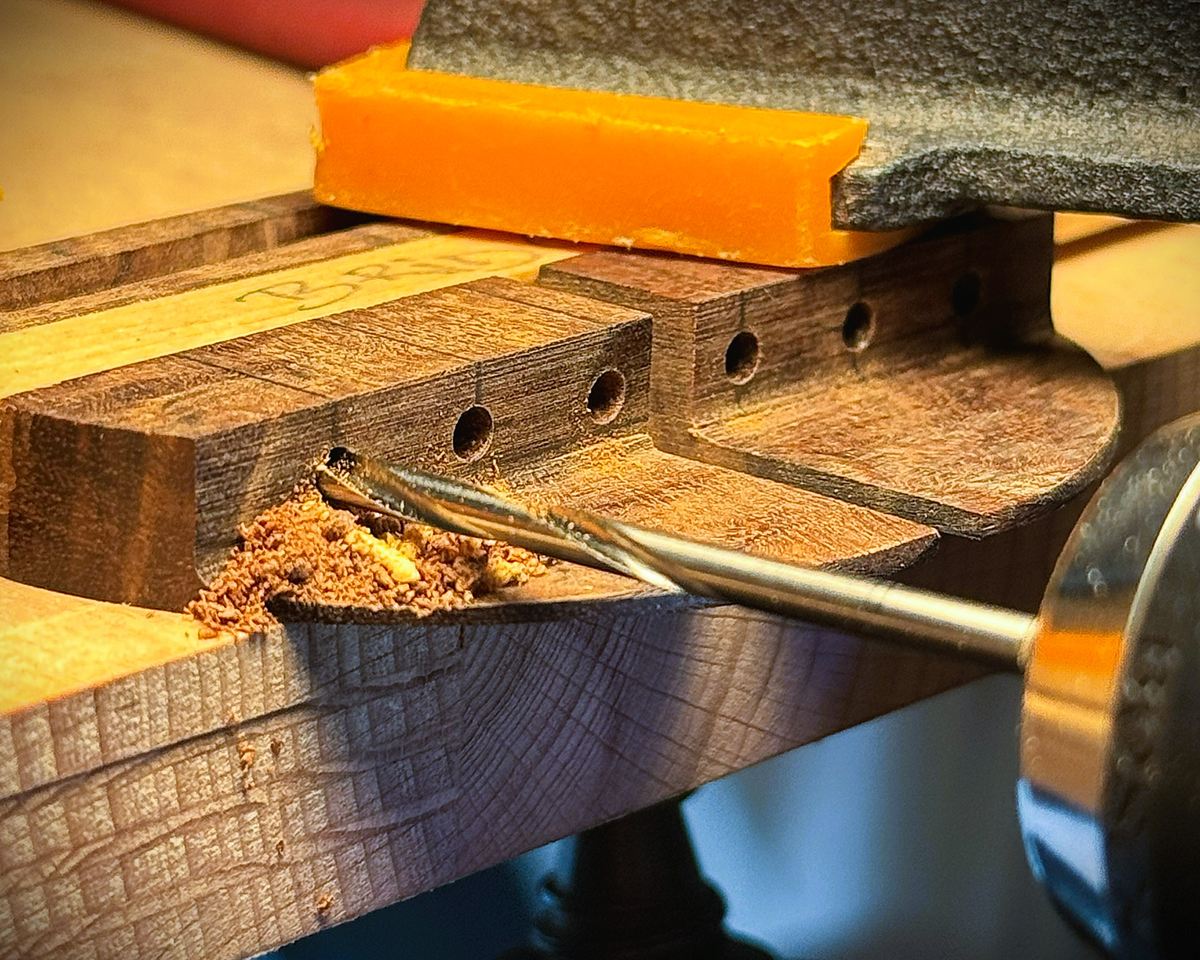
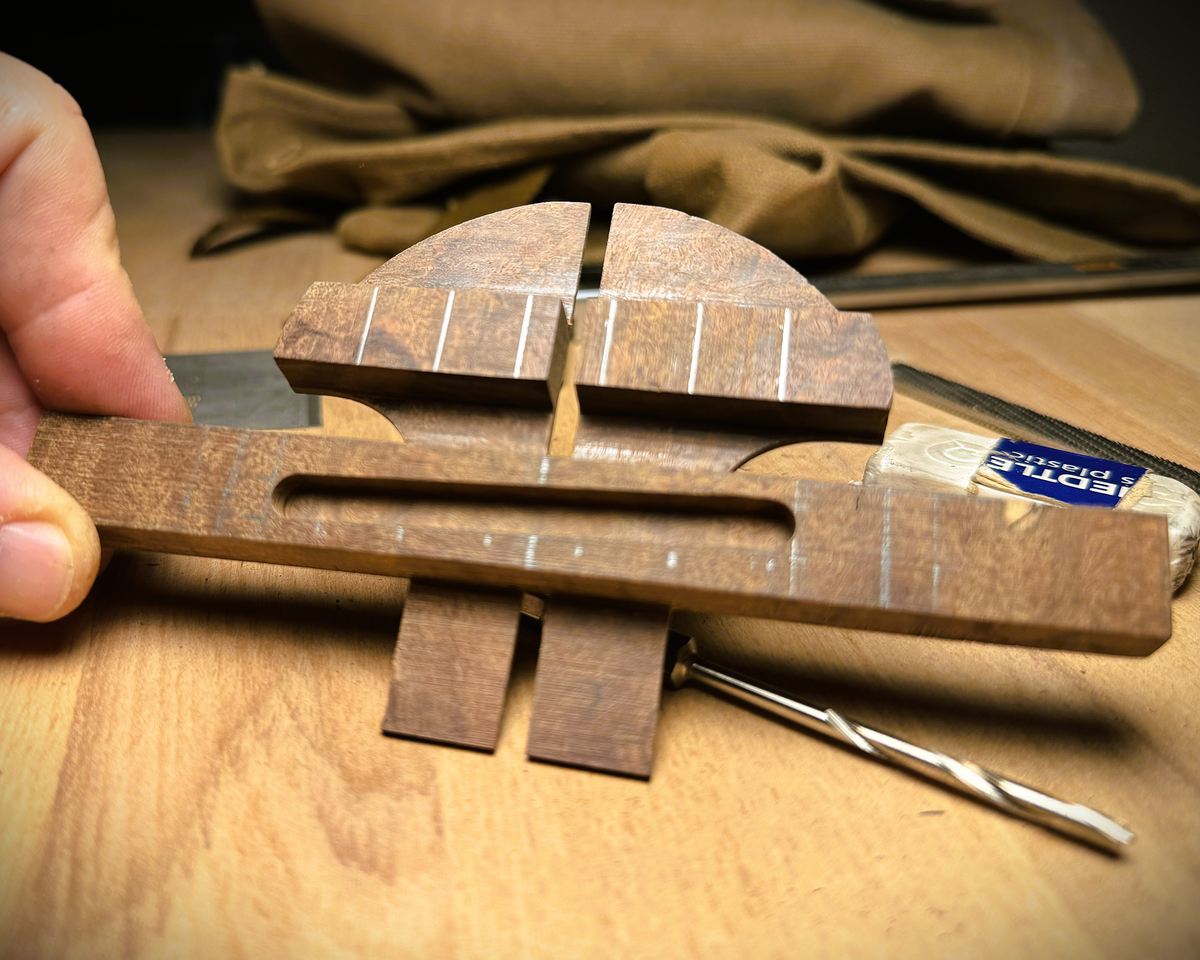
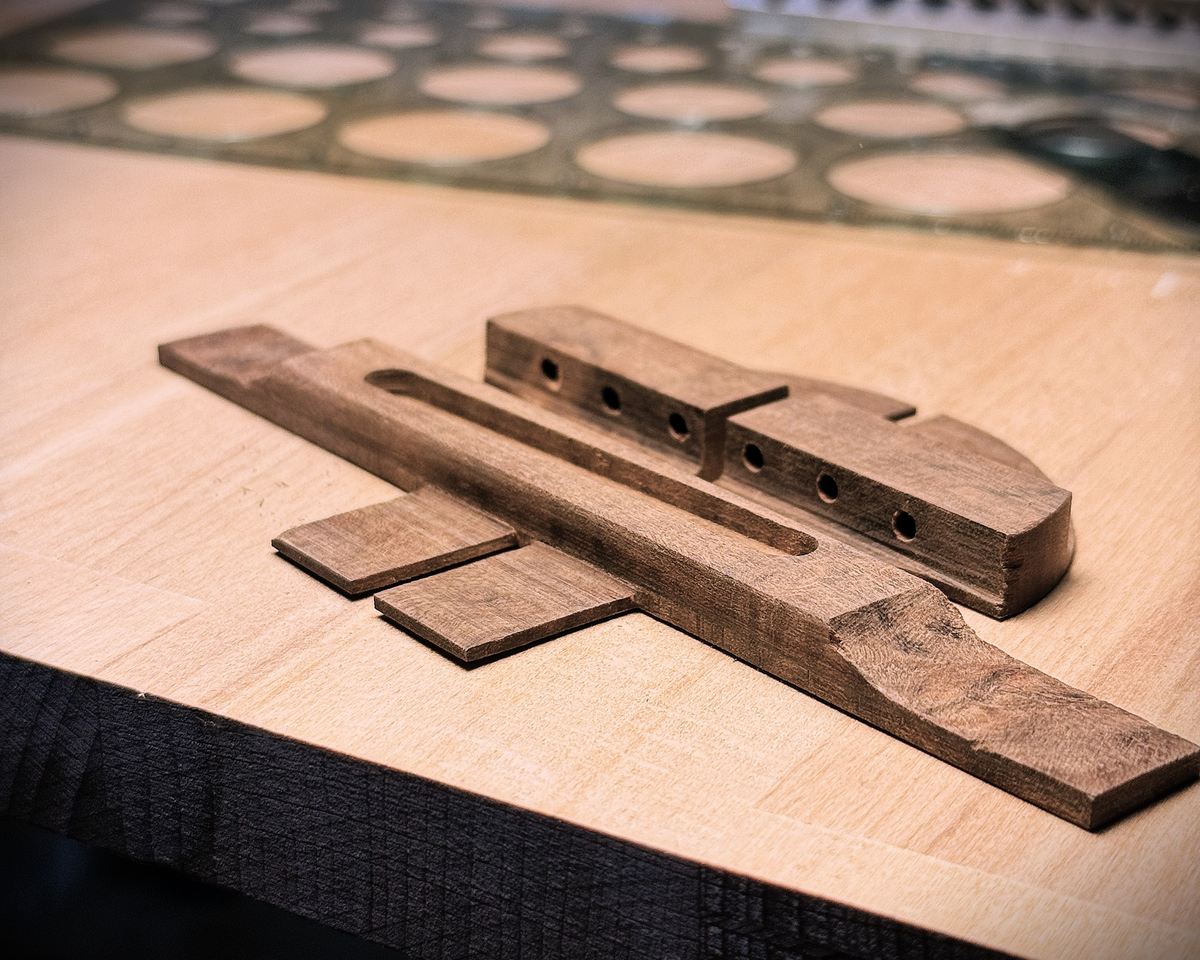
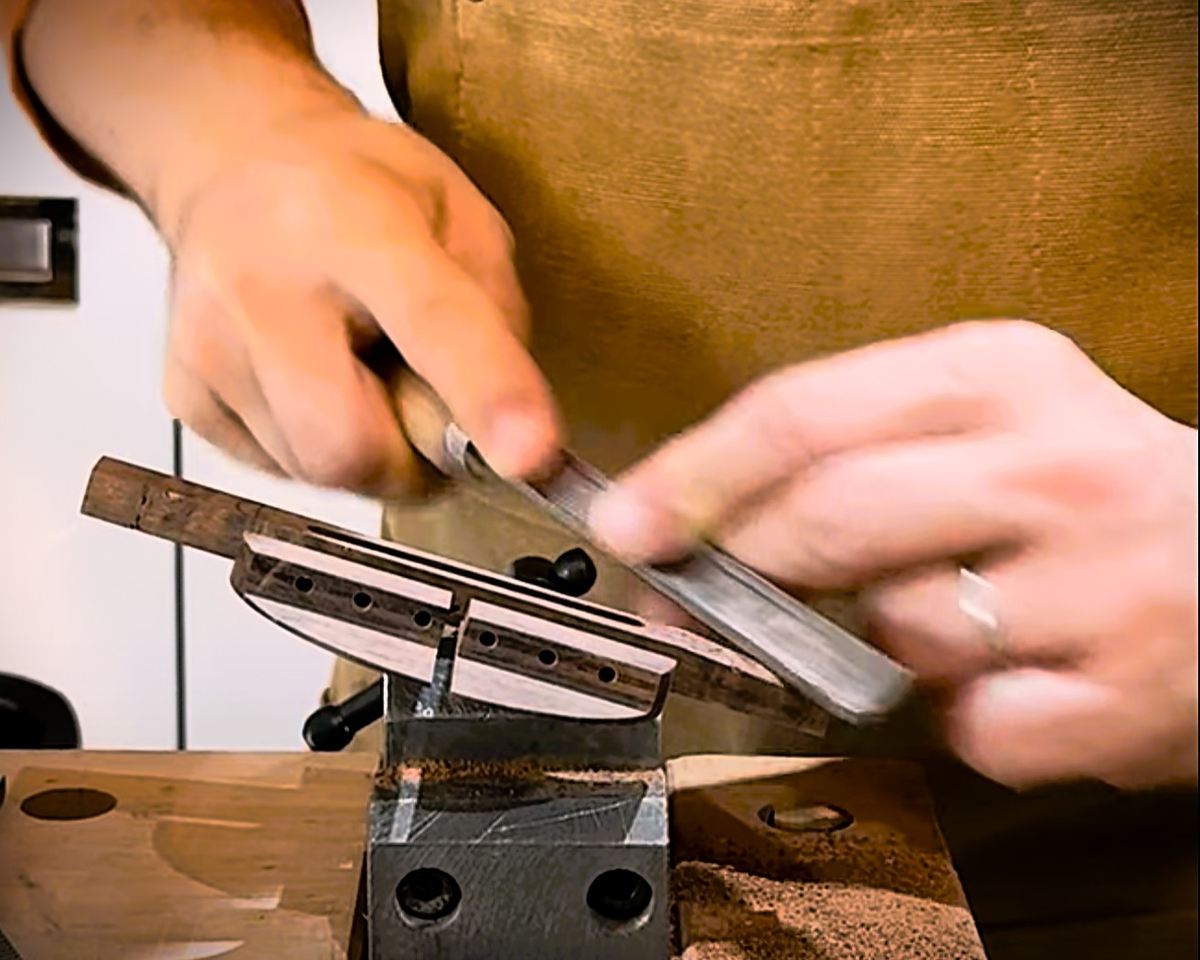
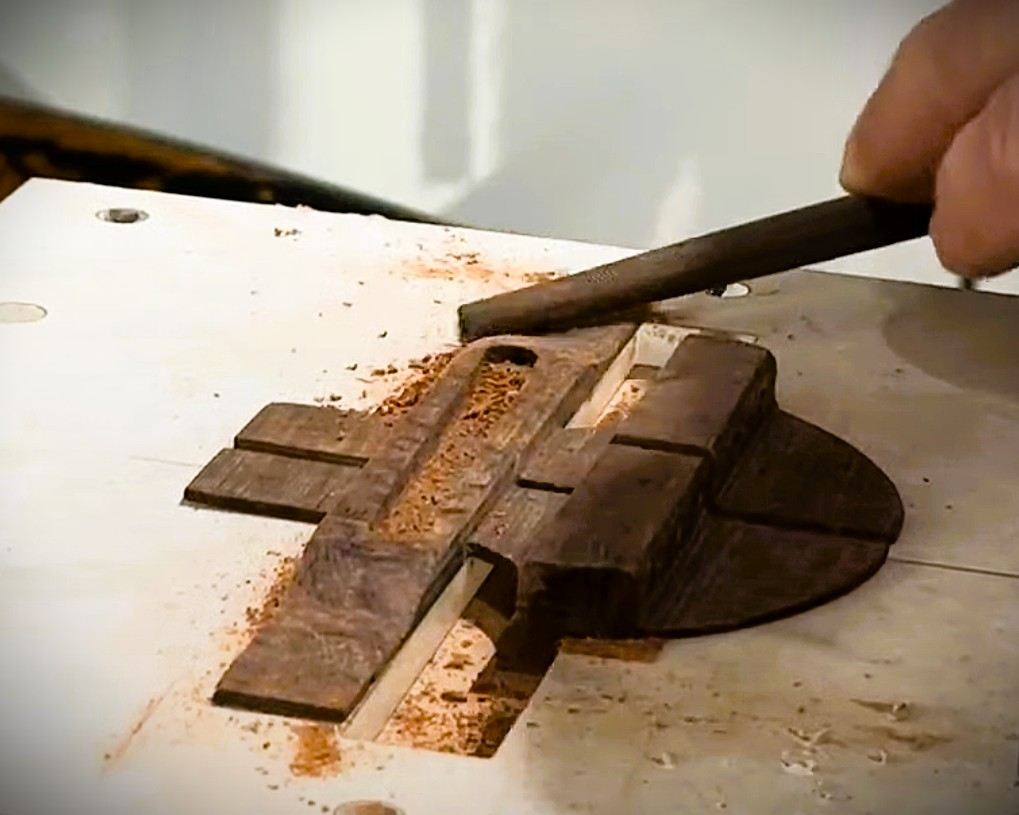
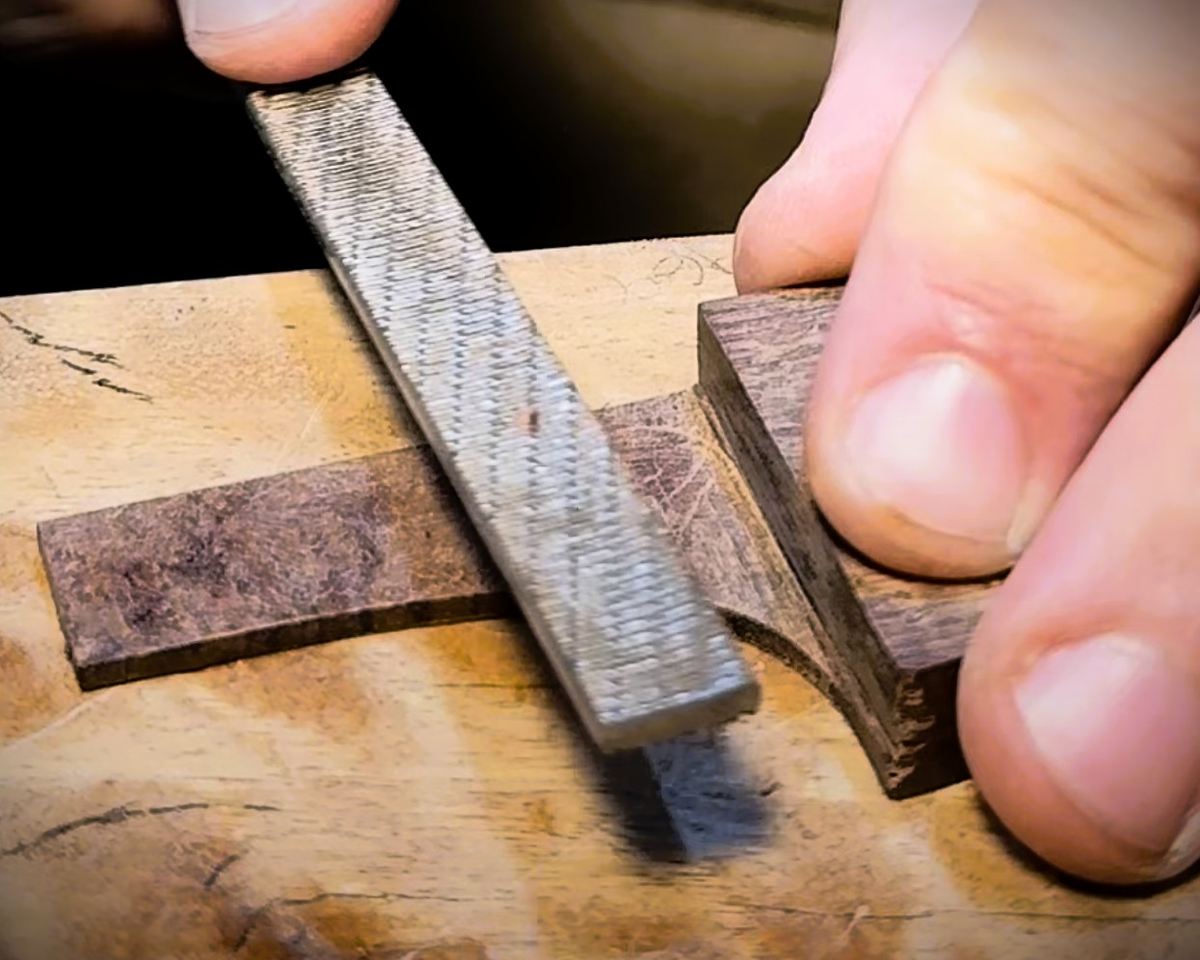
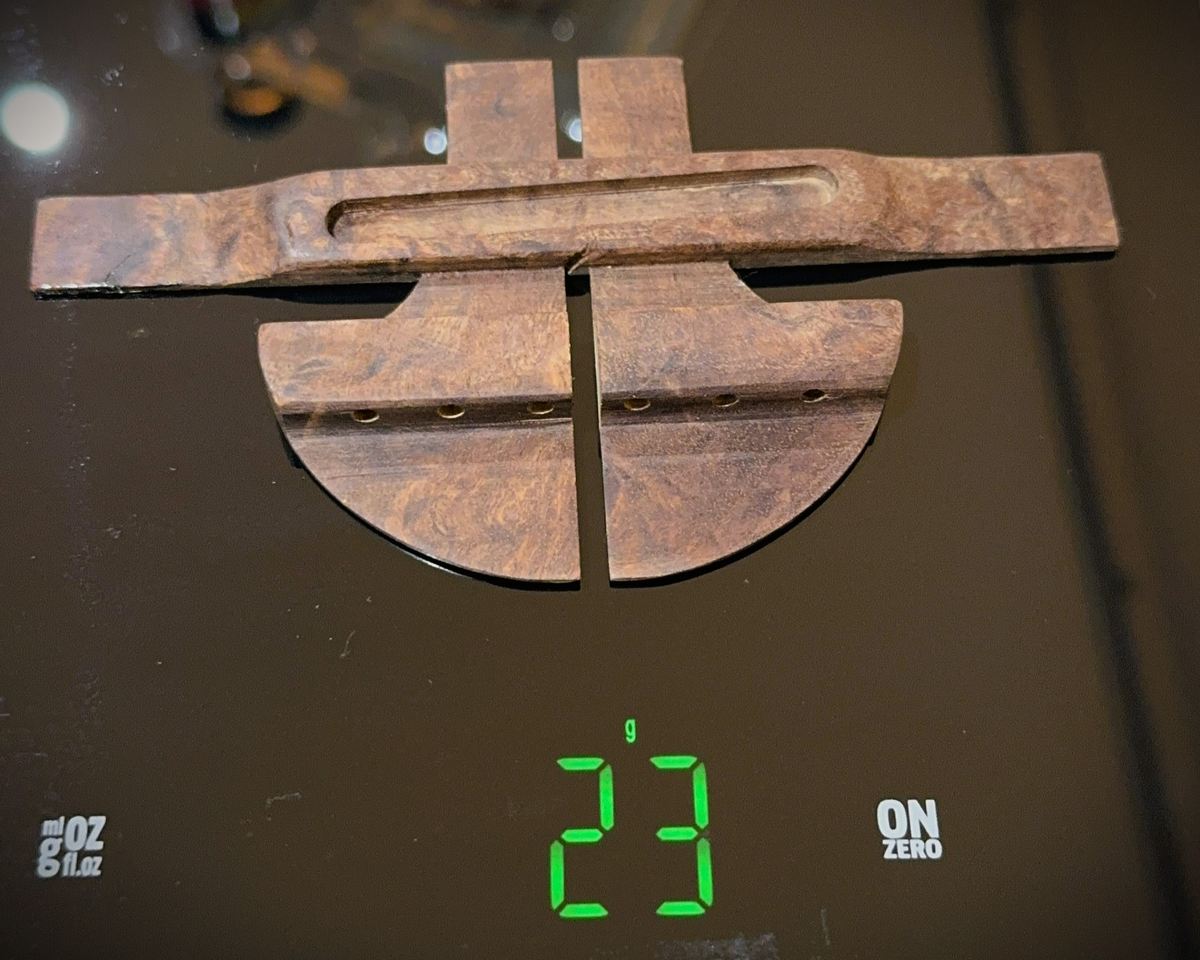
The design of the bridge is pinless, specifically created for this instrument and inspired by the work of Michihiro Matsuda. It is sawn from reclaimed birdseye Gidgee and carved by hand.
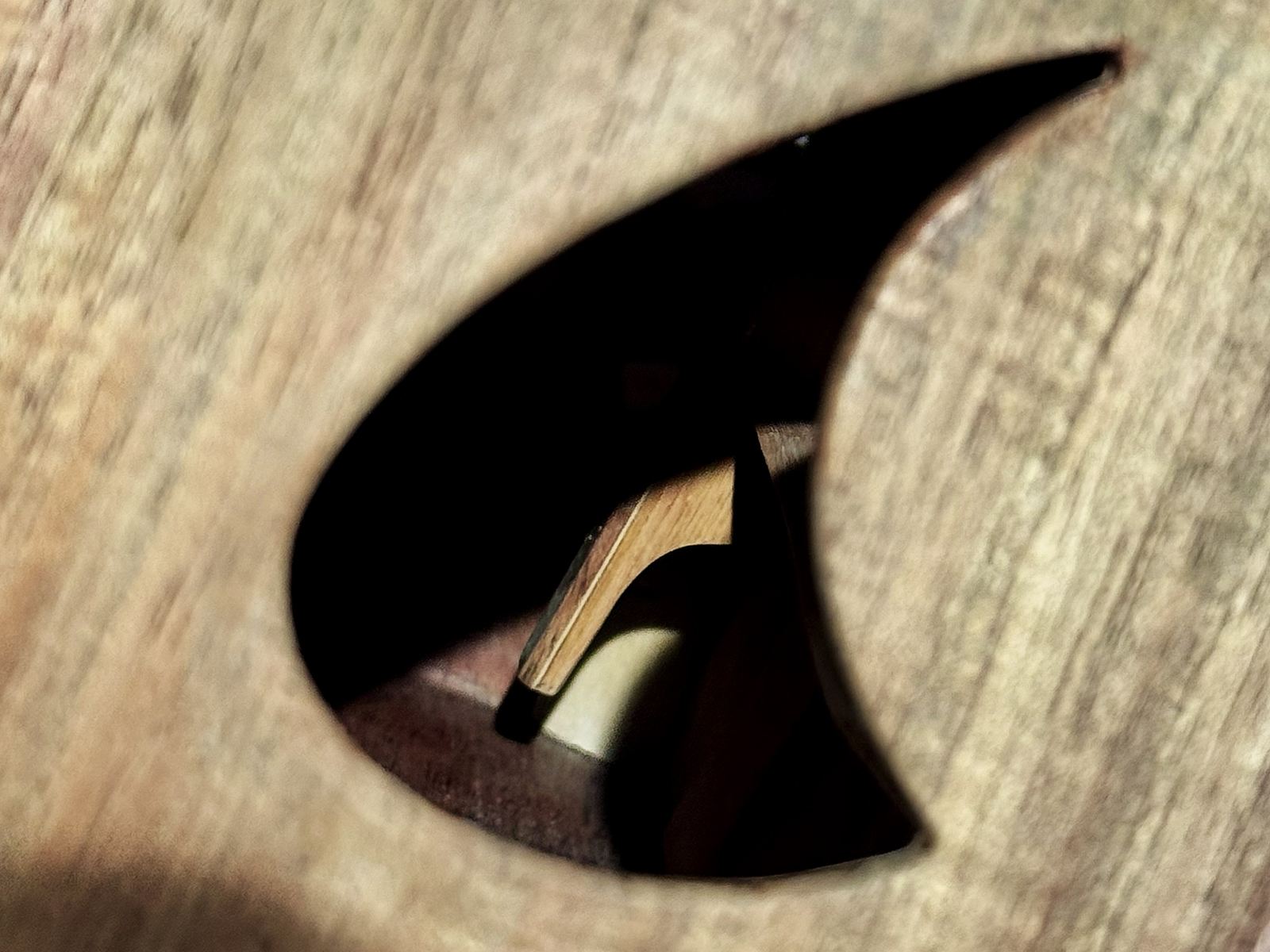
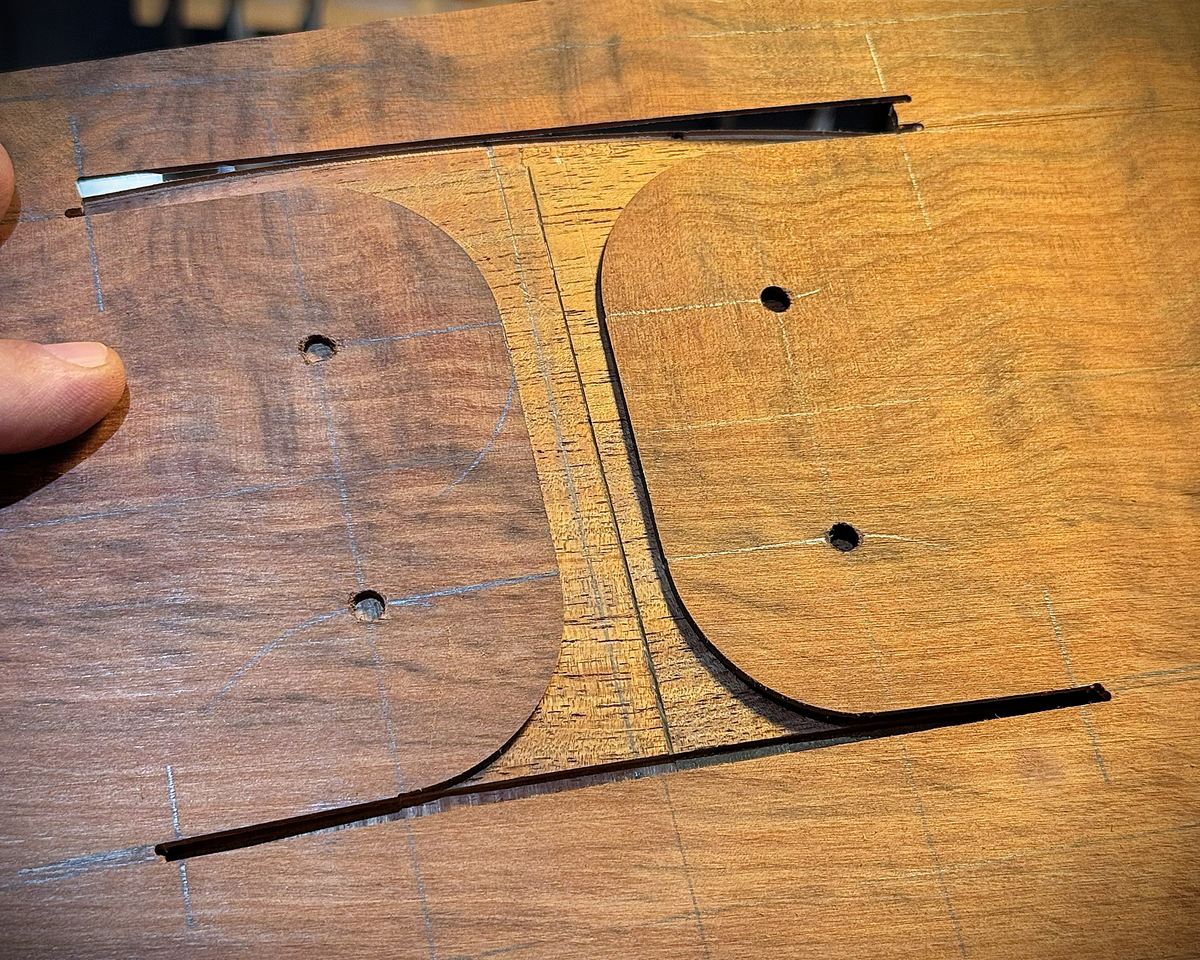
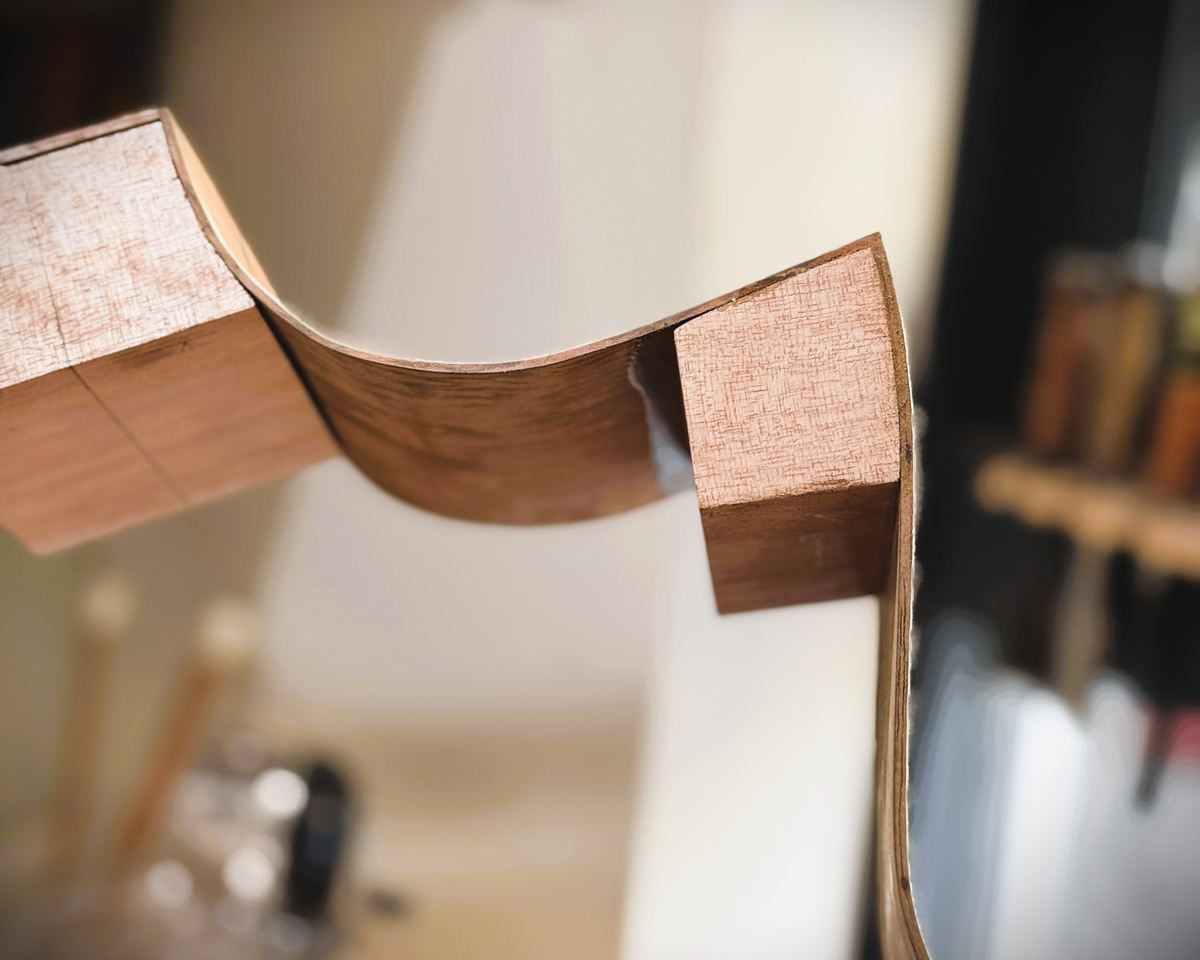
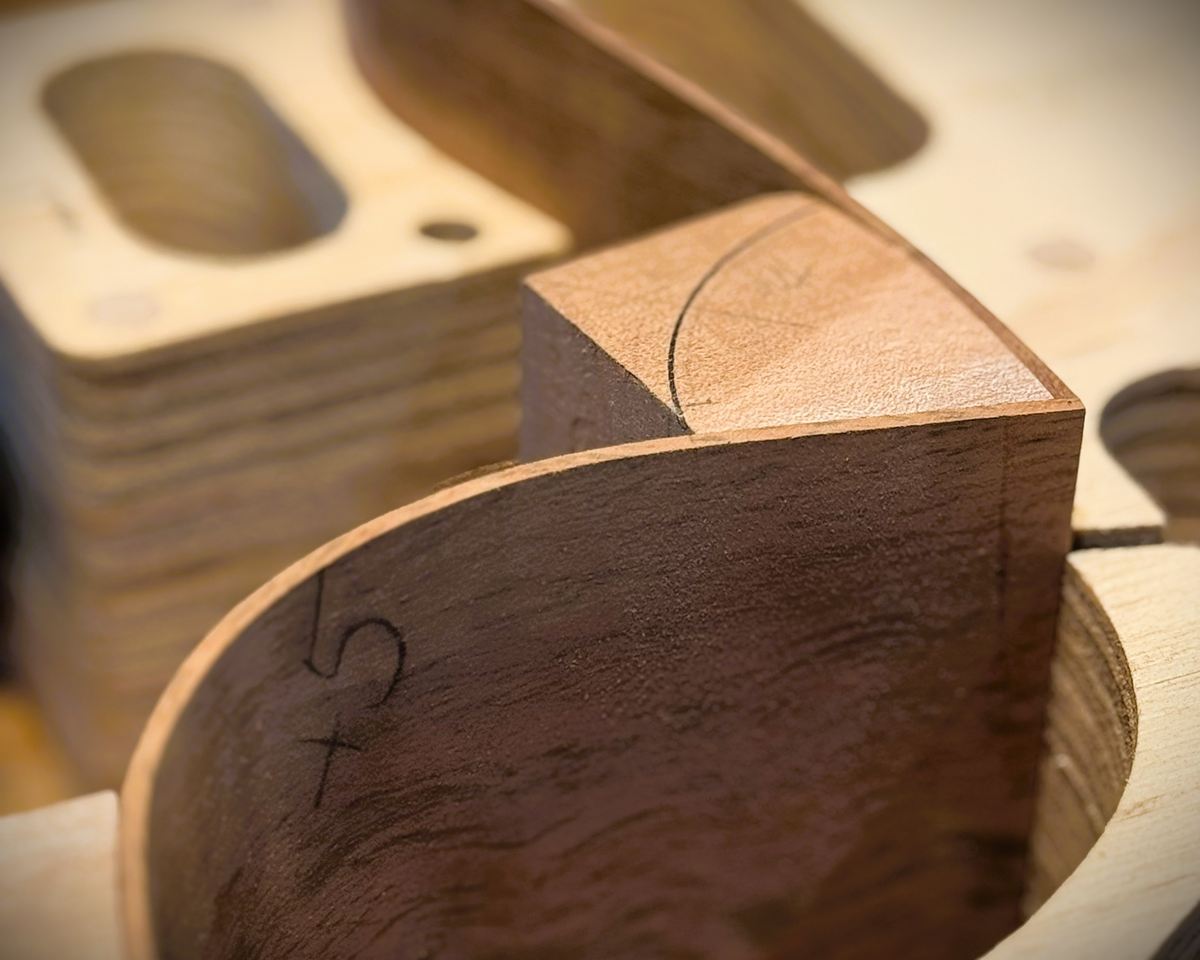
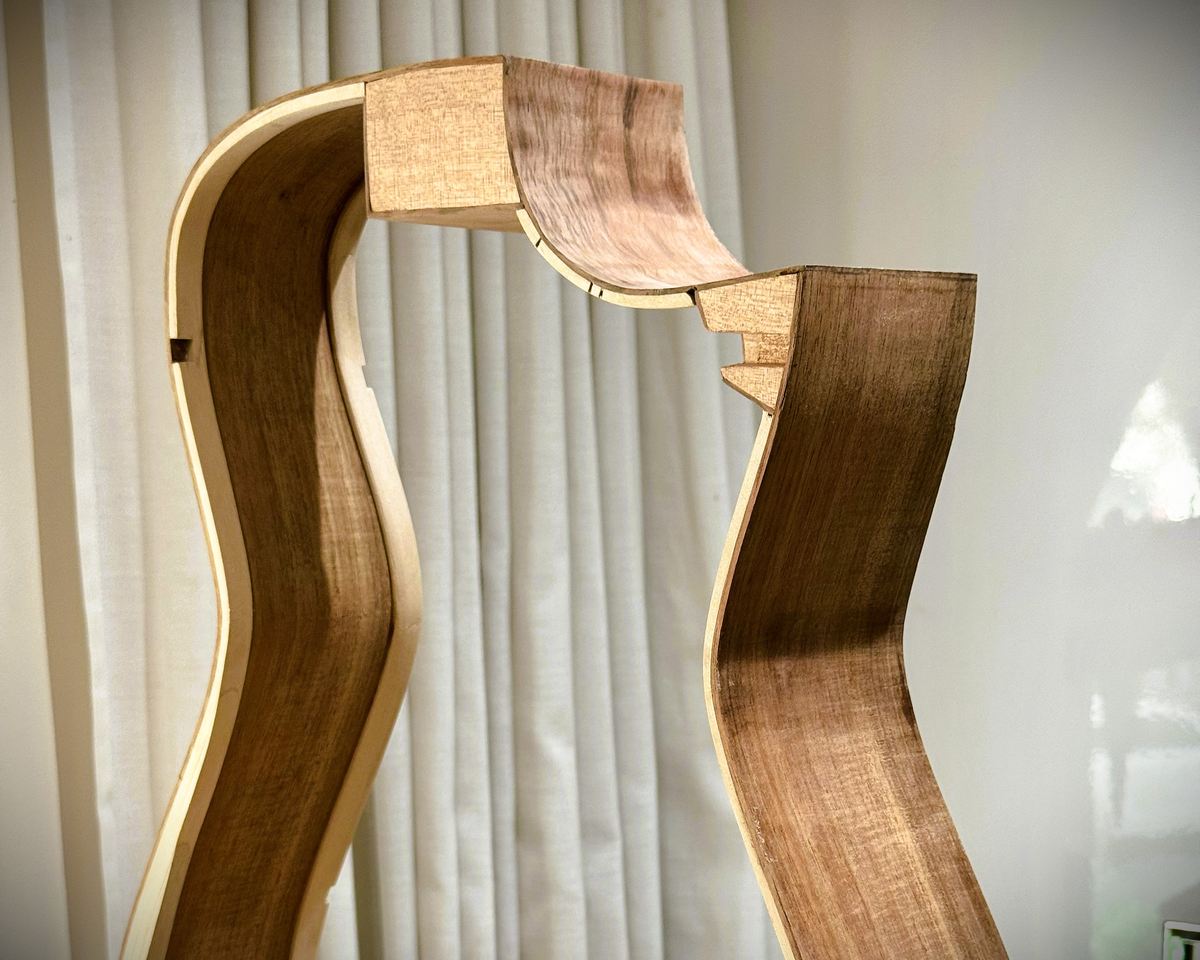
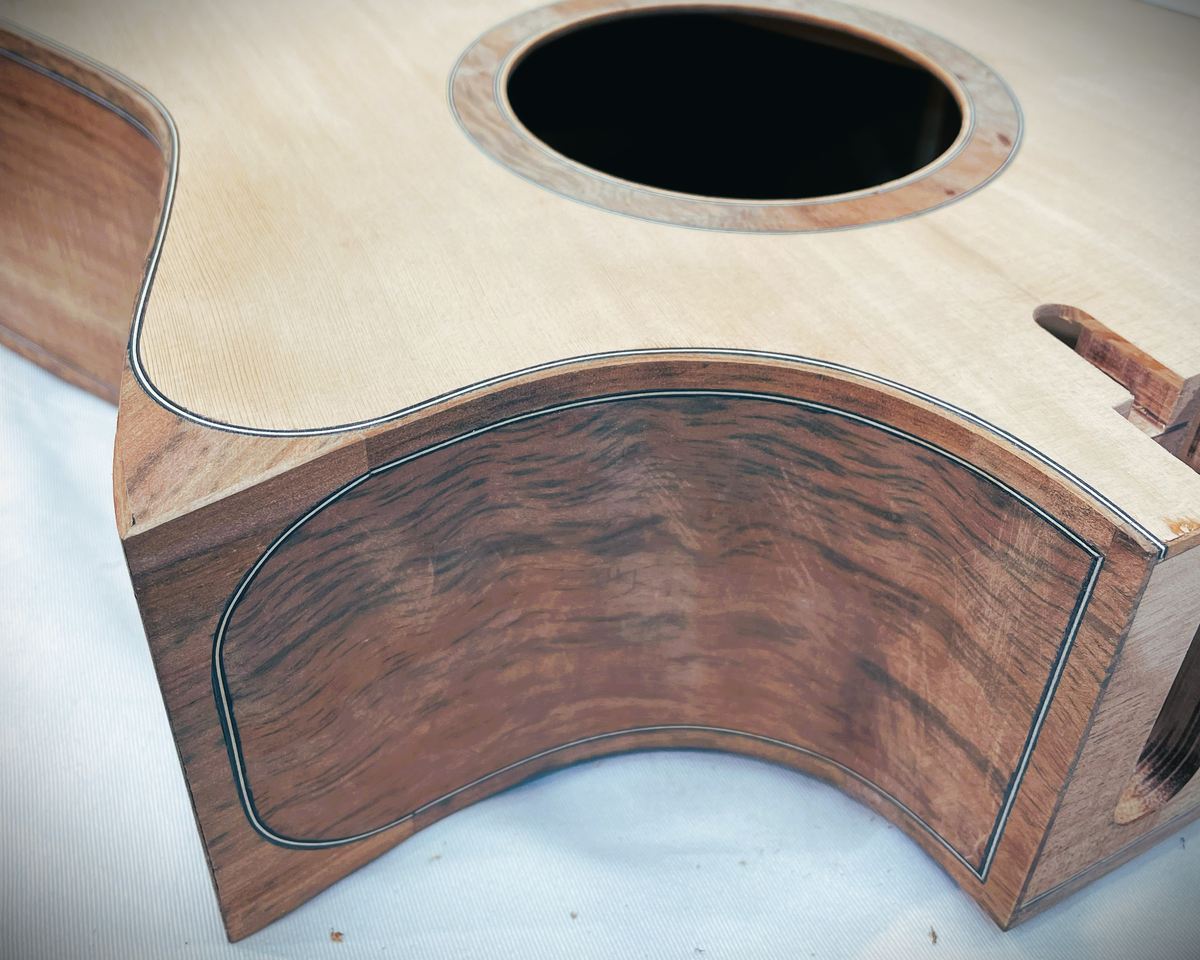
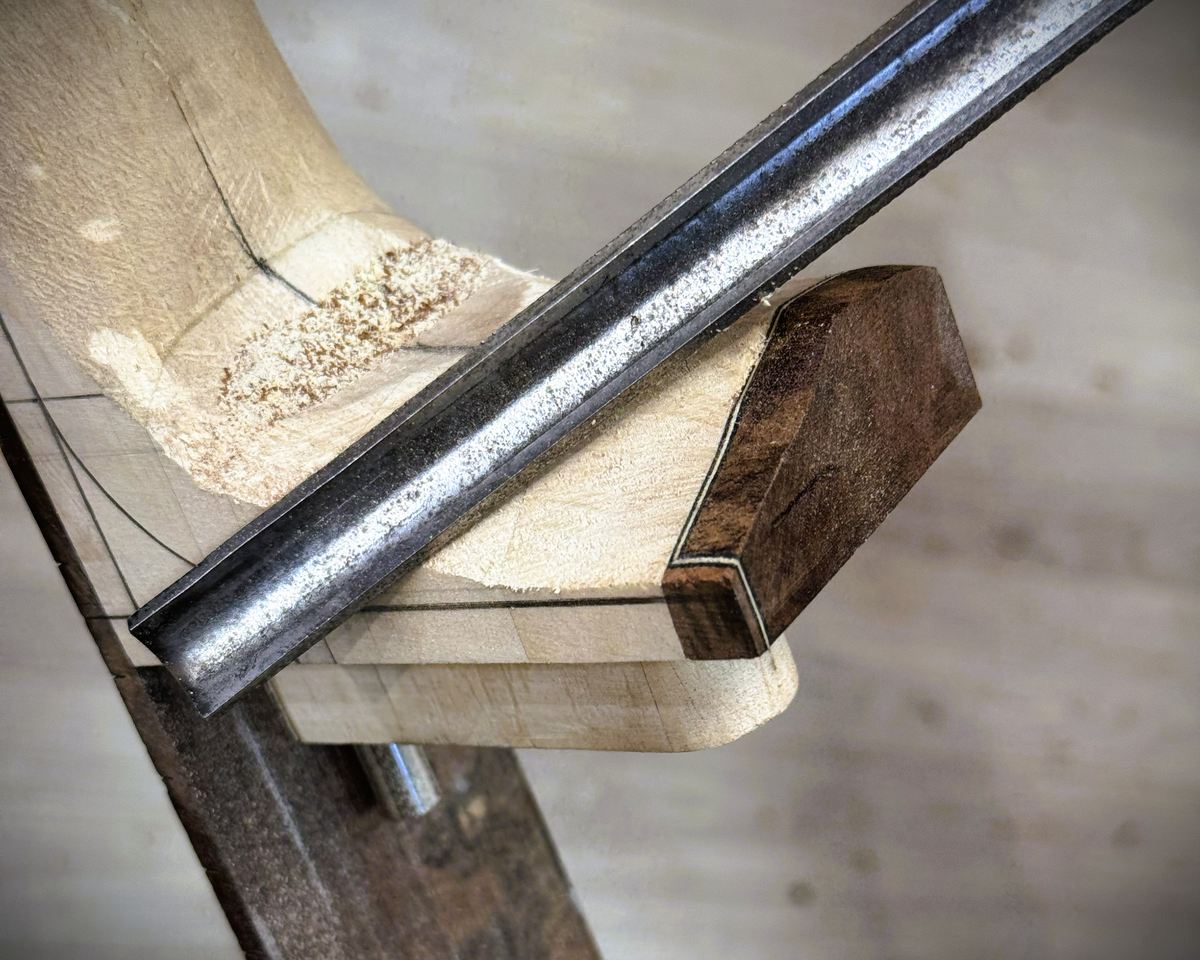
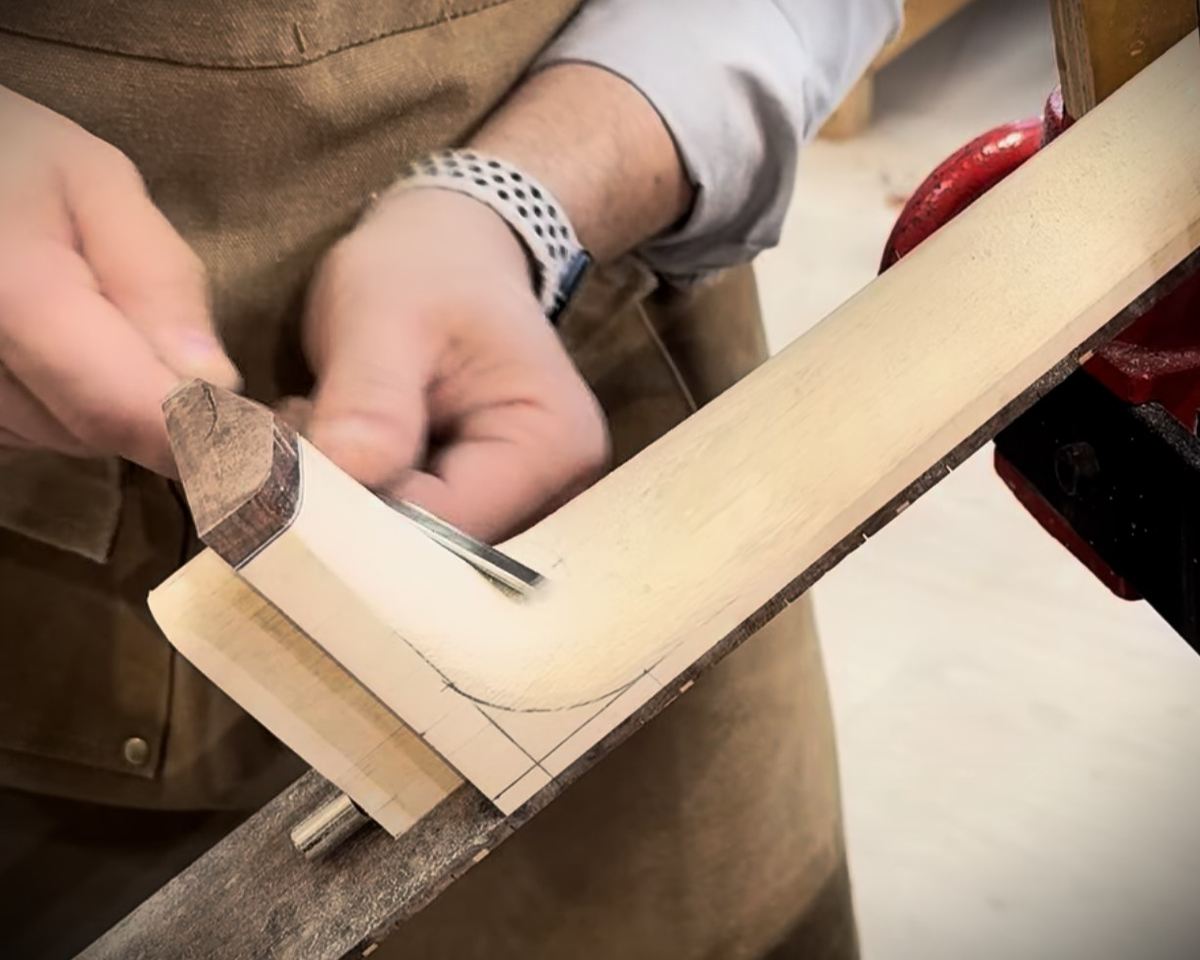
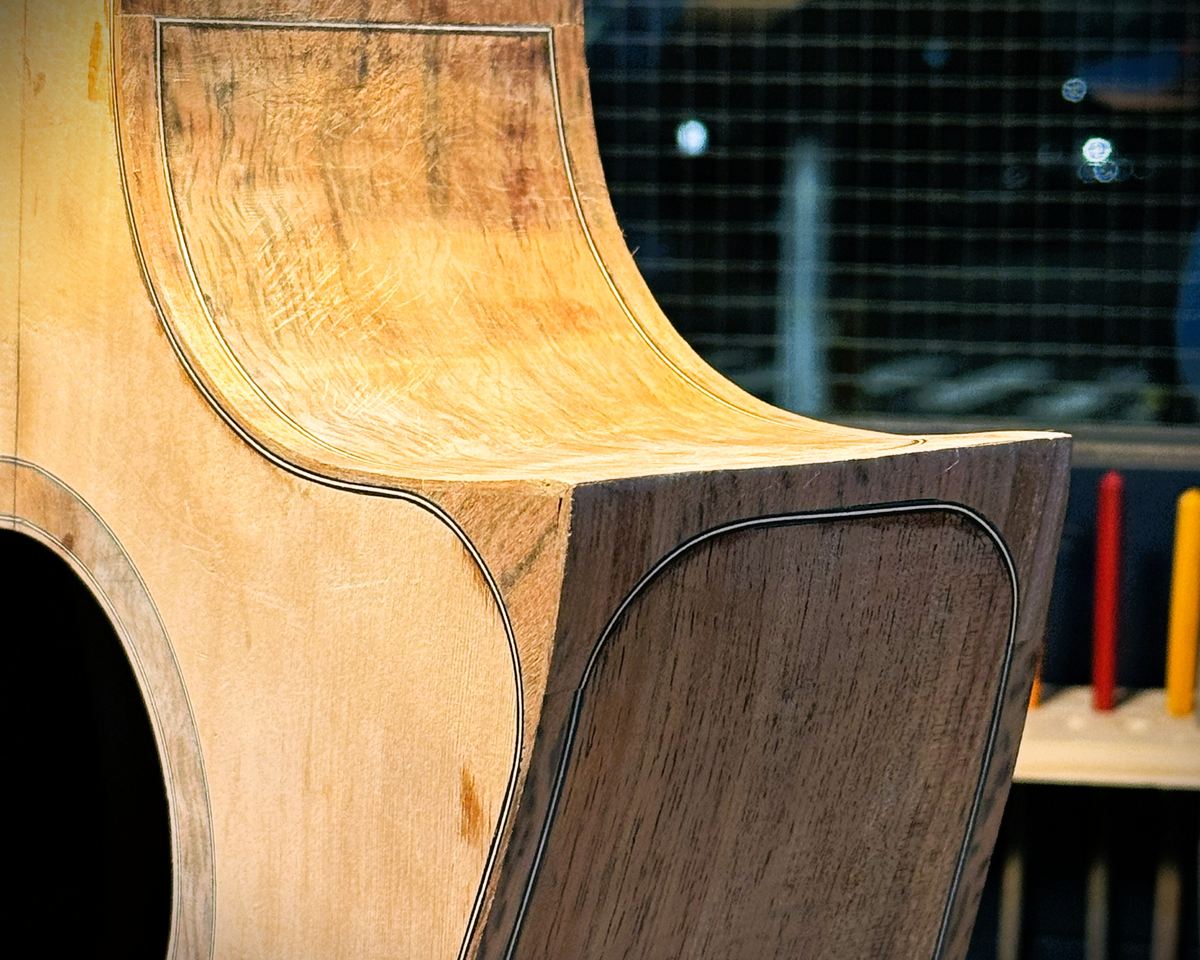
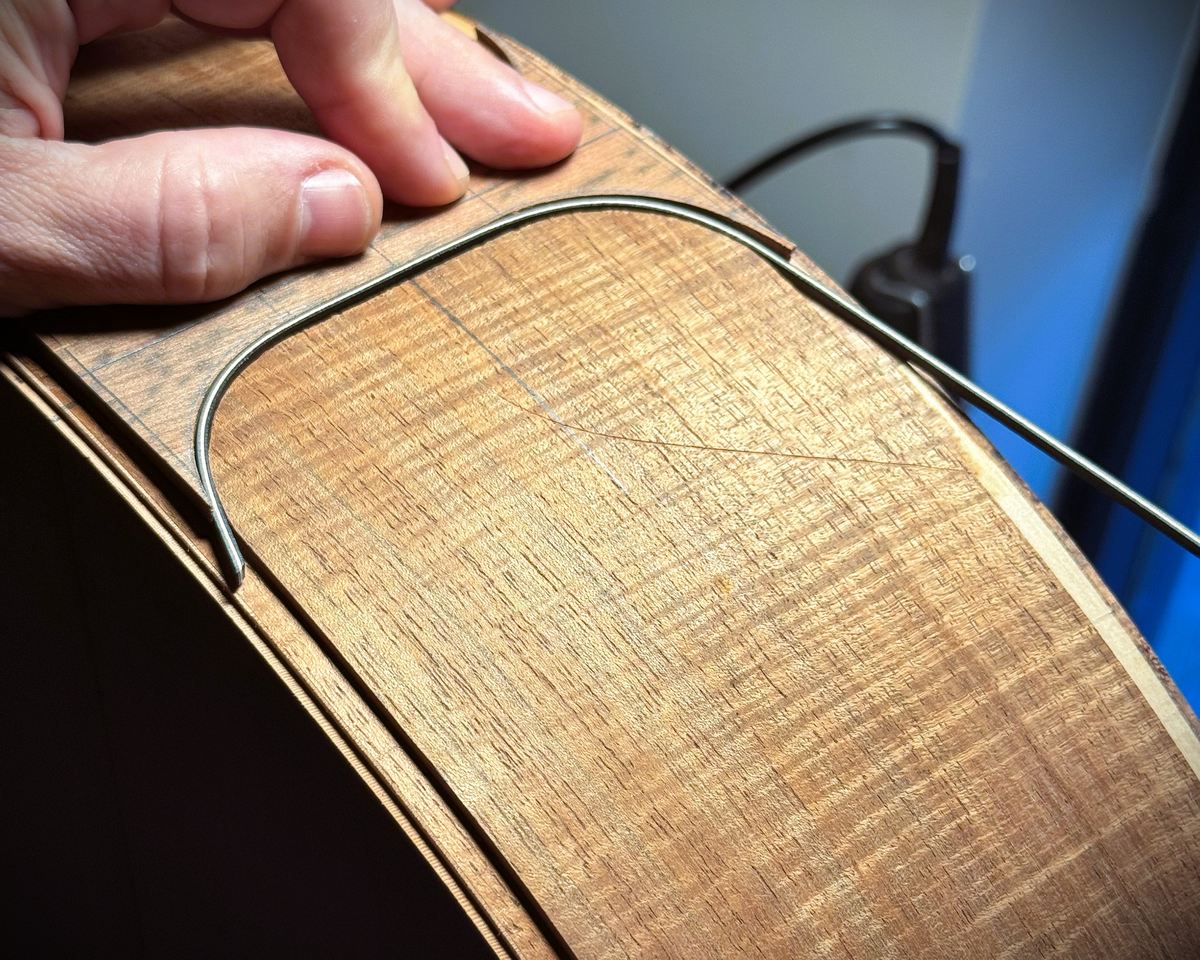
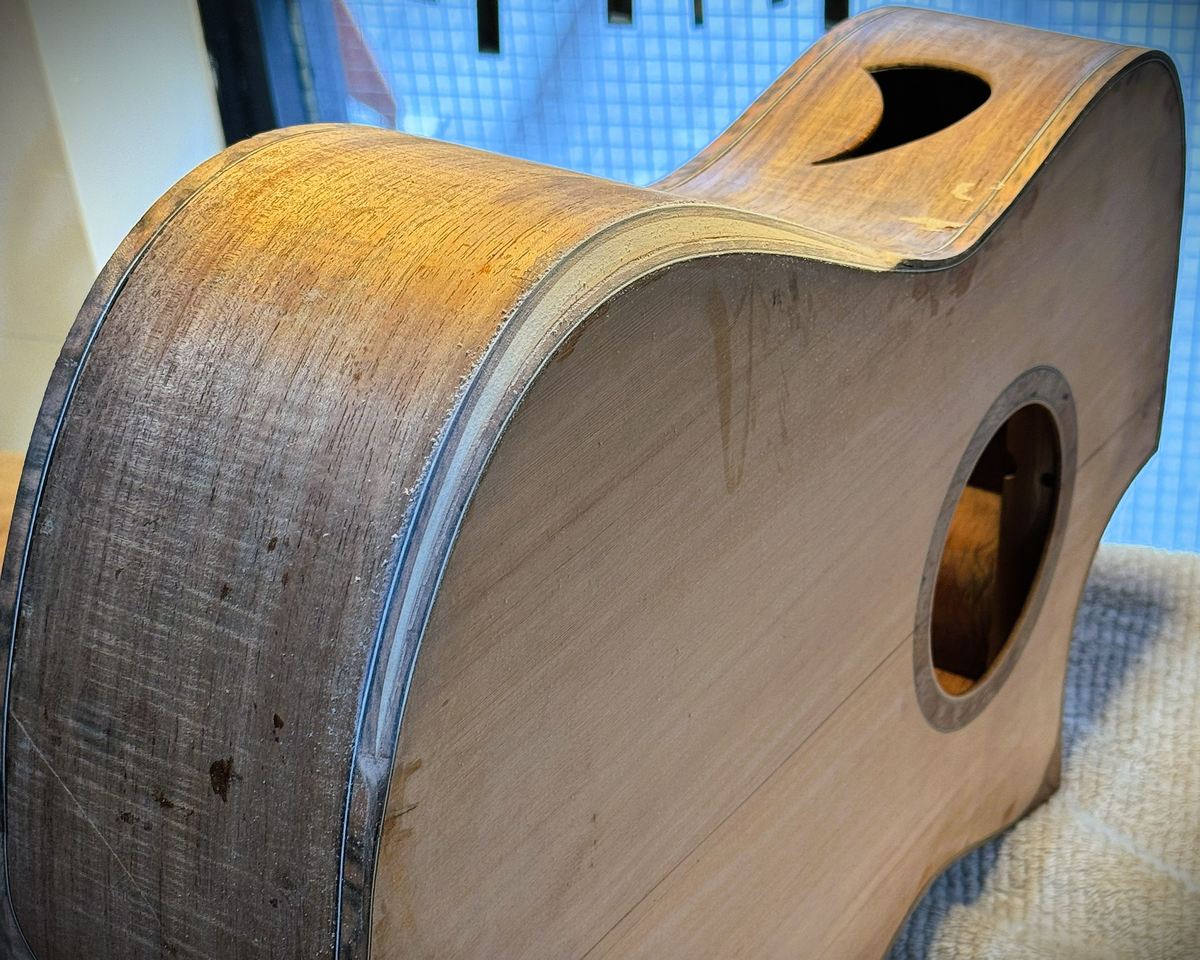
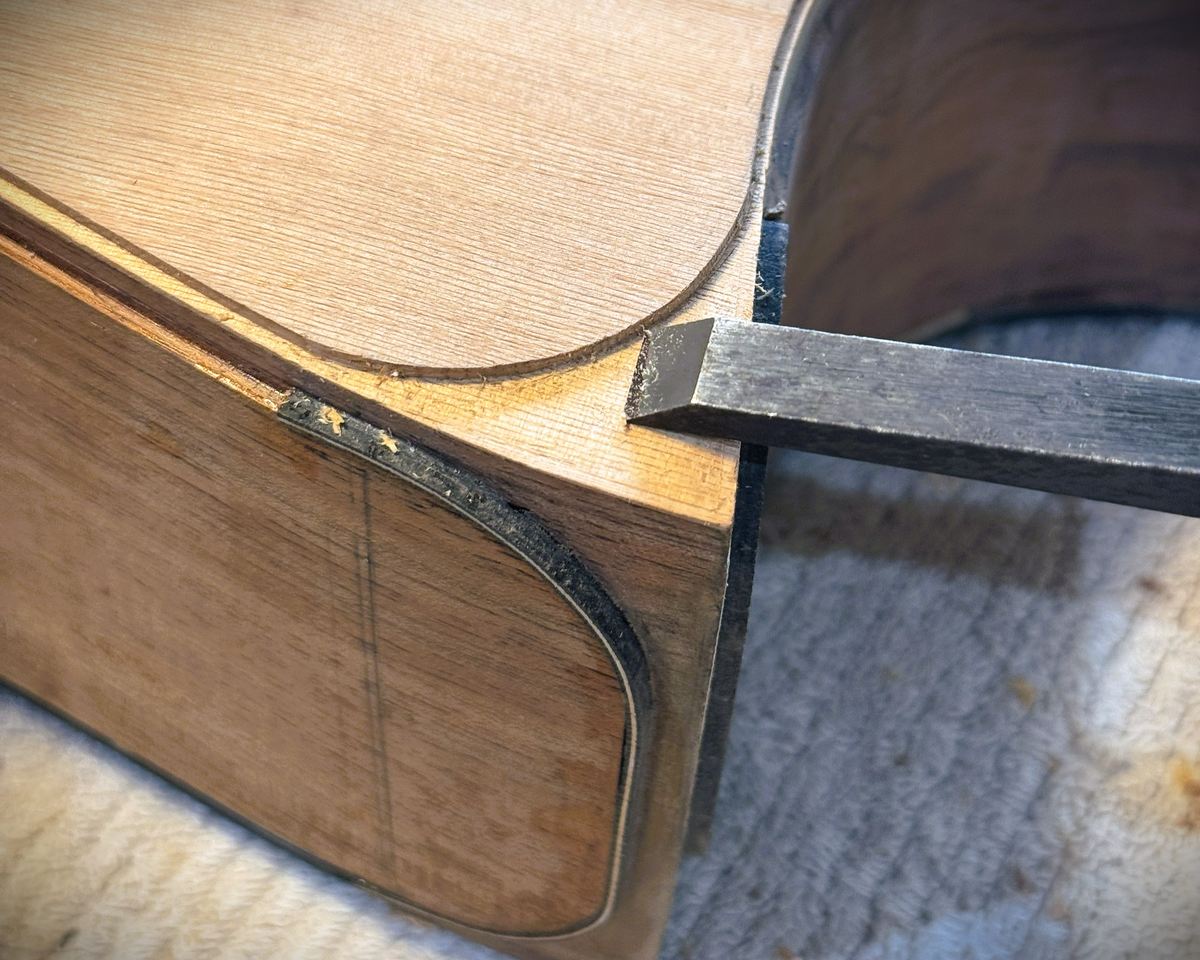
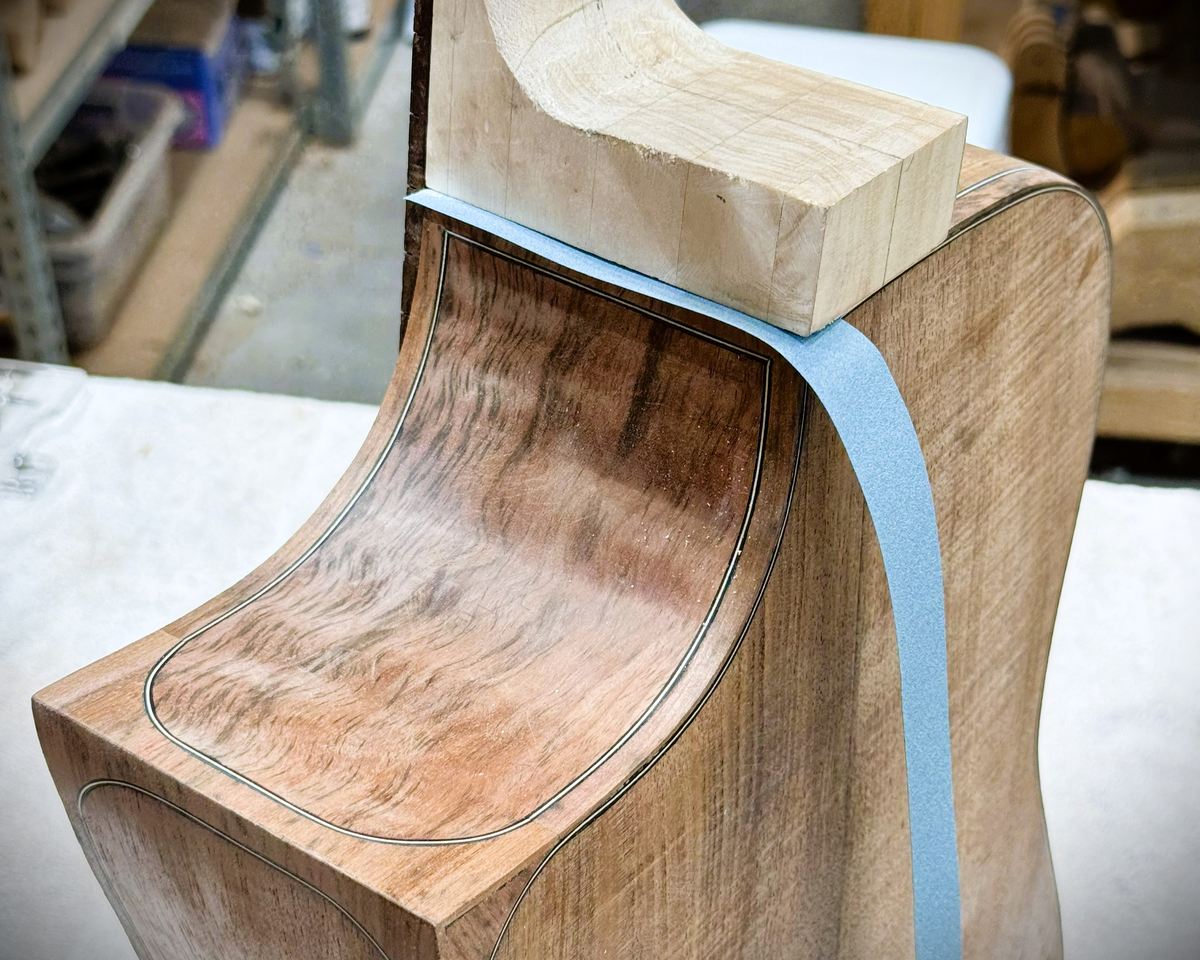
A Florentine cutaway is the sharp-cornered kind, and it is normally cut from the same timber as the sides so that it disappears into them. This one does the opposite.
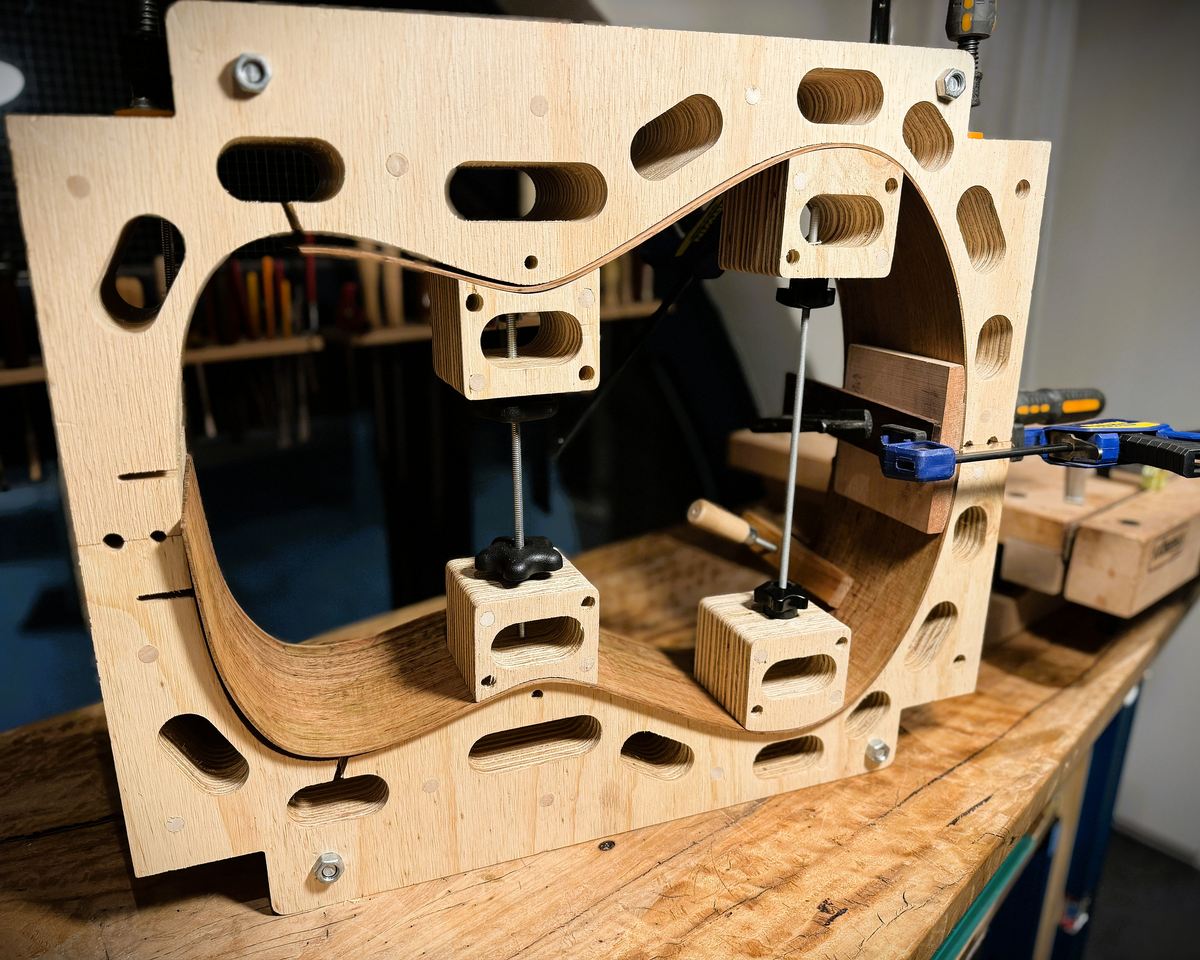
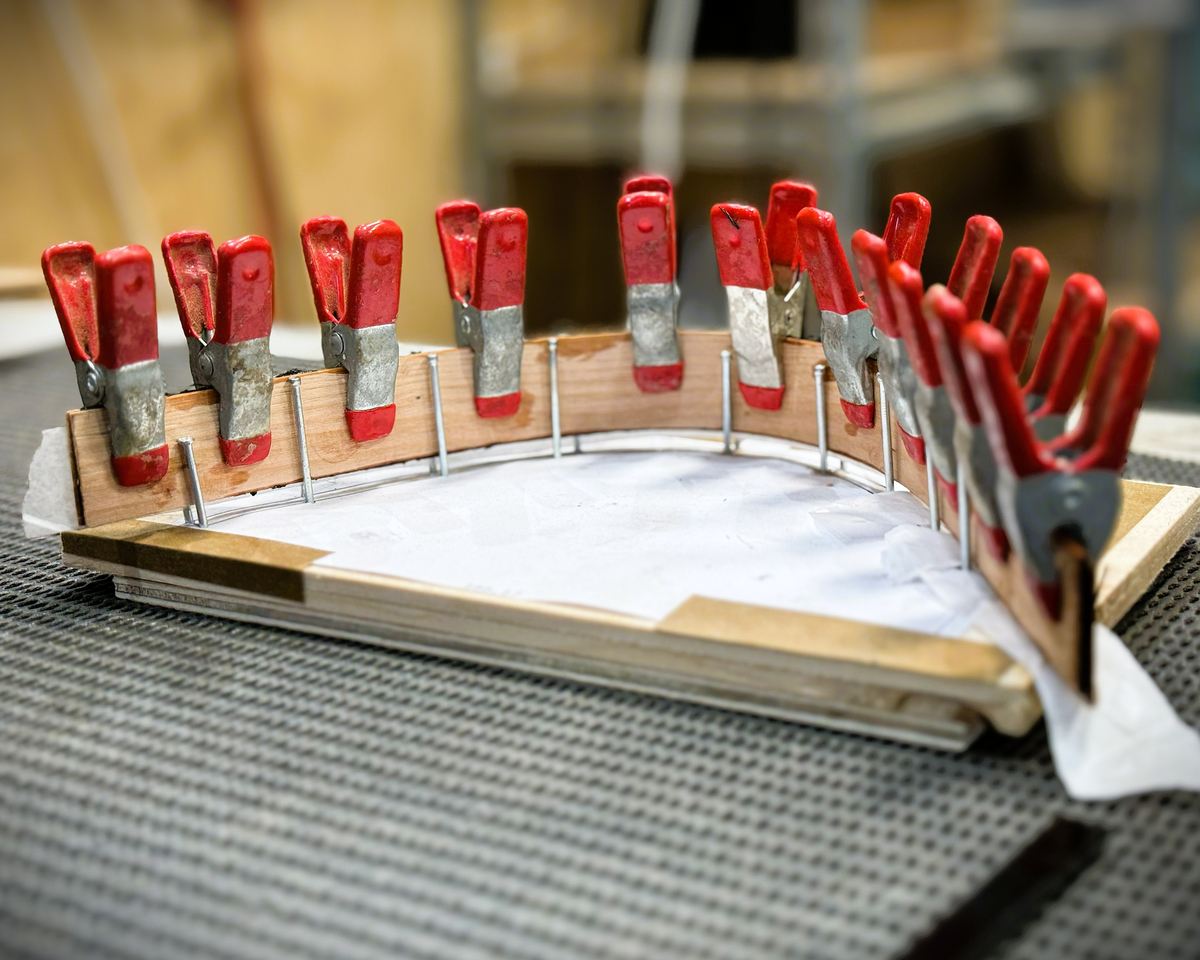
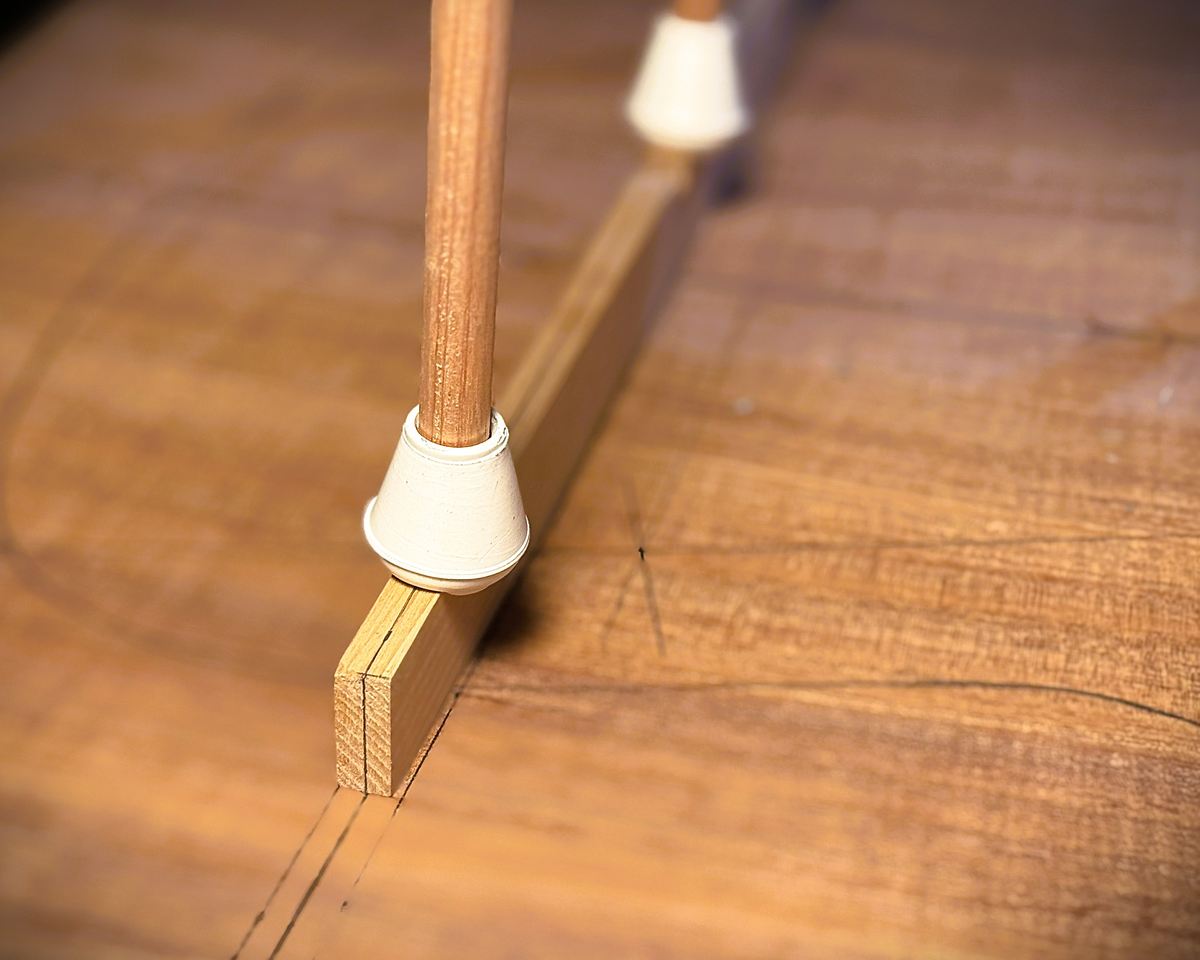
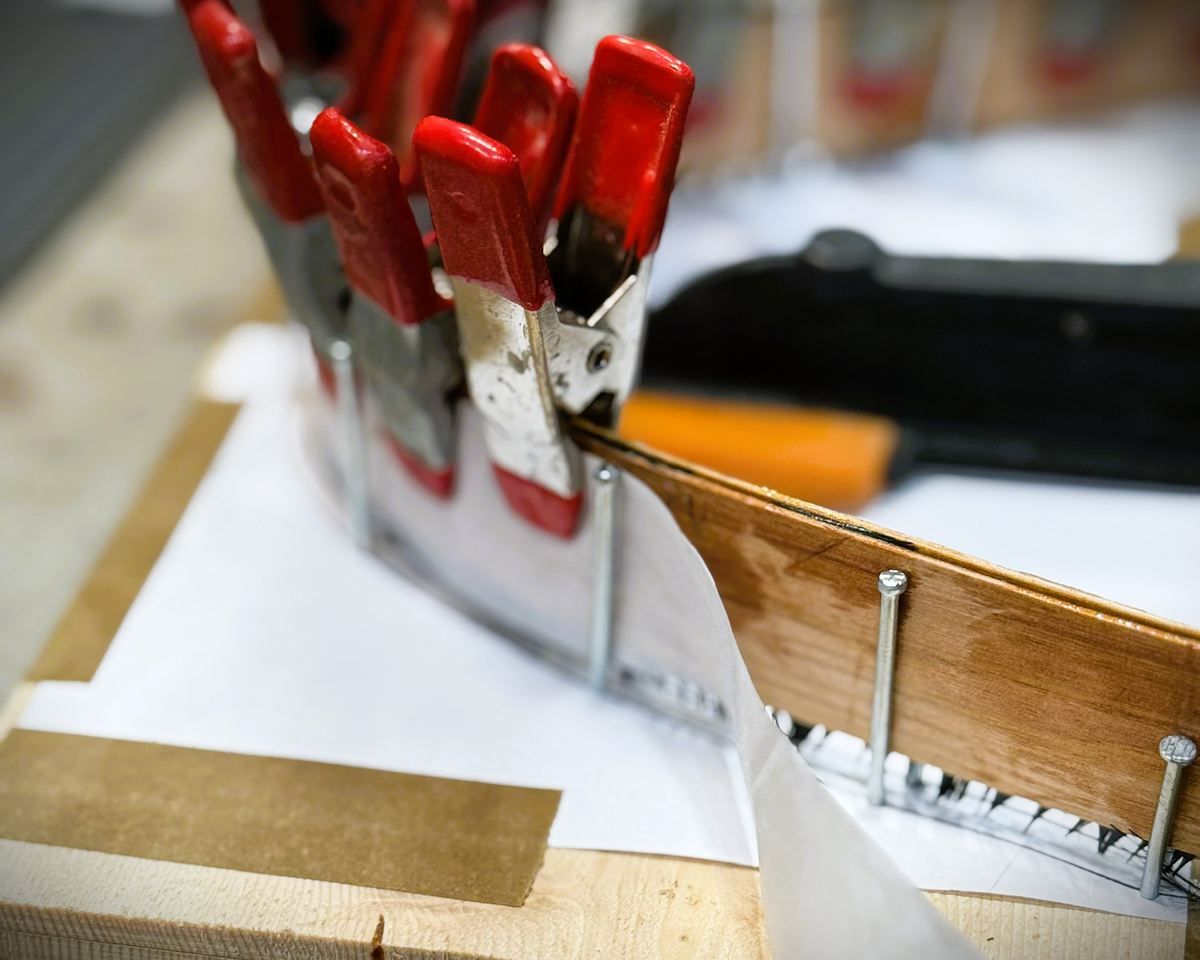
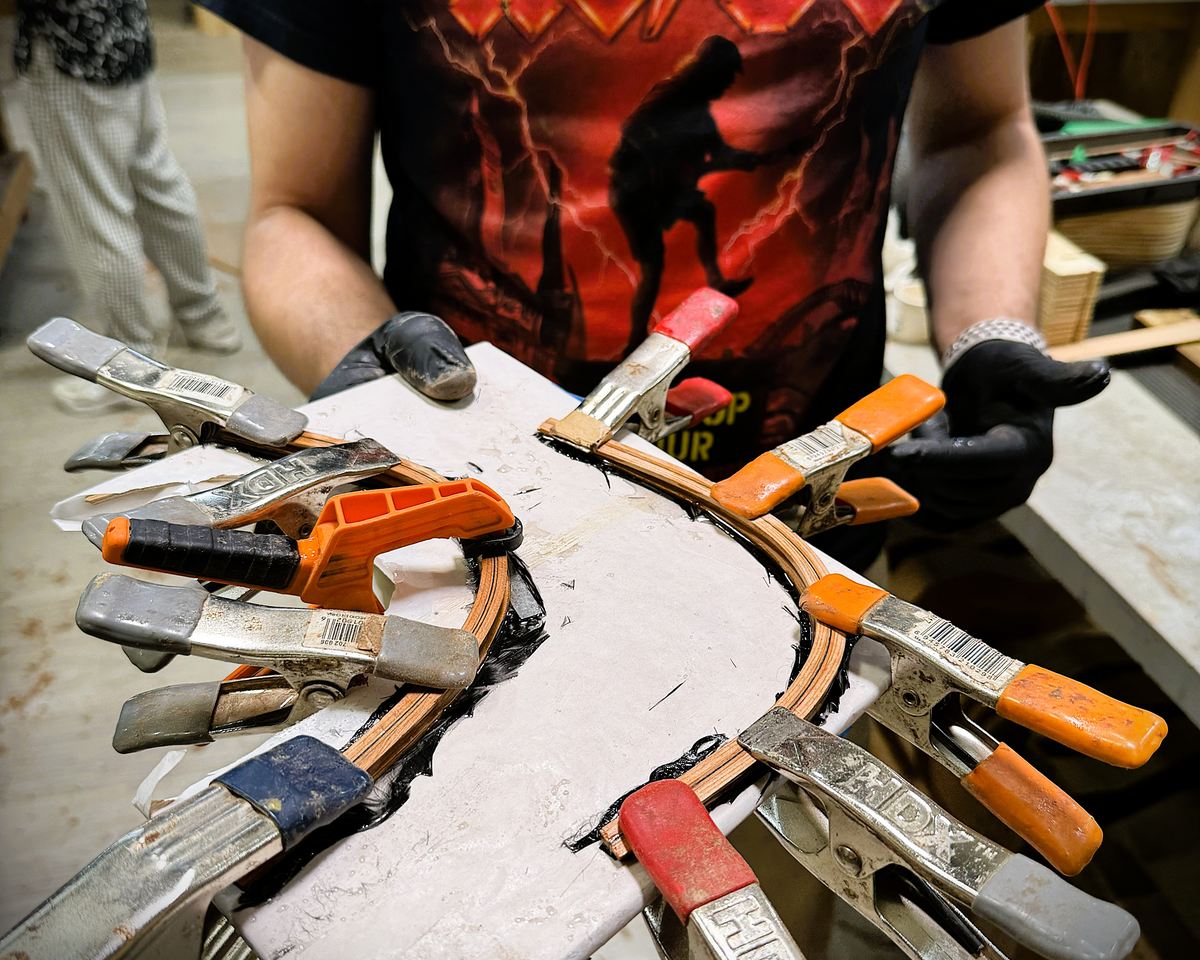
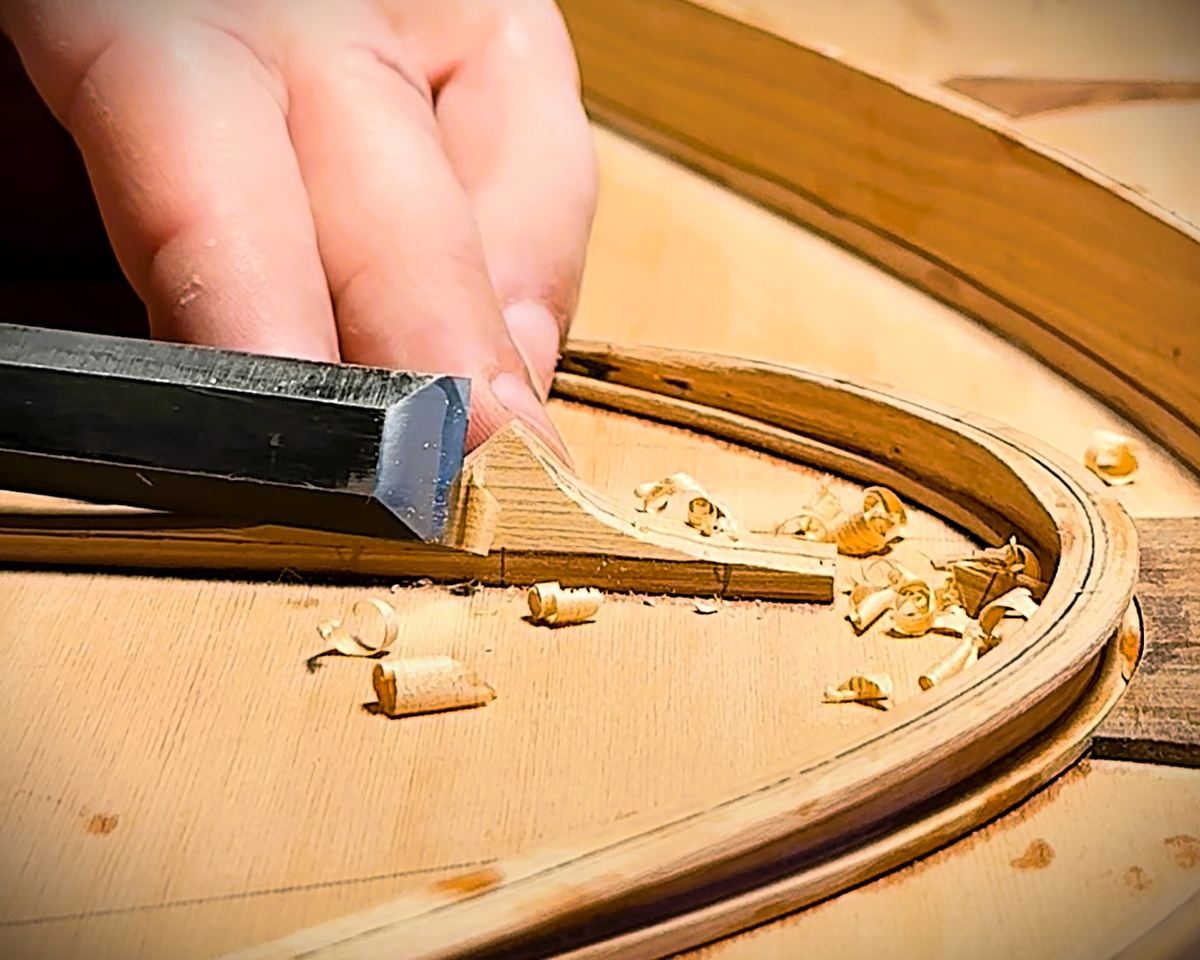
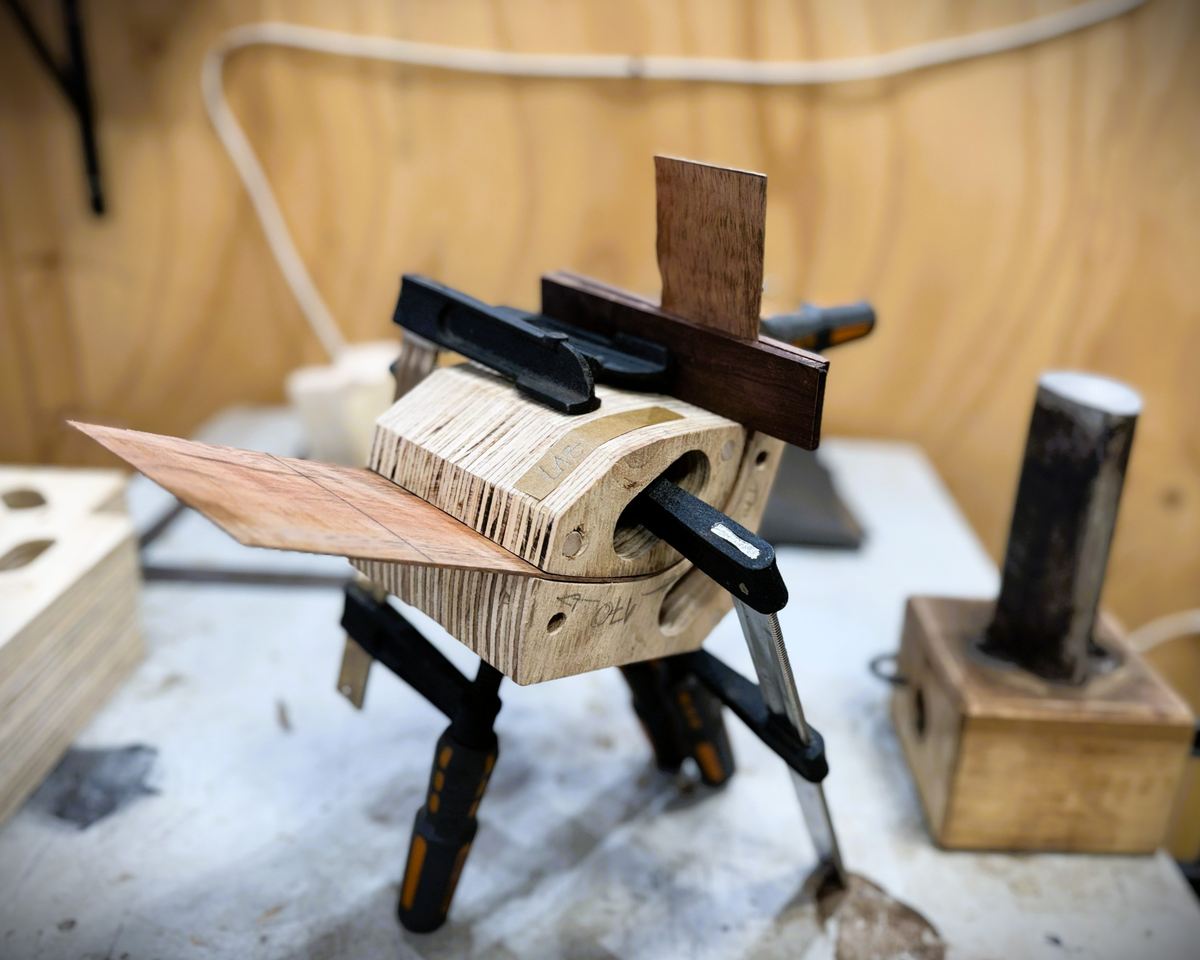
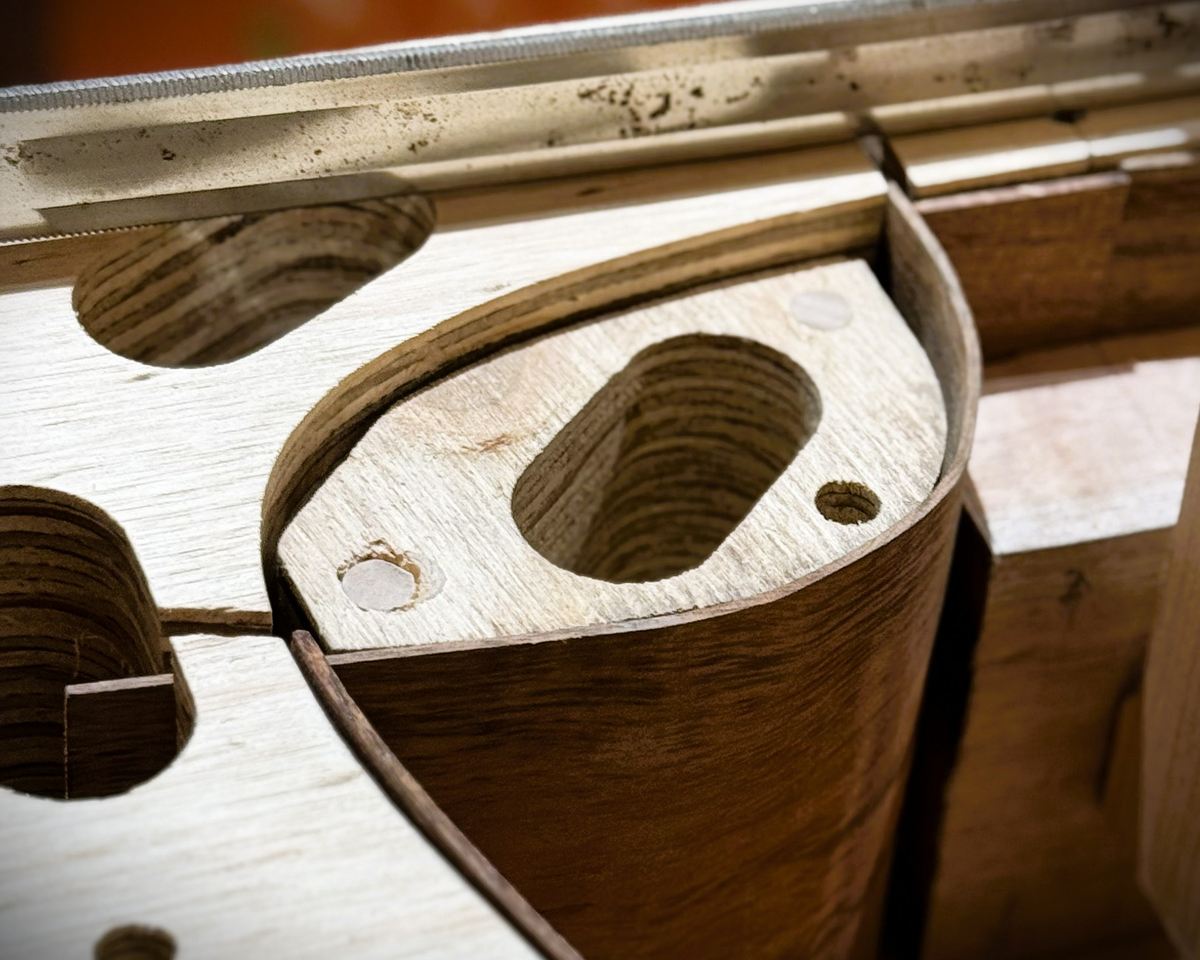
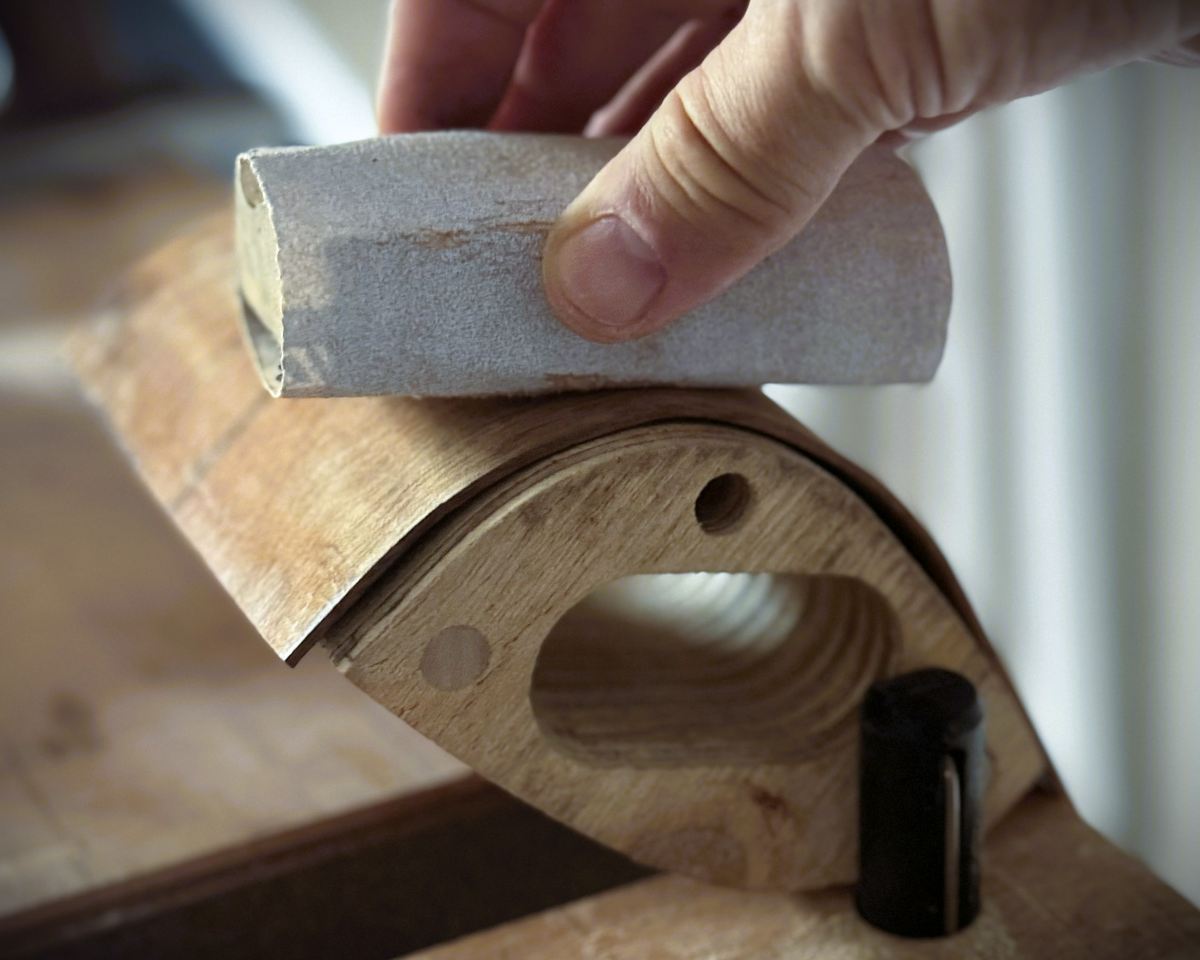
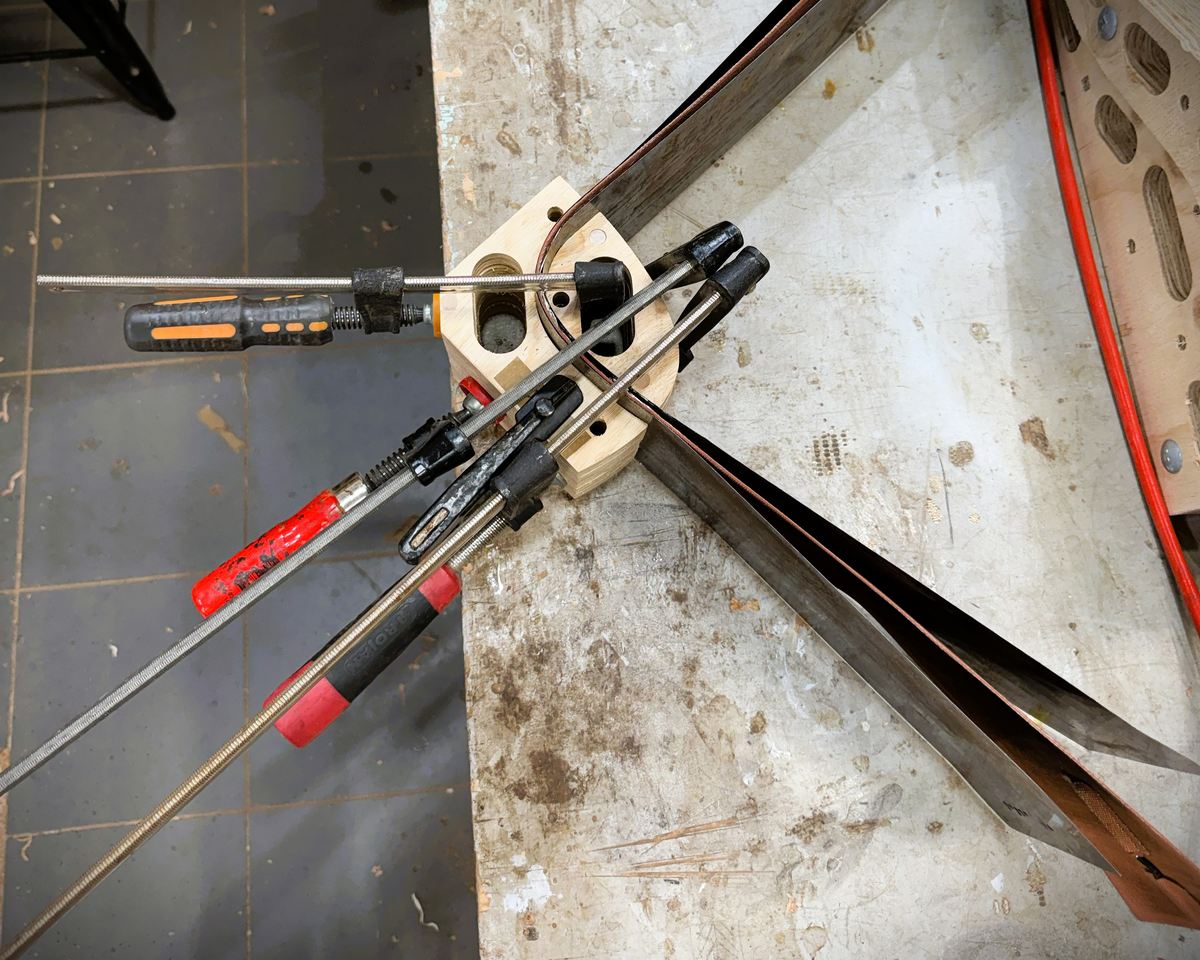
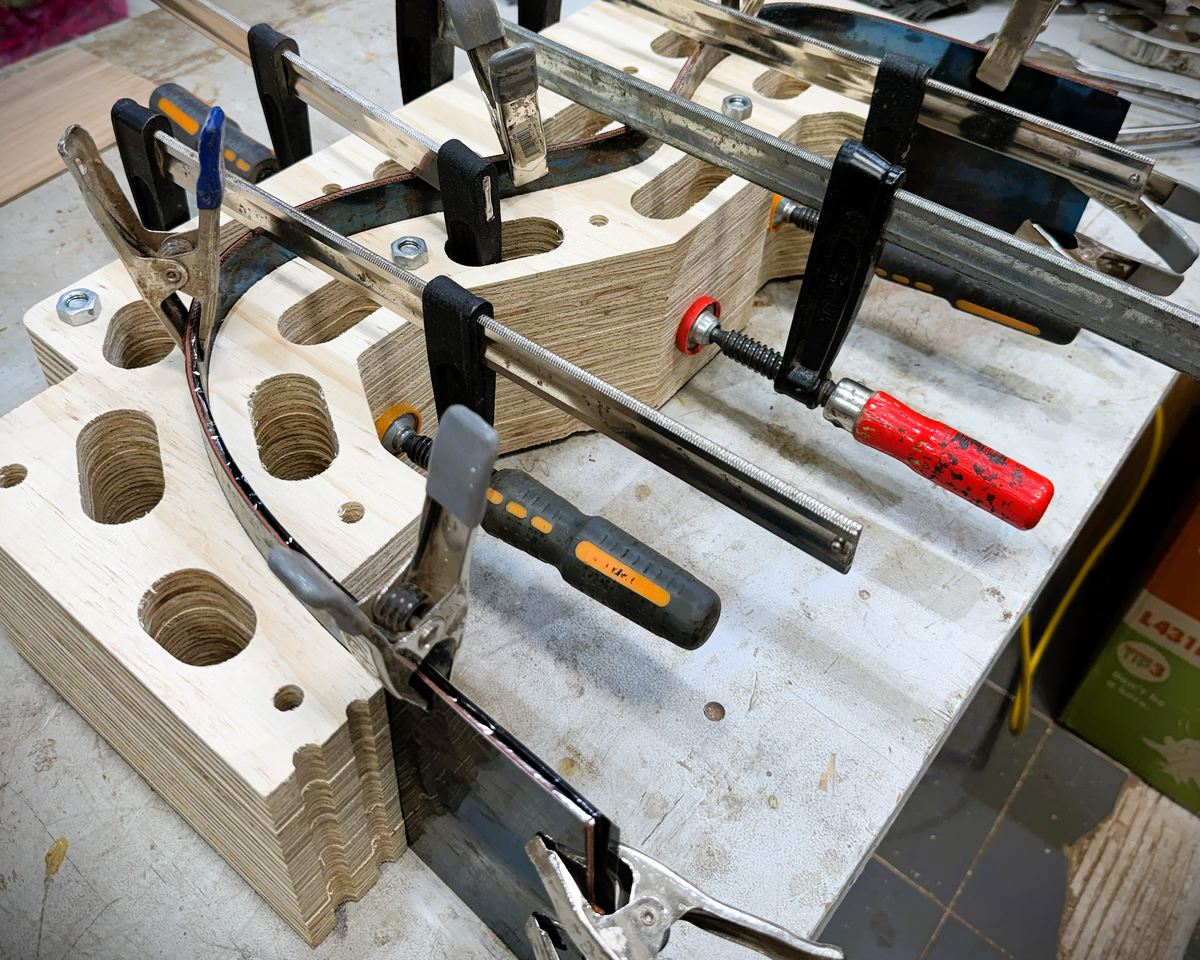
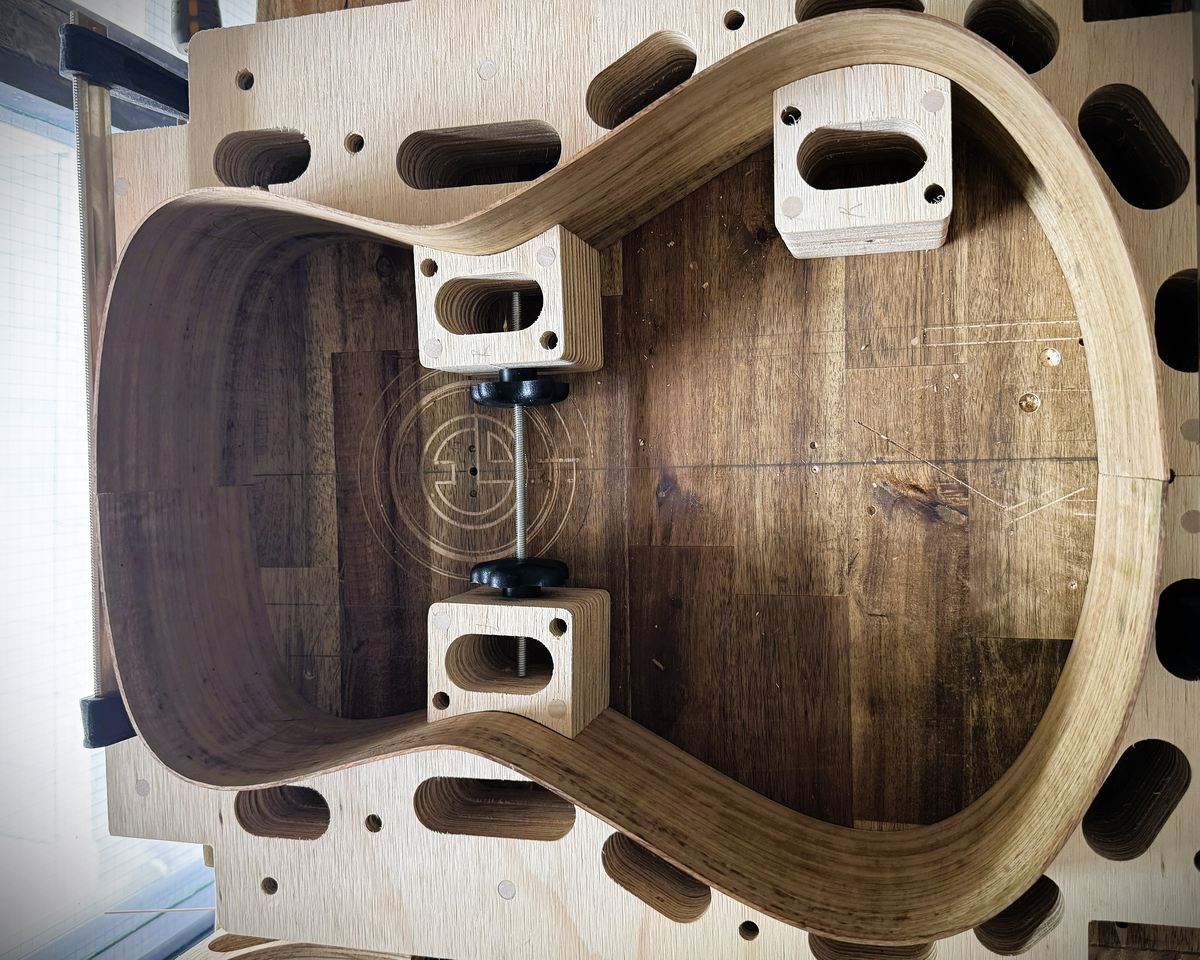
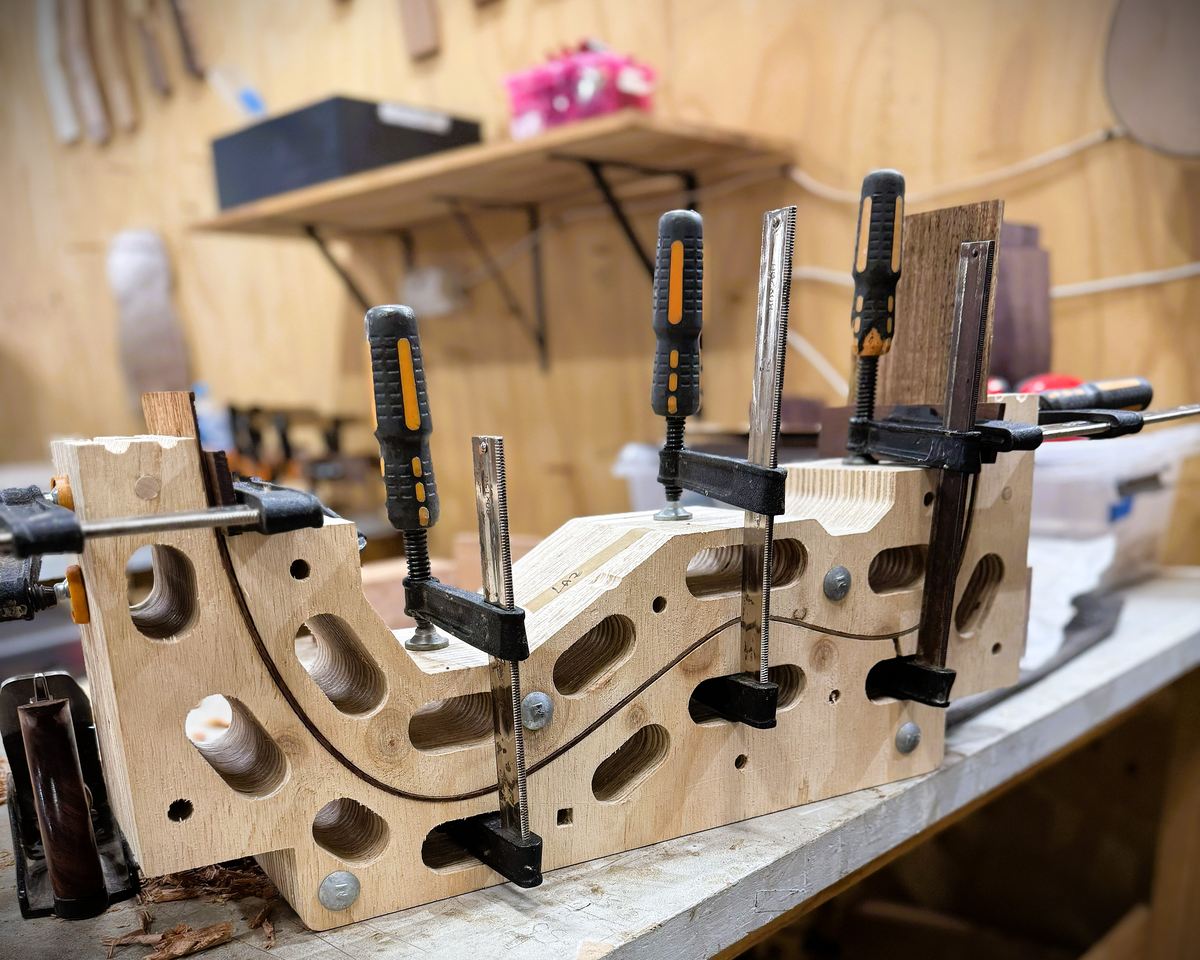
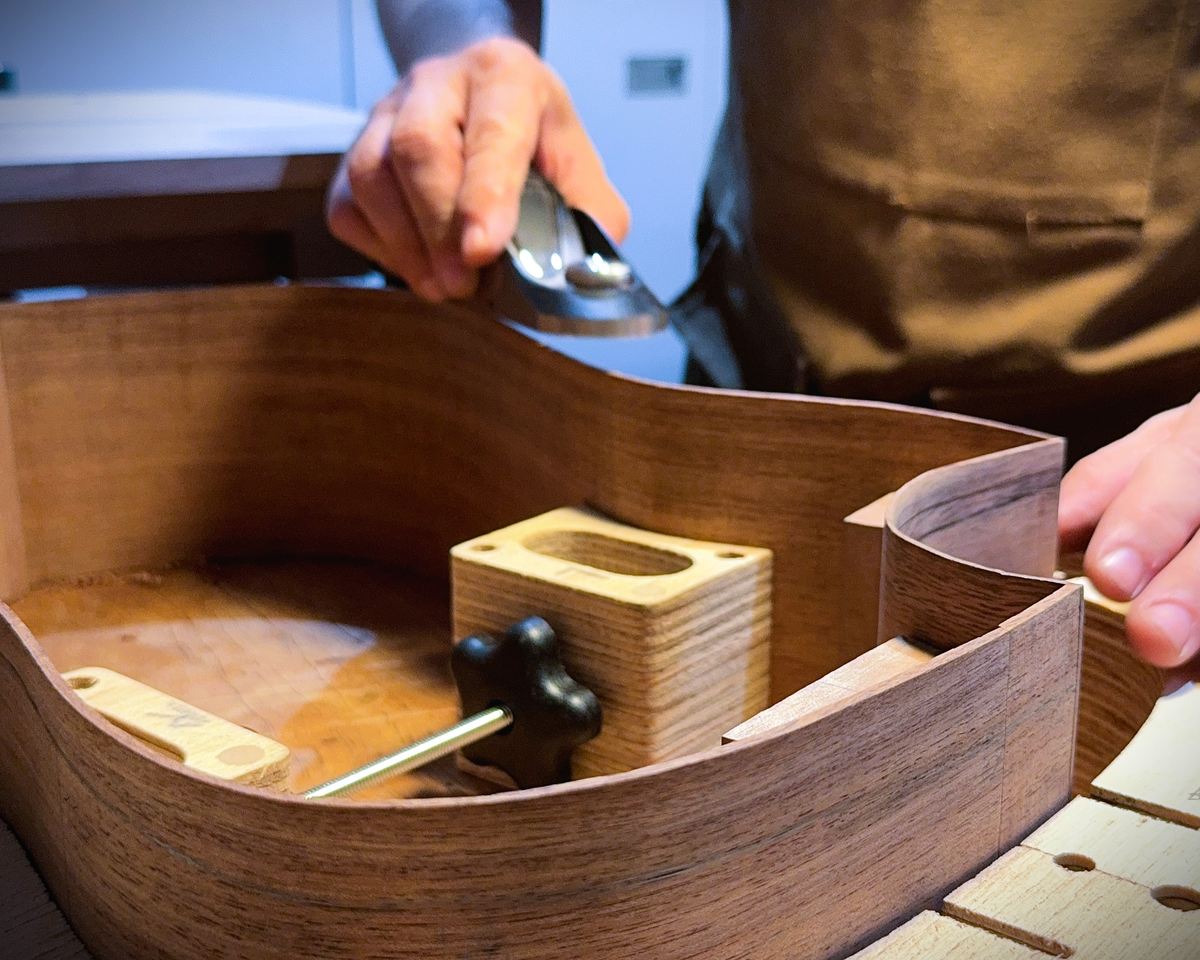
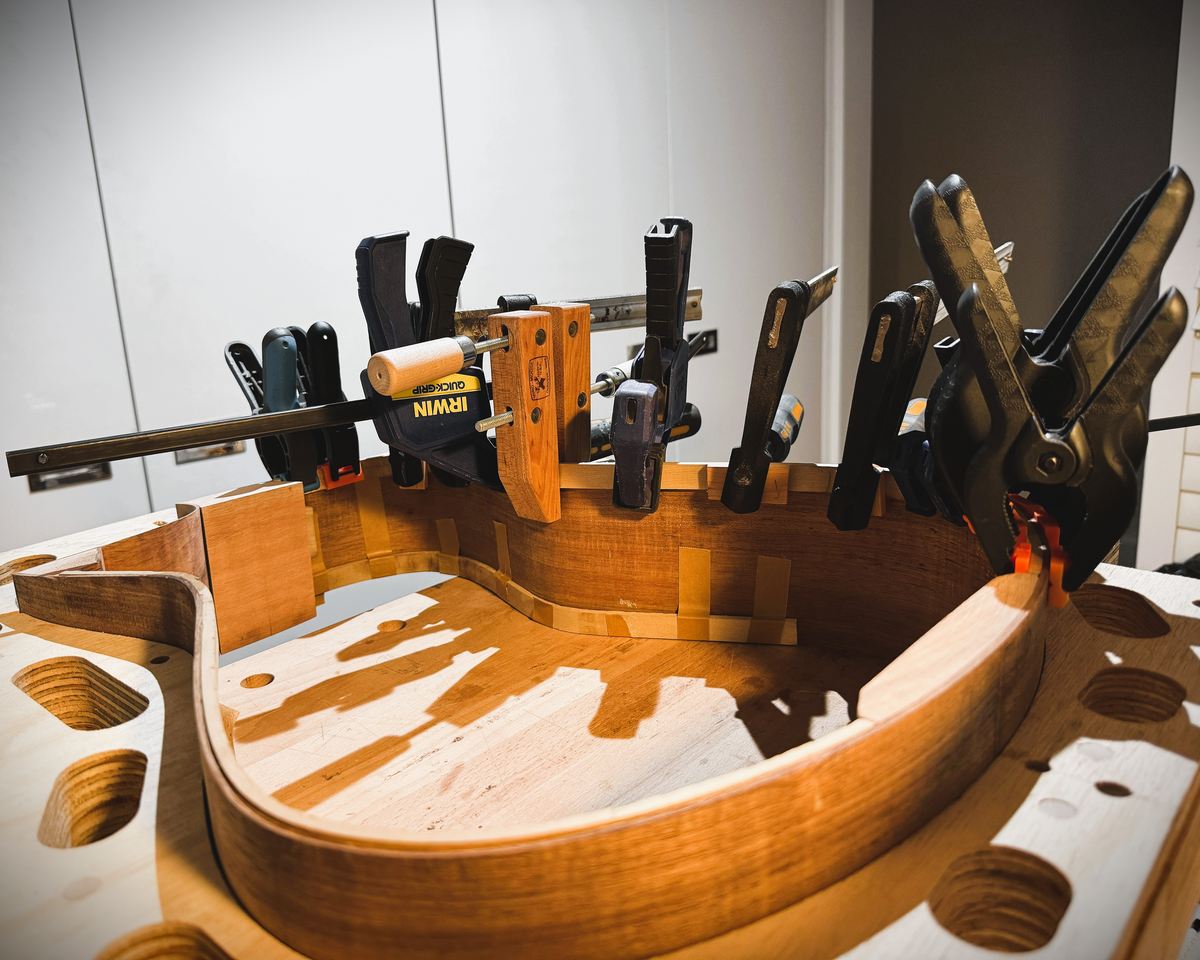
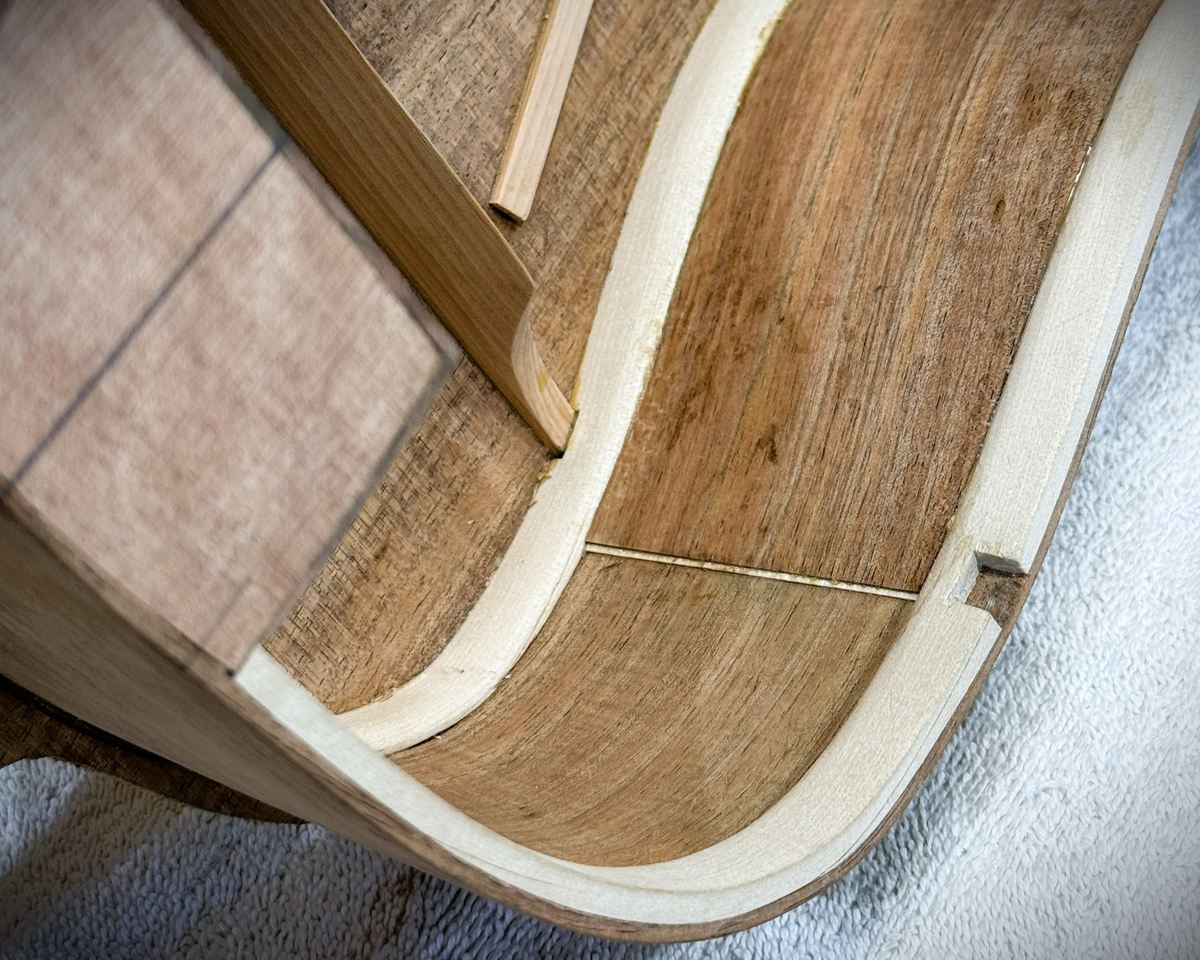
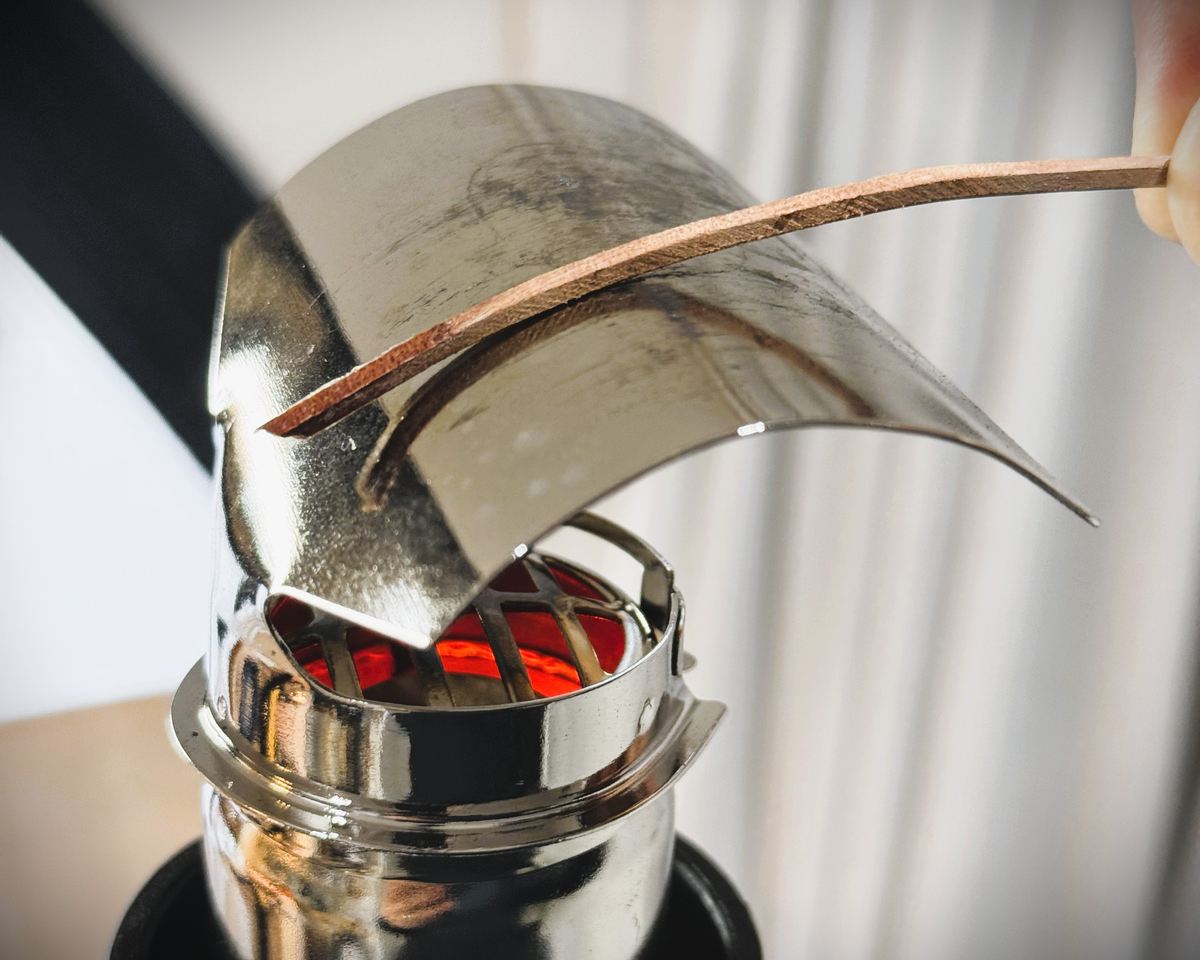
The Blackwood sides are bent over a hot iron and clamped to a mould. Blackheart Sassafras lining is bent to match and then glued to the length of both edges, giving the rim its stiffness and the plates a proper gluing surface.
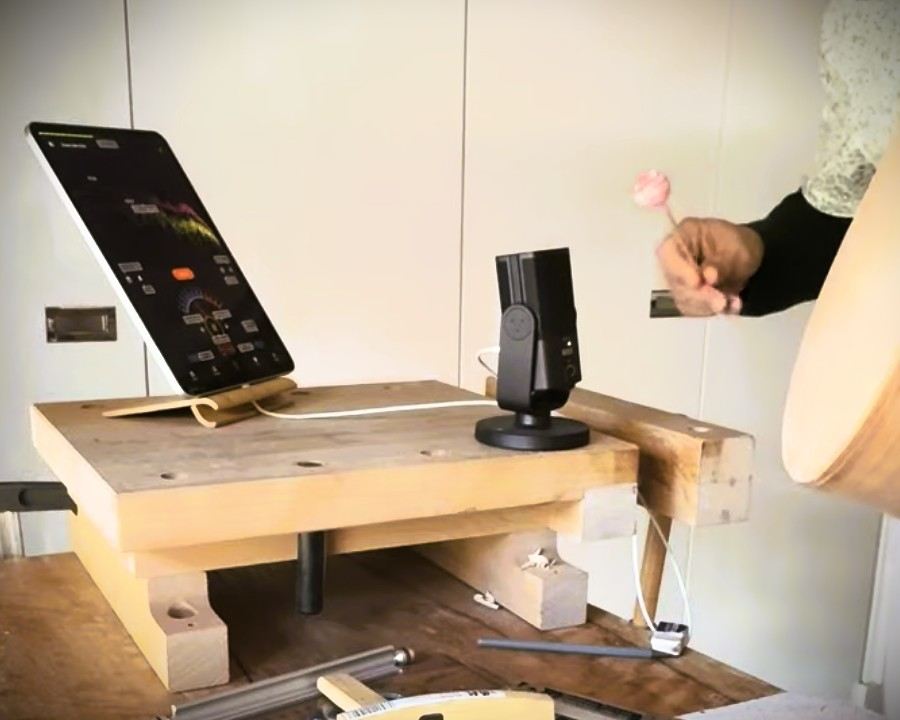
The plate is tapped at a node and the sound recorded a few centimetres away with a directional microphone, which hears the timber and not the room. An FFT turns that tap into a frequency plot, and the peaks show where the plate wants to move: the air resonance of the box, the main top mode and the back mode.
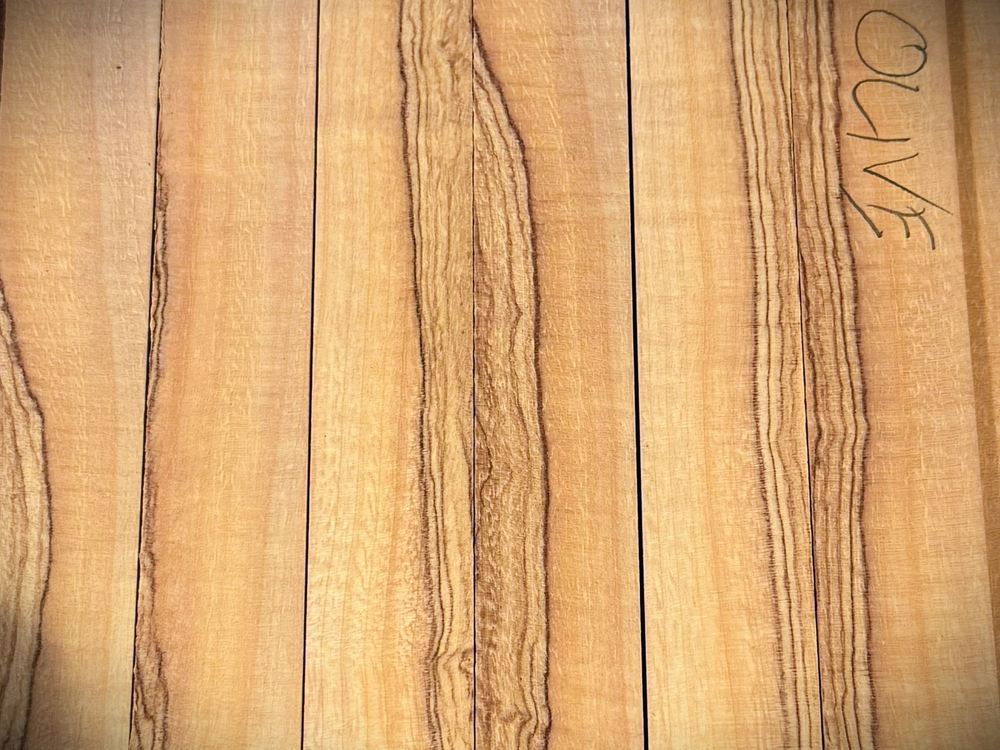
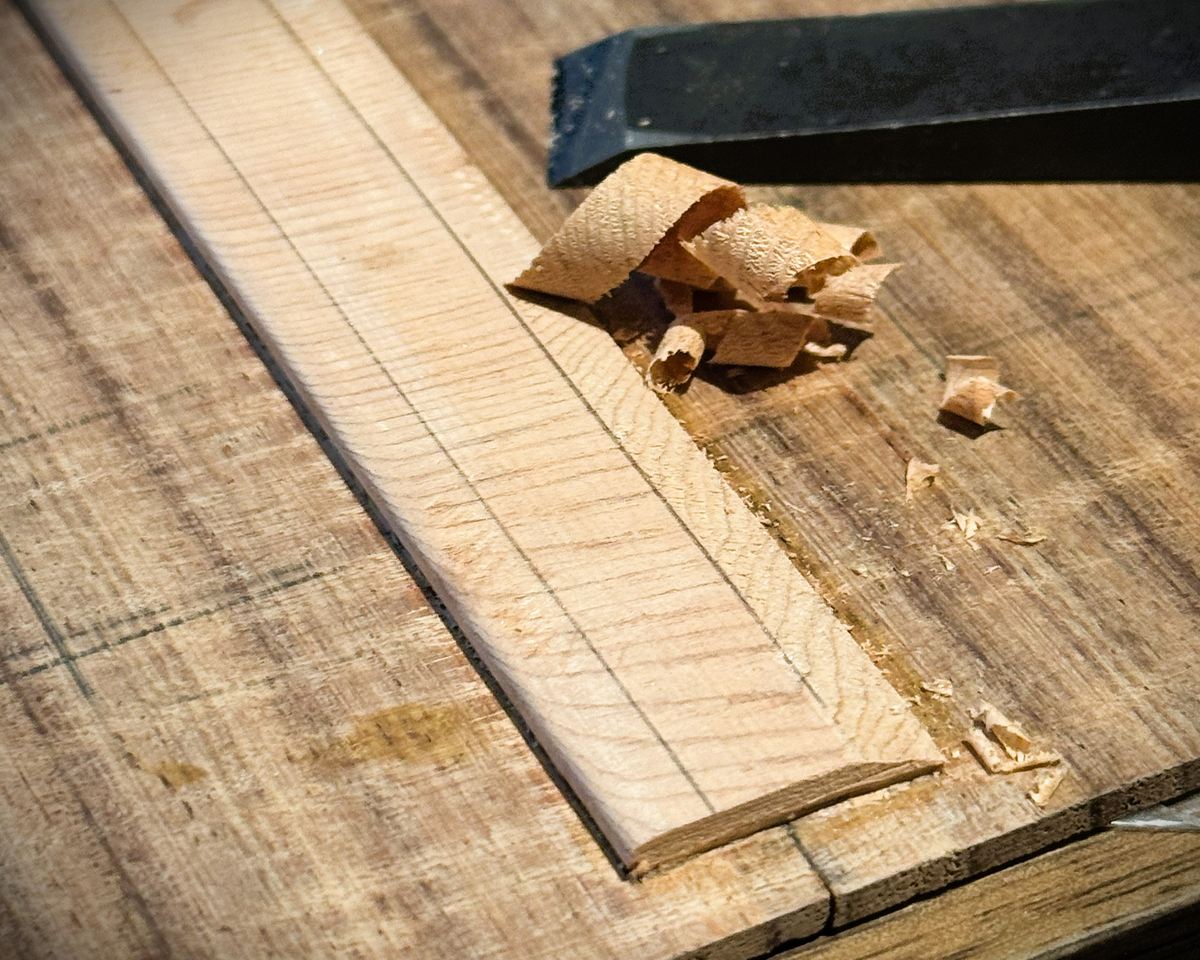
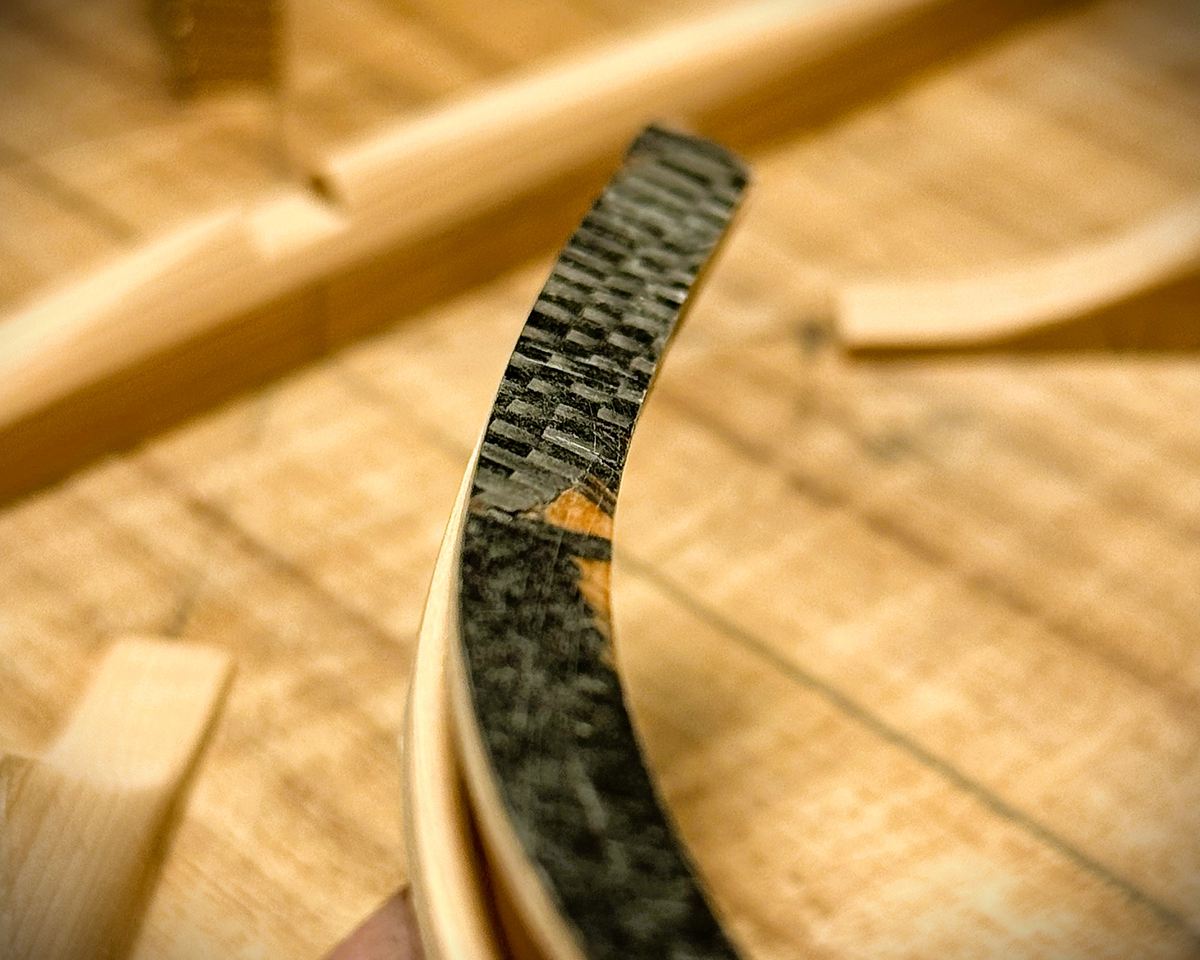
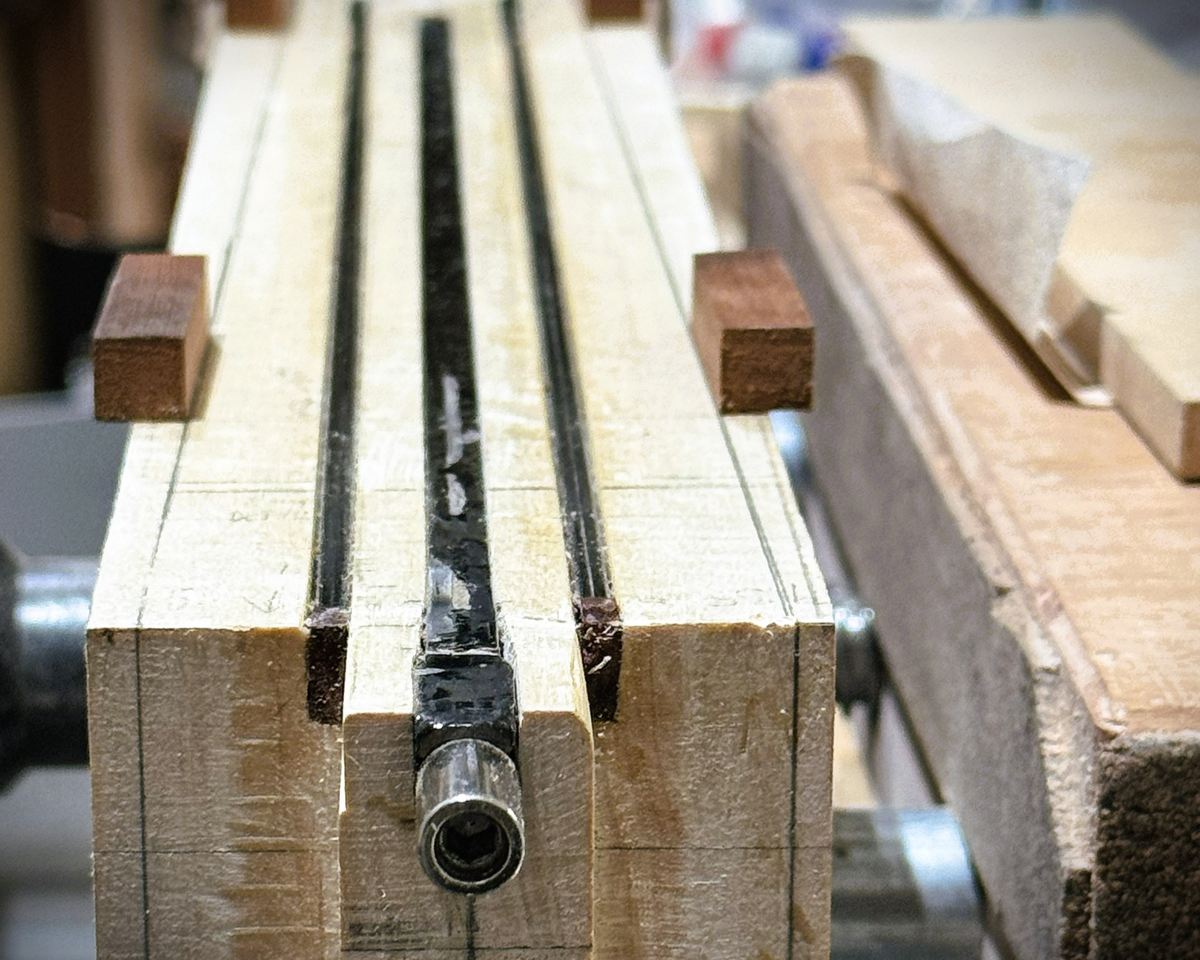
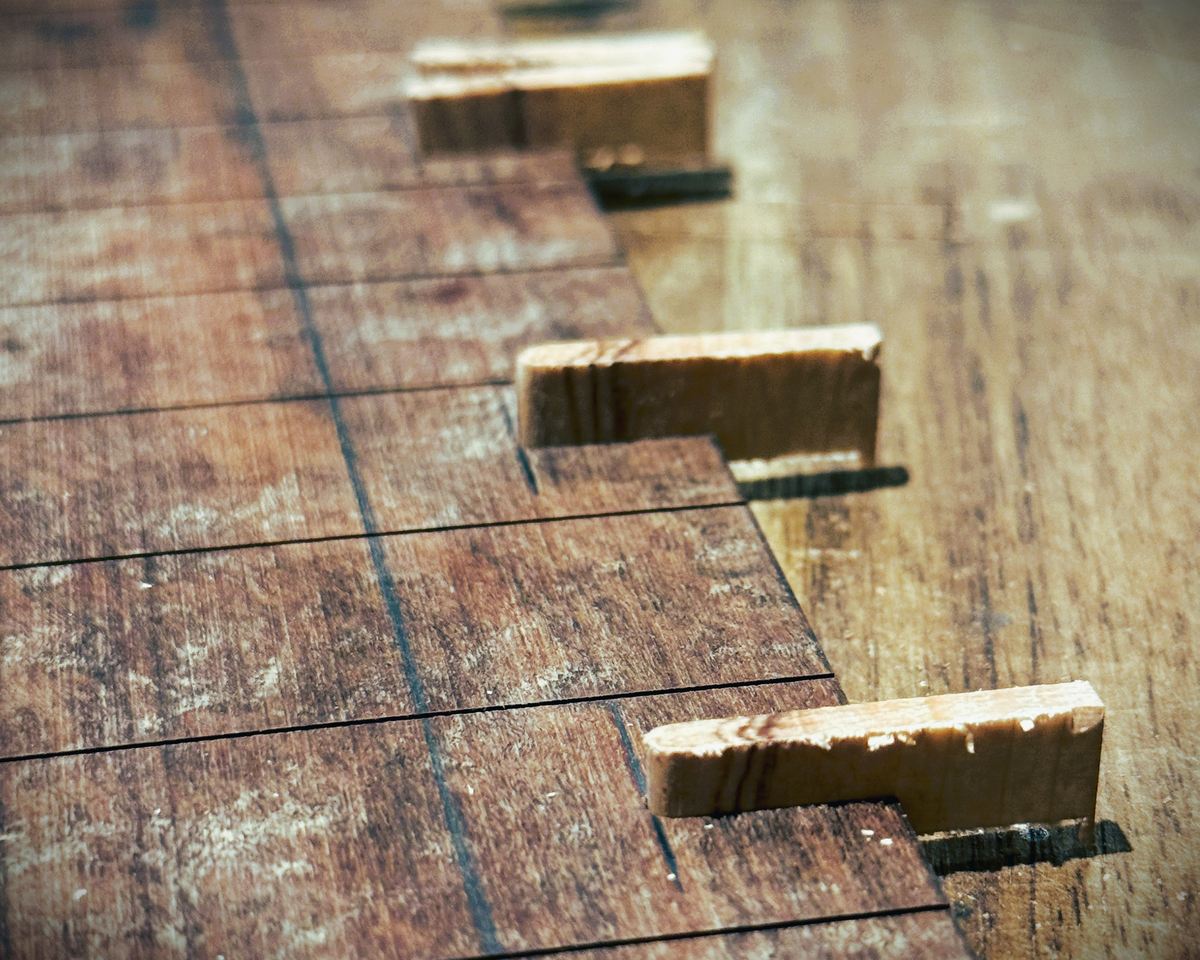
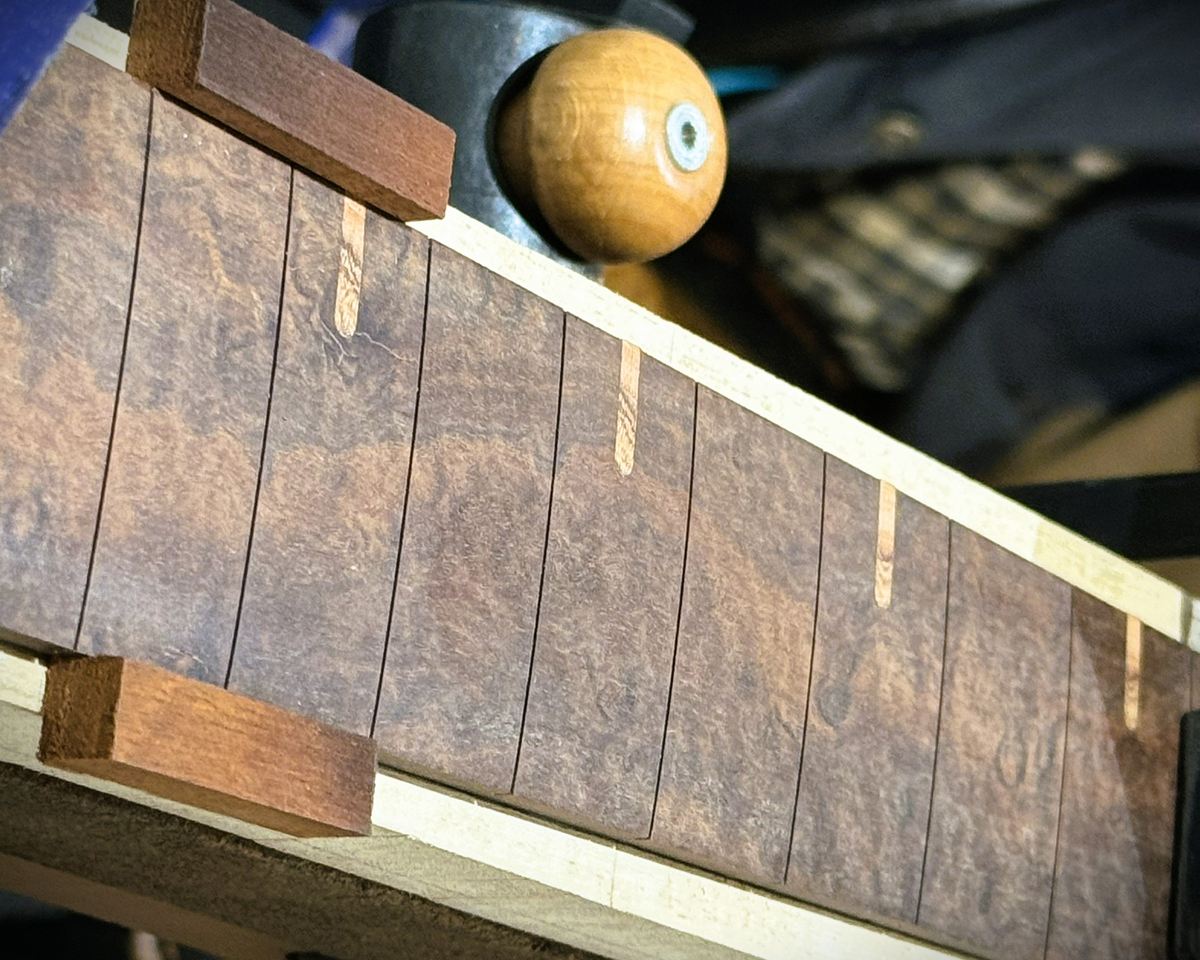
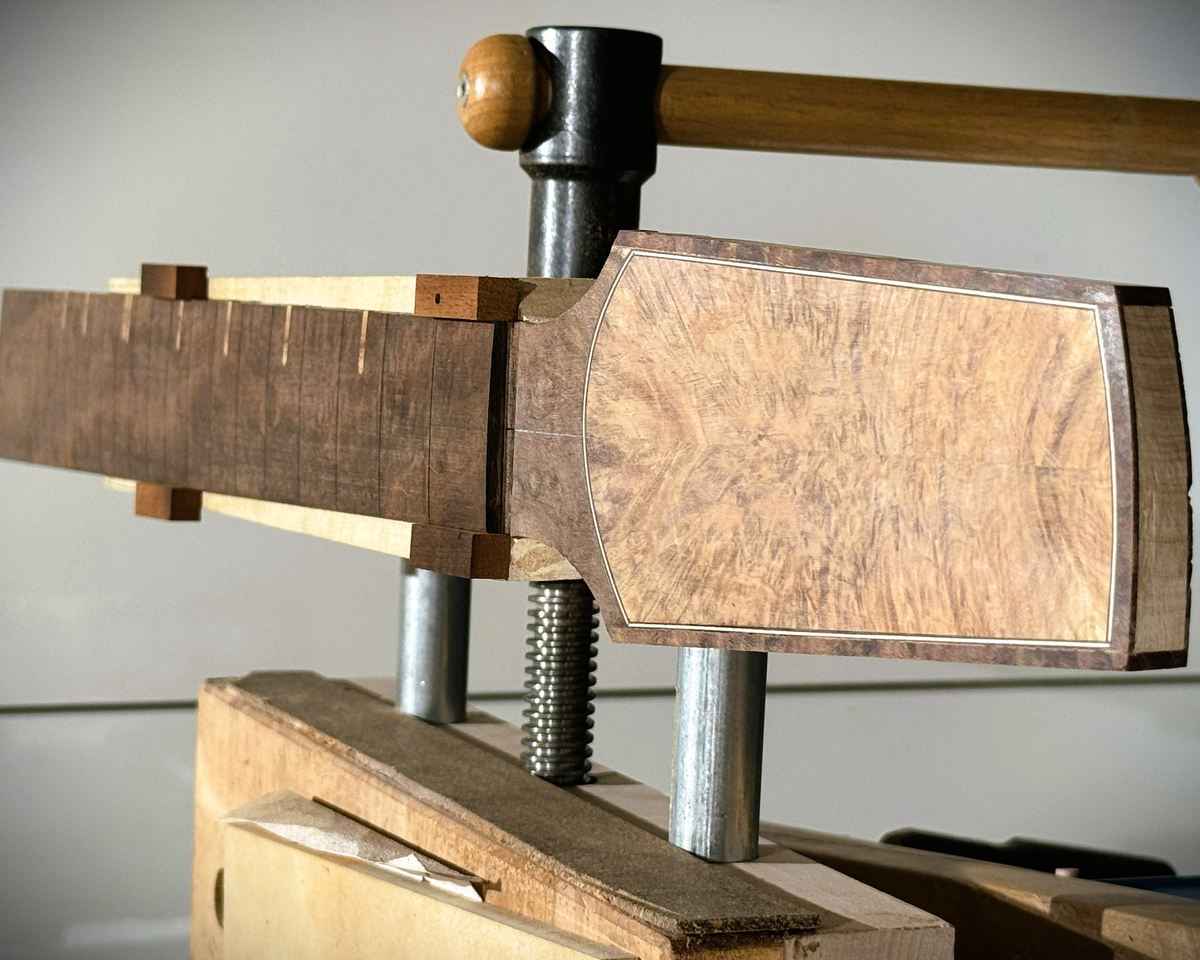
The Silver Ash neck is carbon-fibre reinforced and carries a two-way adjustable truss rod. The Gidgee fingerboard is radiused to 16 inches and slotted for twenty frets, the slots cut to depth against the radius so every fret seats along its whole length.
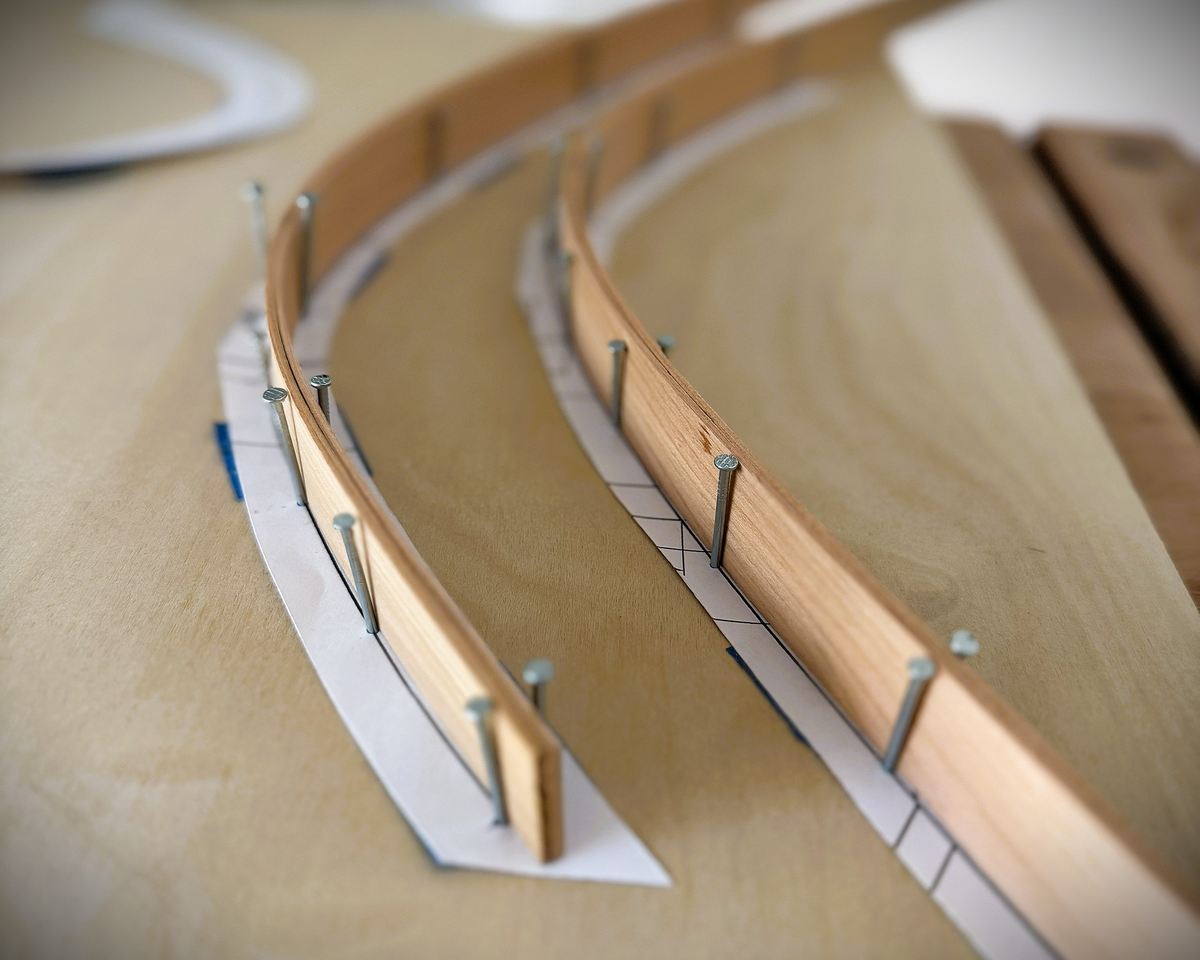
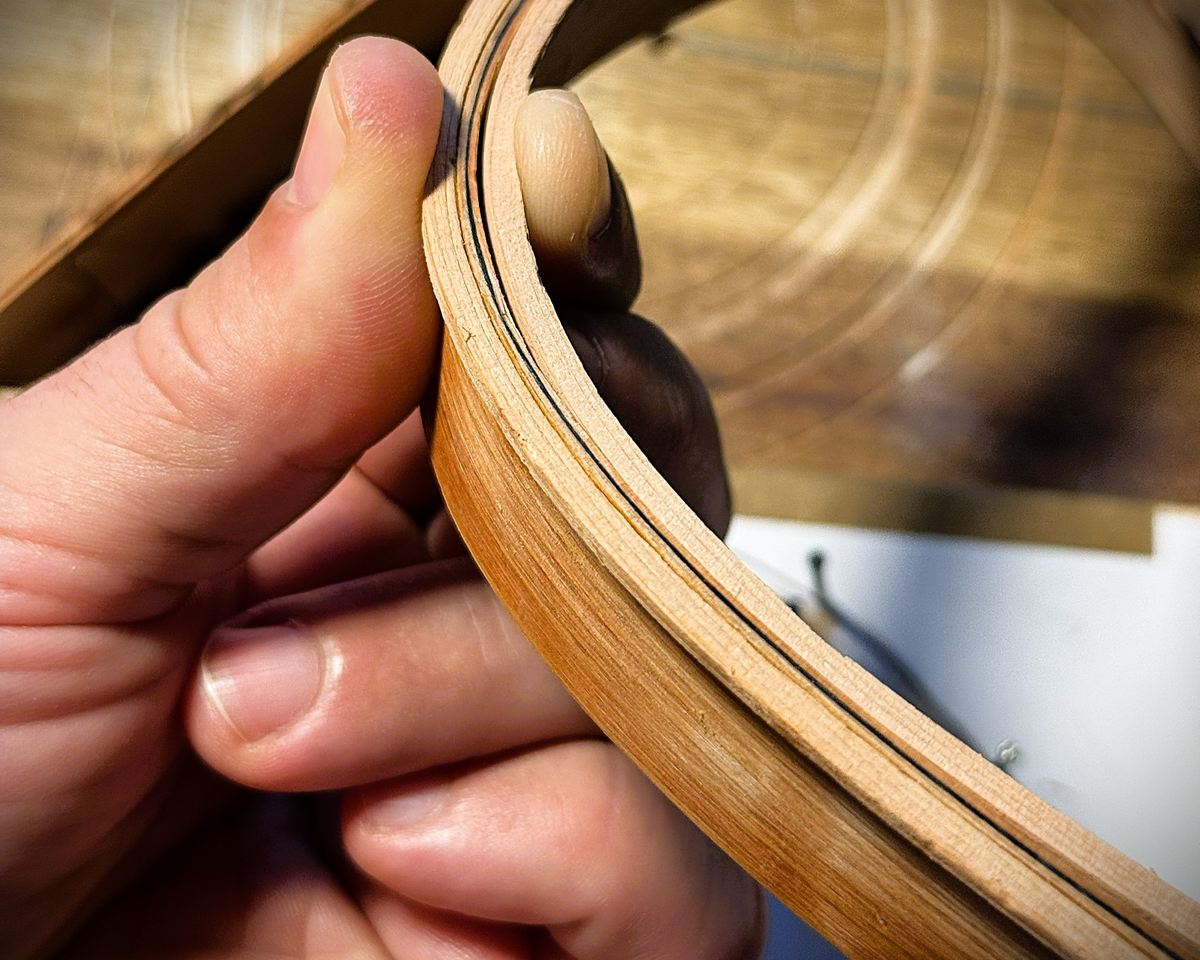
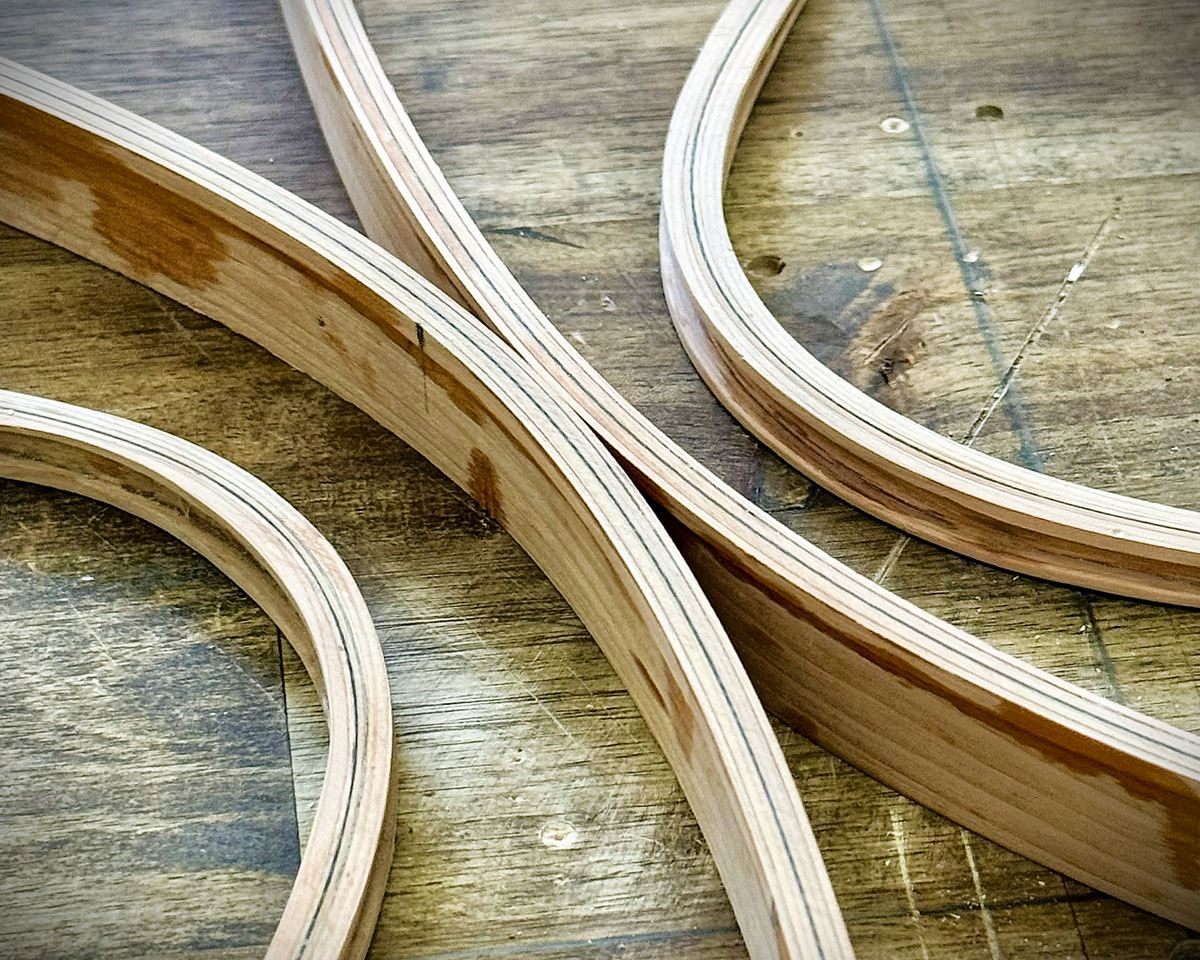
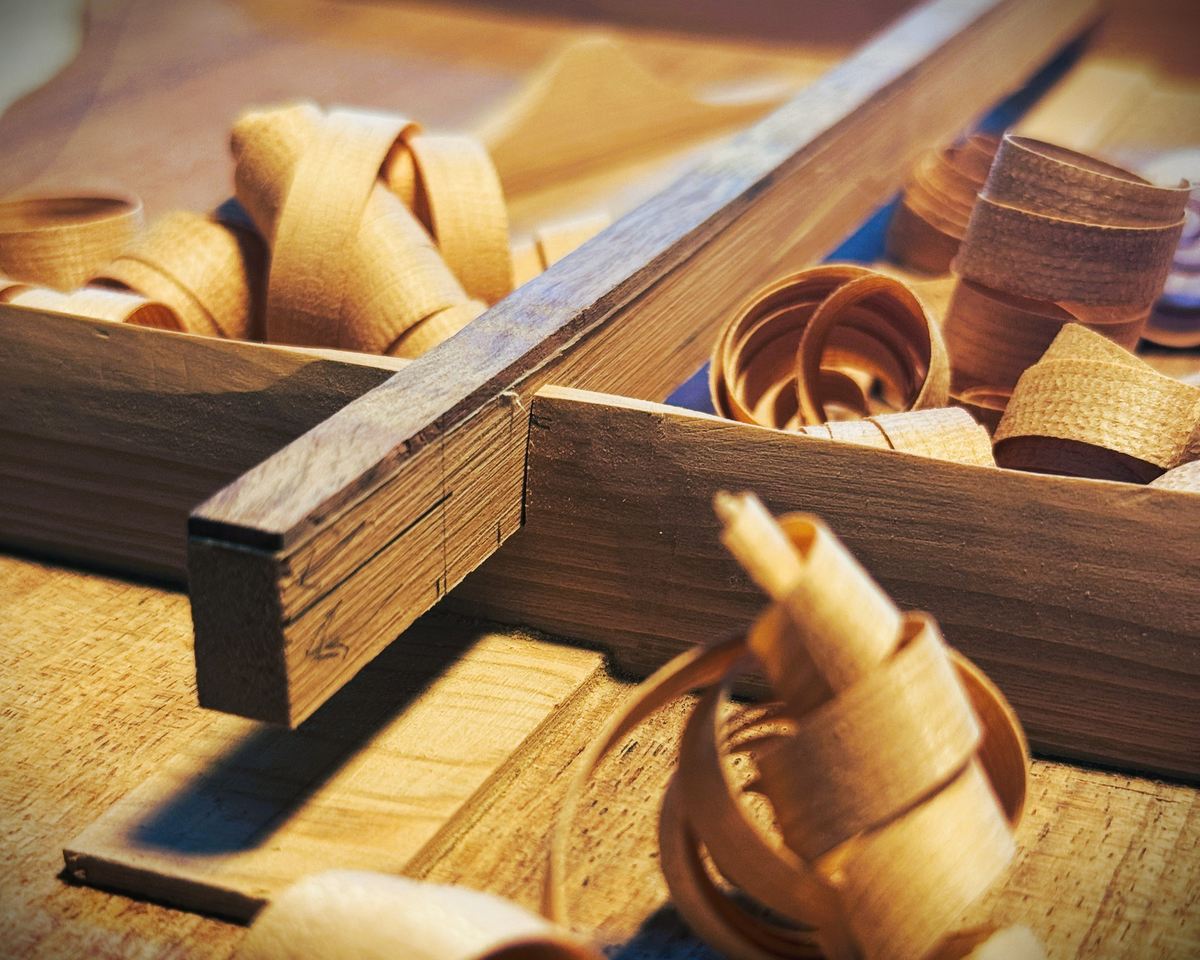
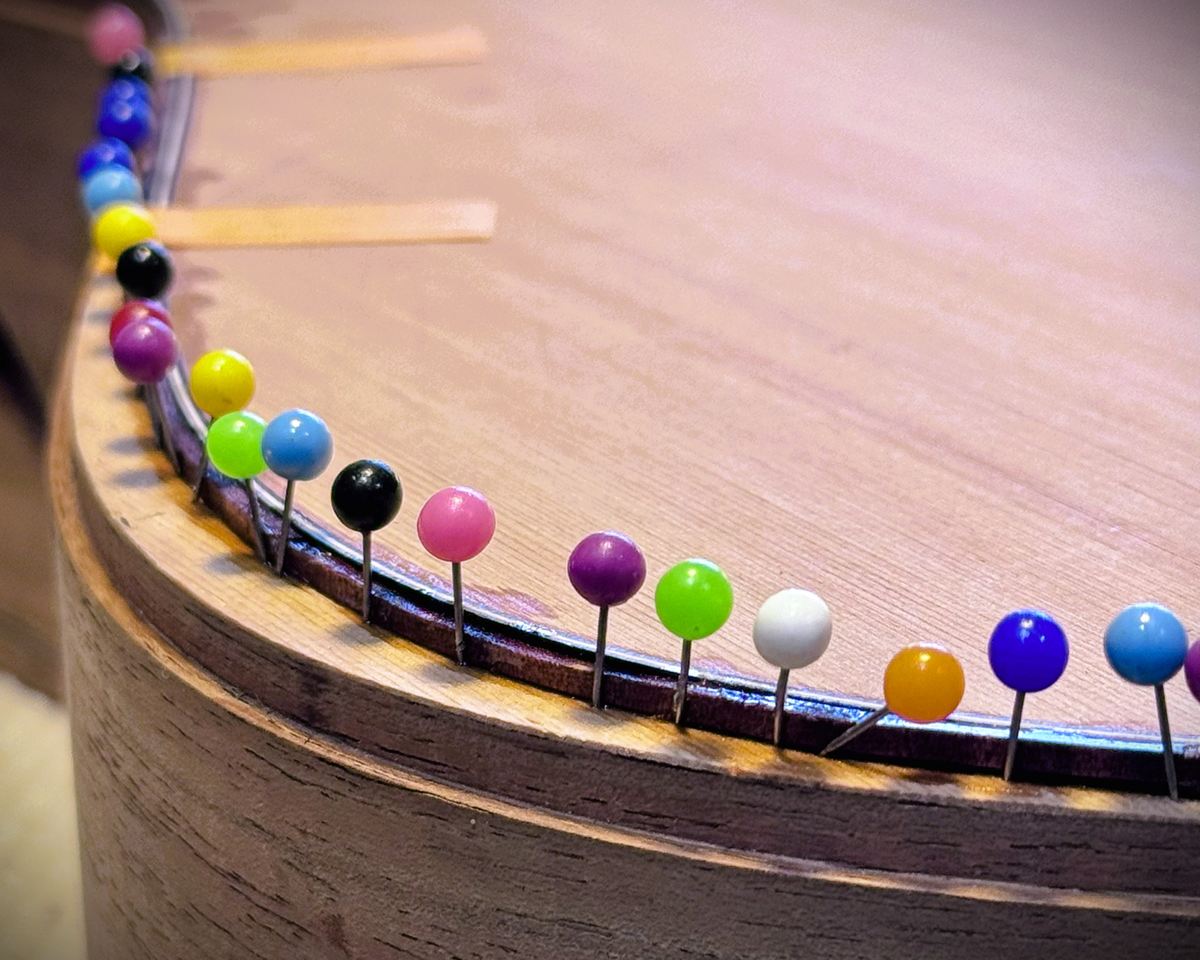
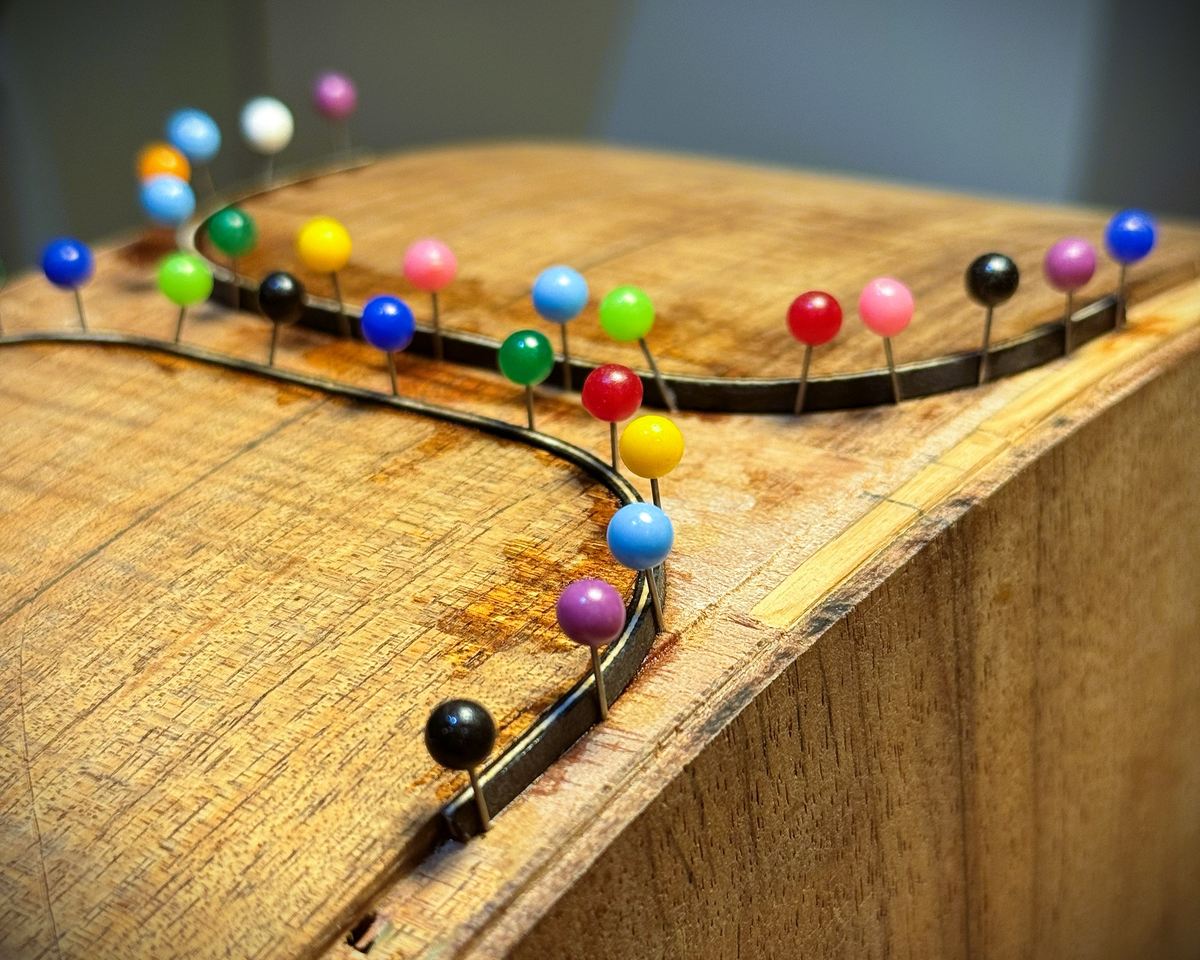
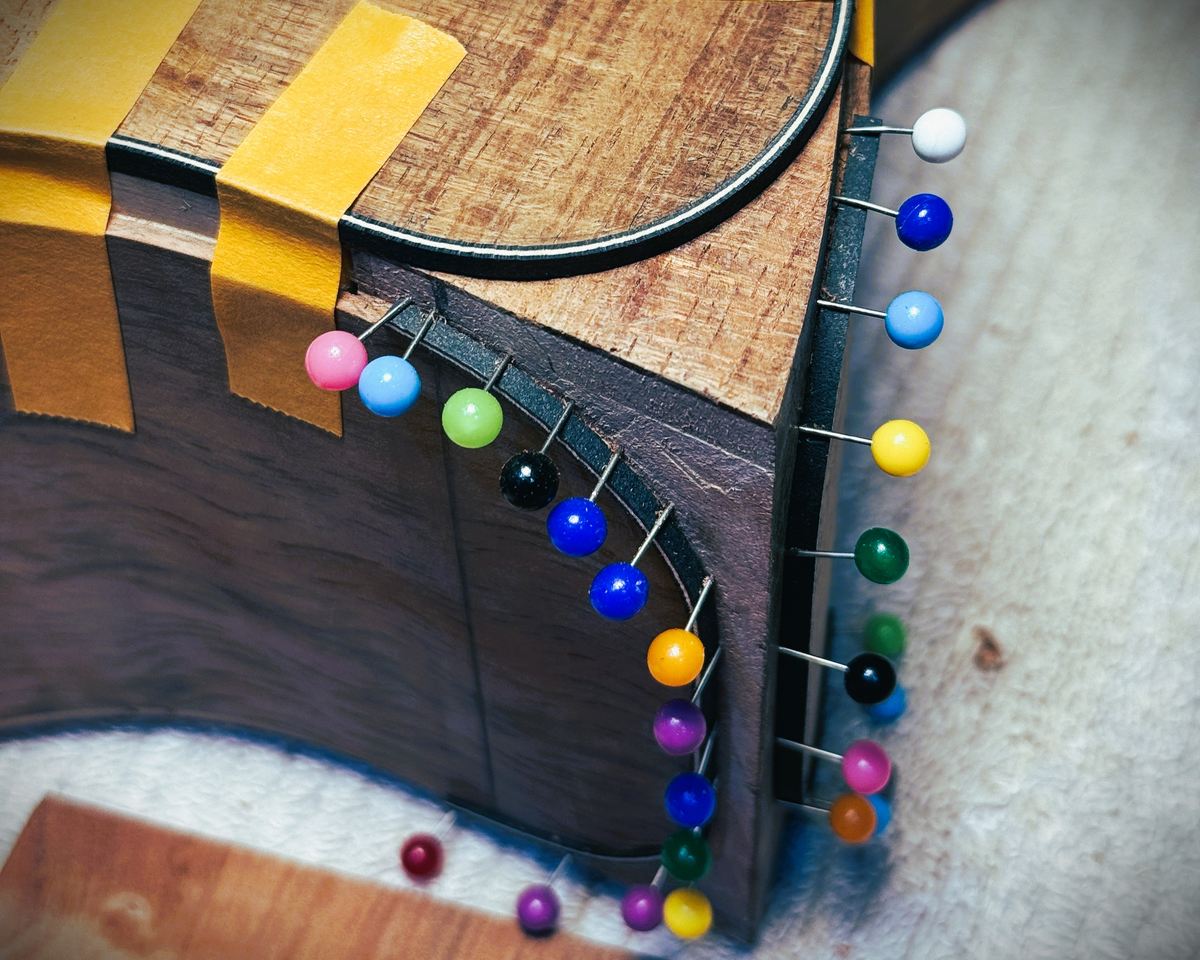
Channels are routed around the top and back edges and the Tiger Myrtle binding is bent, fitted and glued in. The end graft is inlet at the tail also from the same timber so the figure runs right around the instrument.
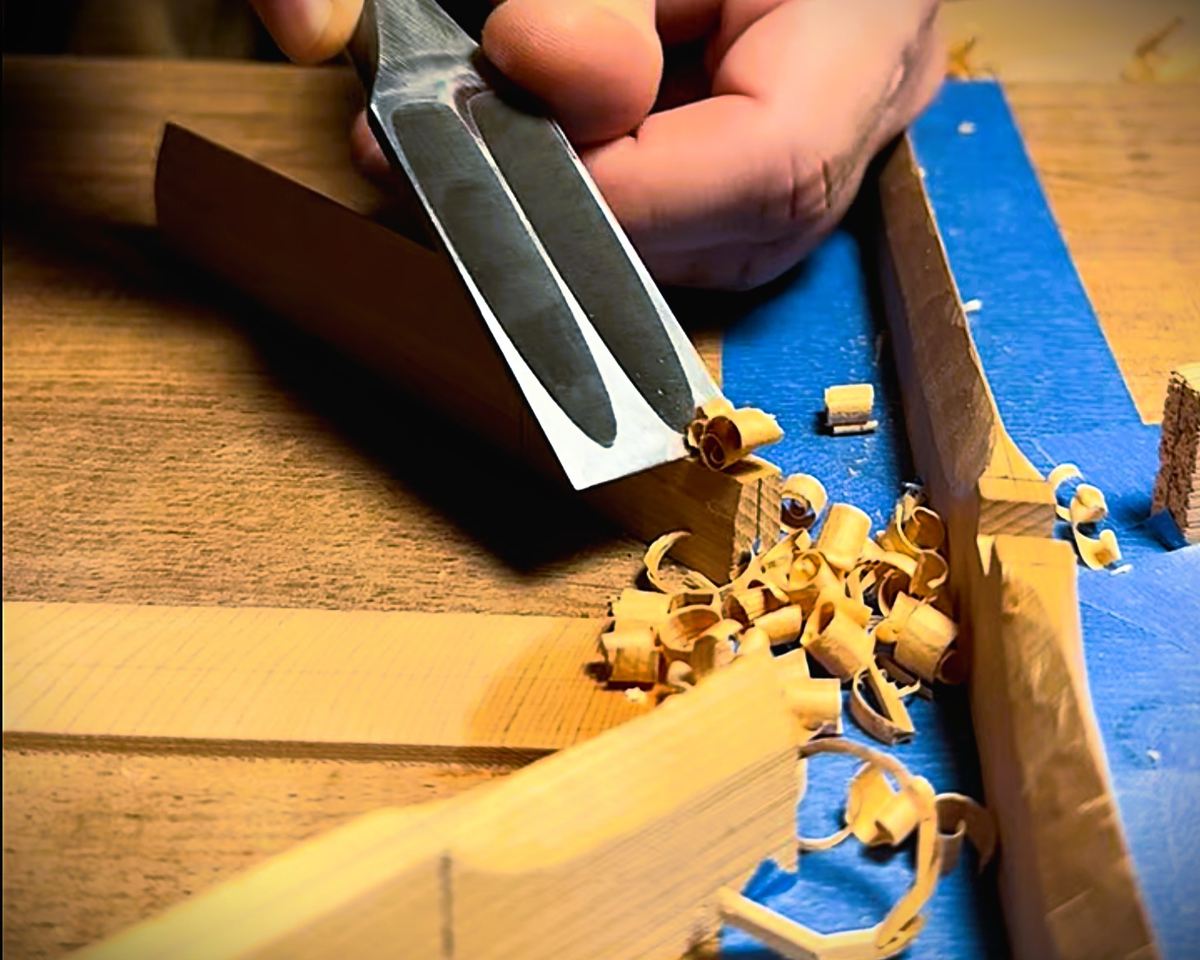
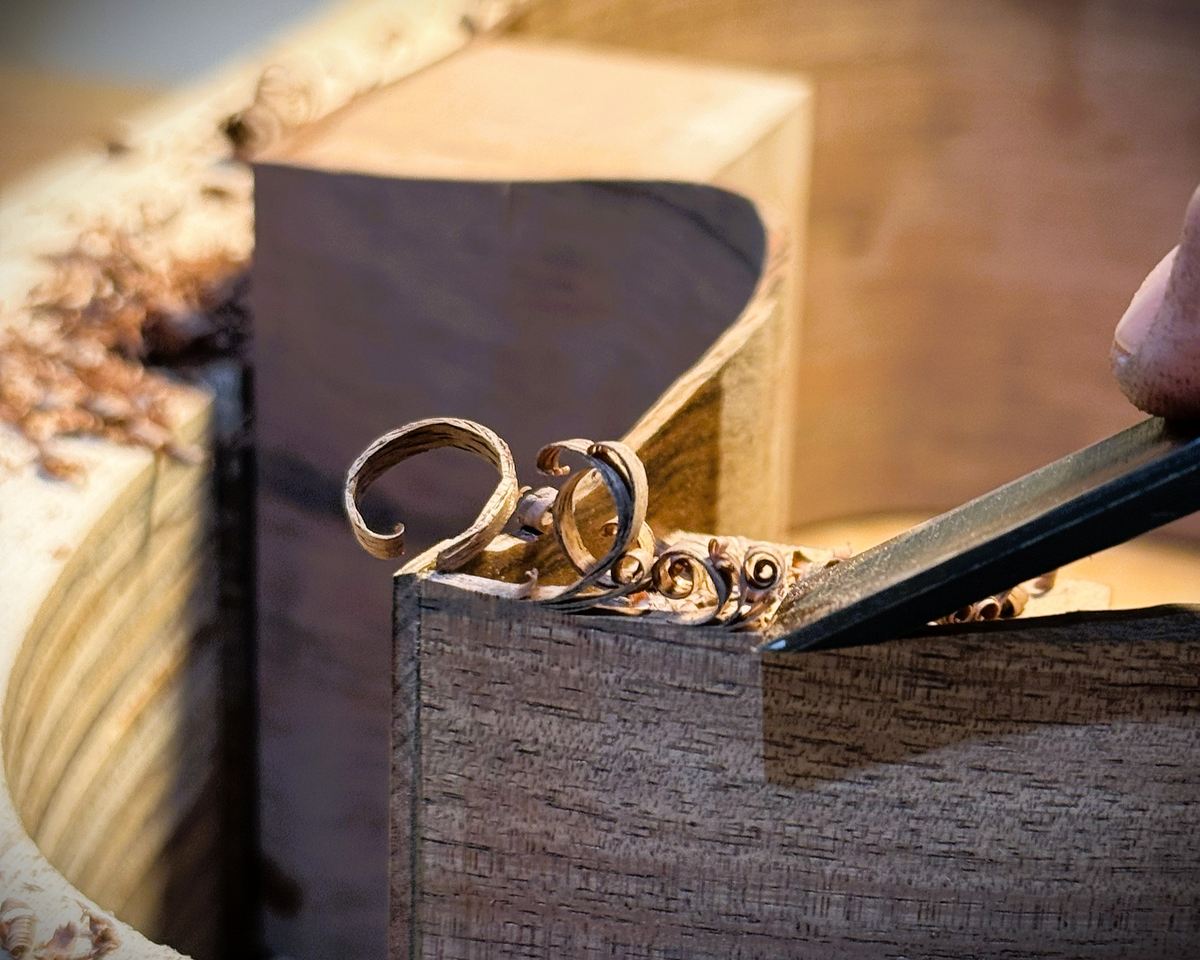
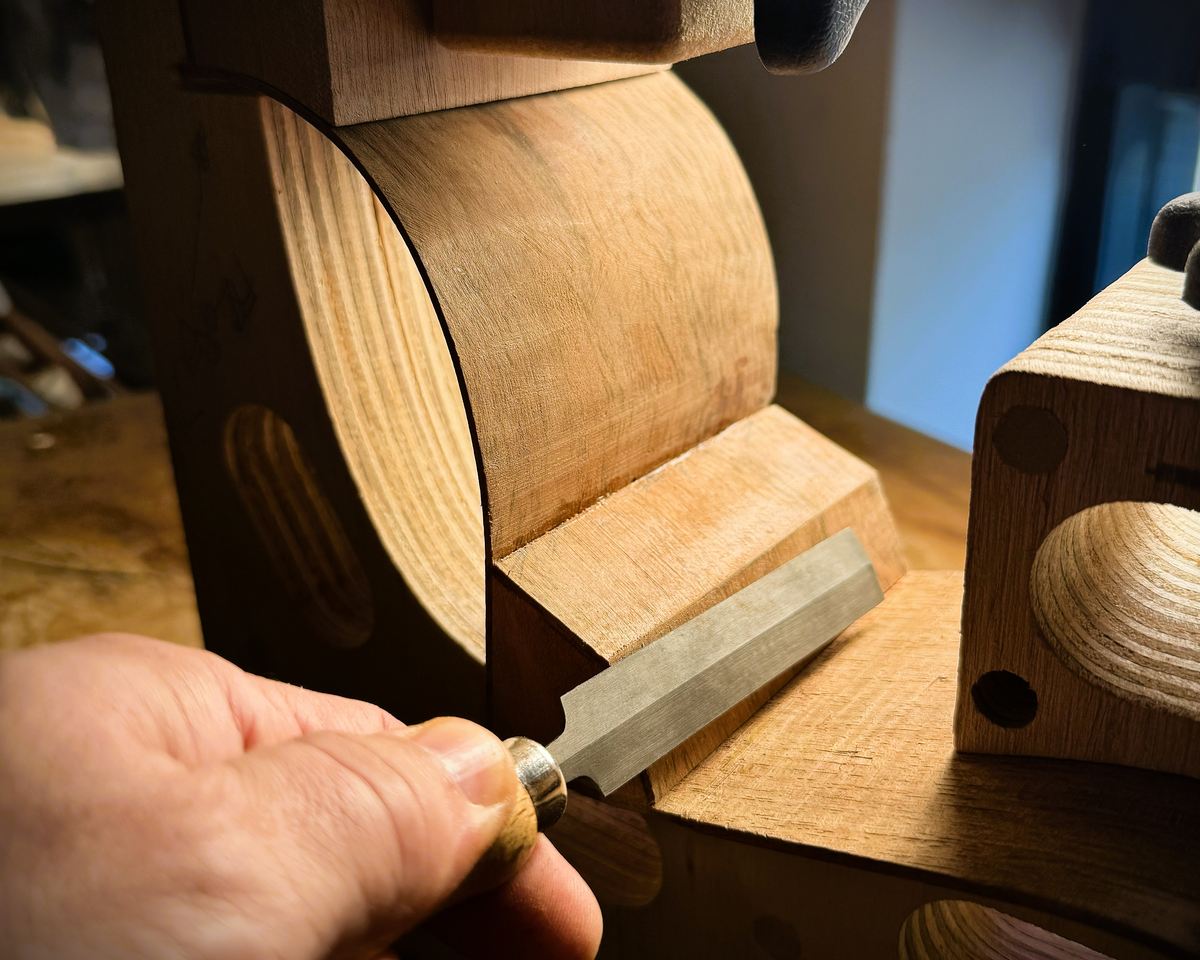
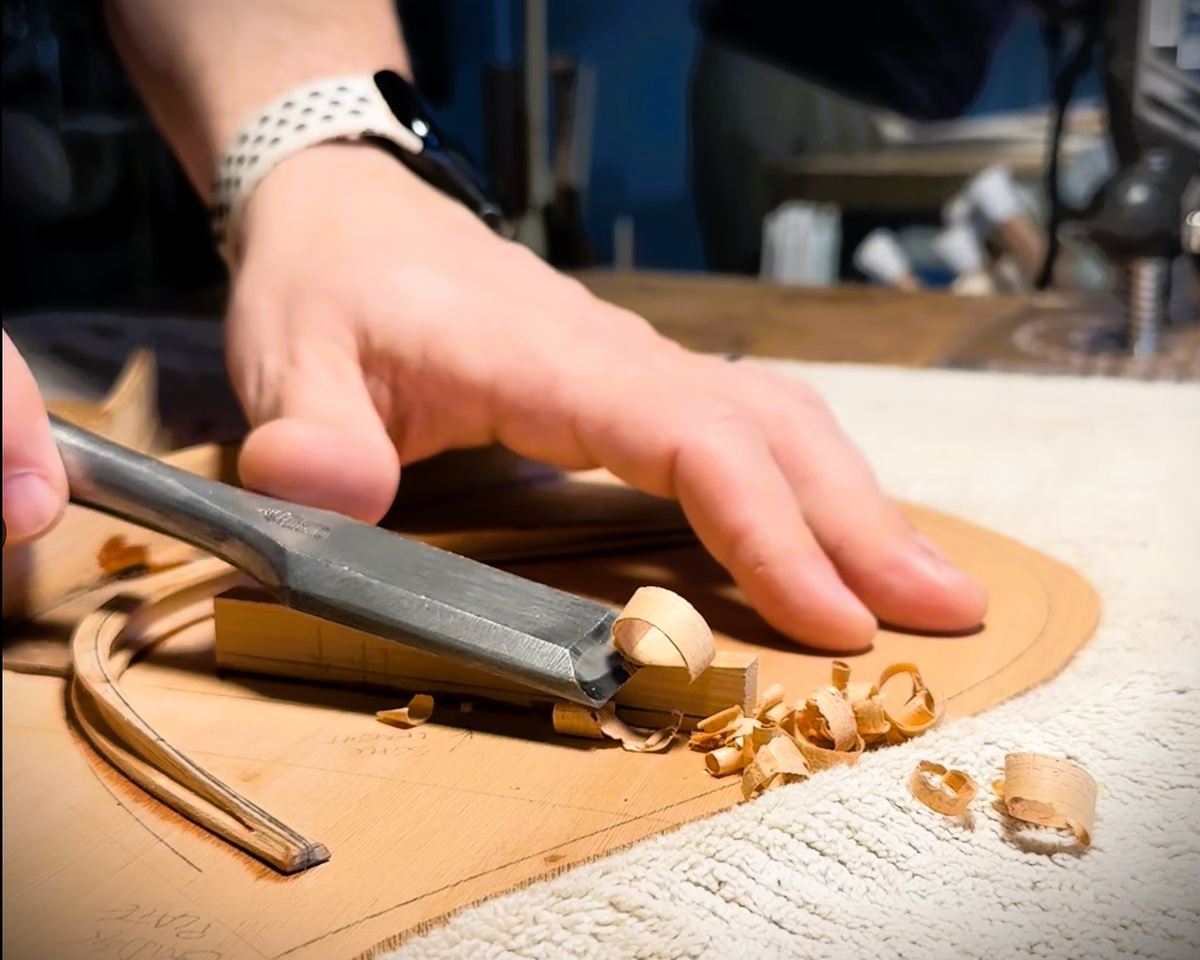
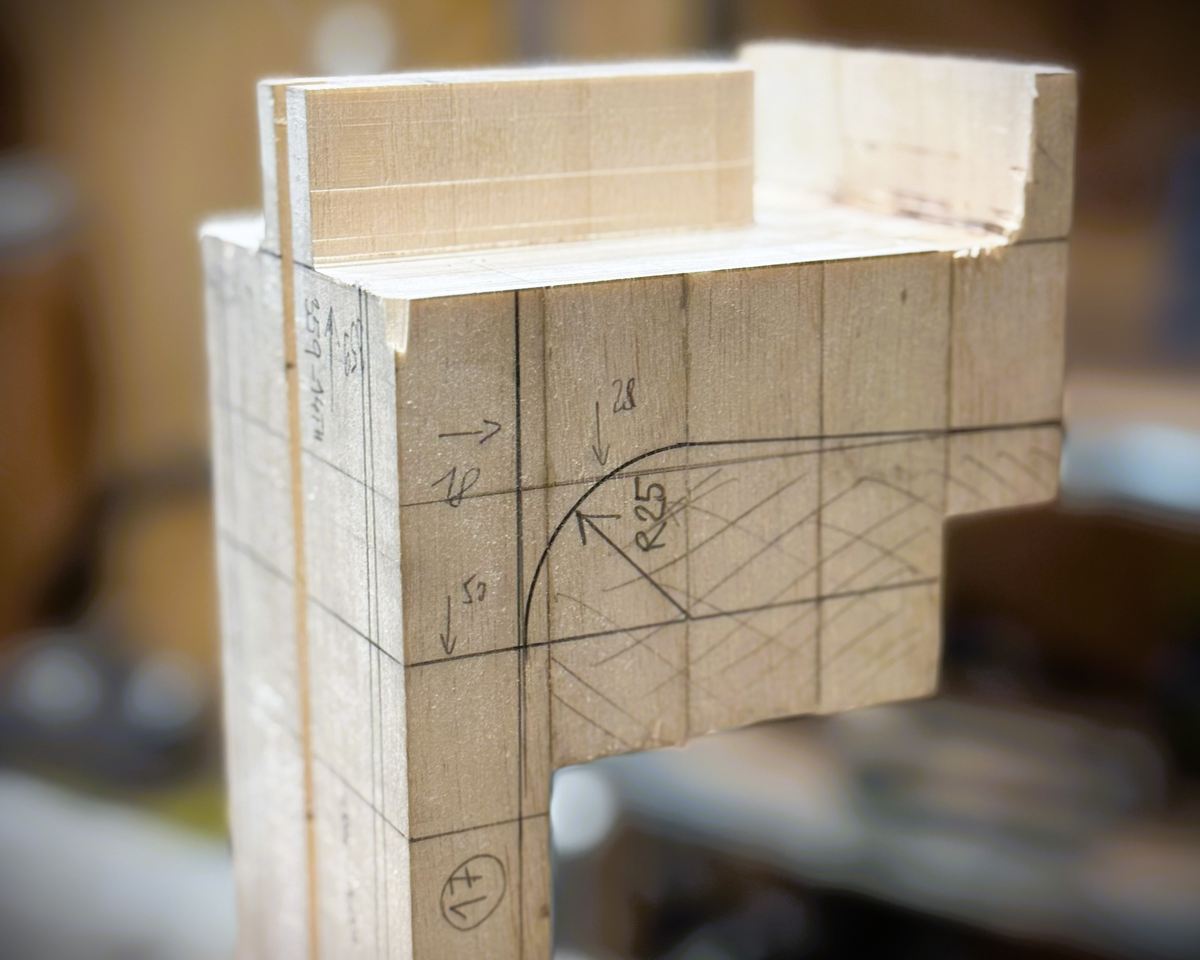
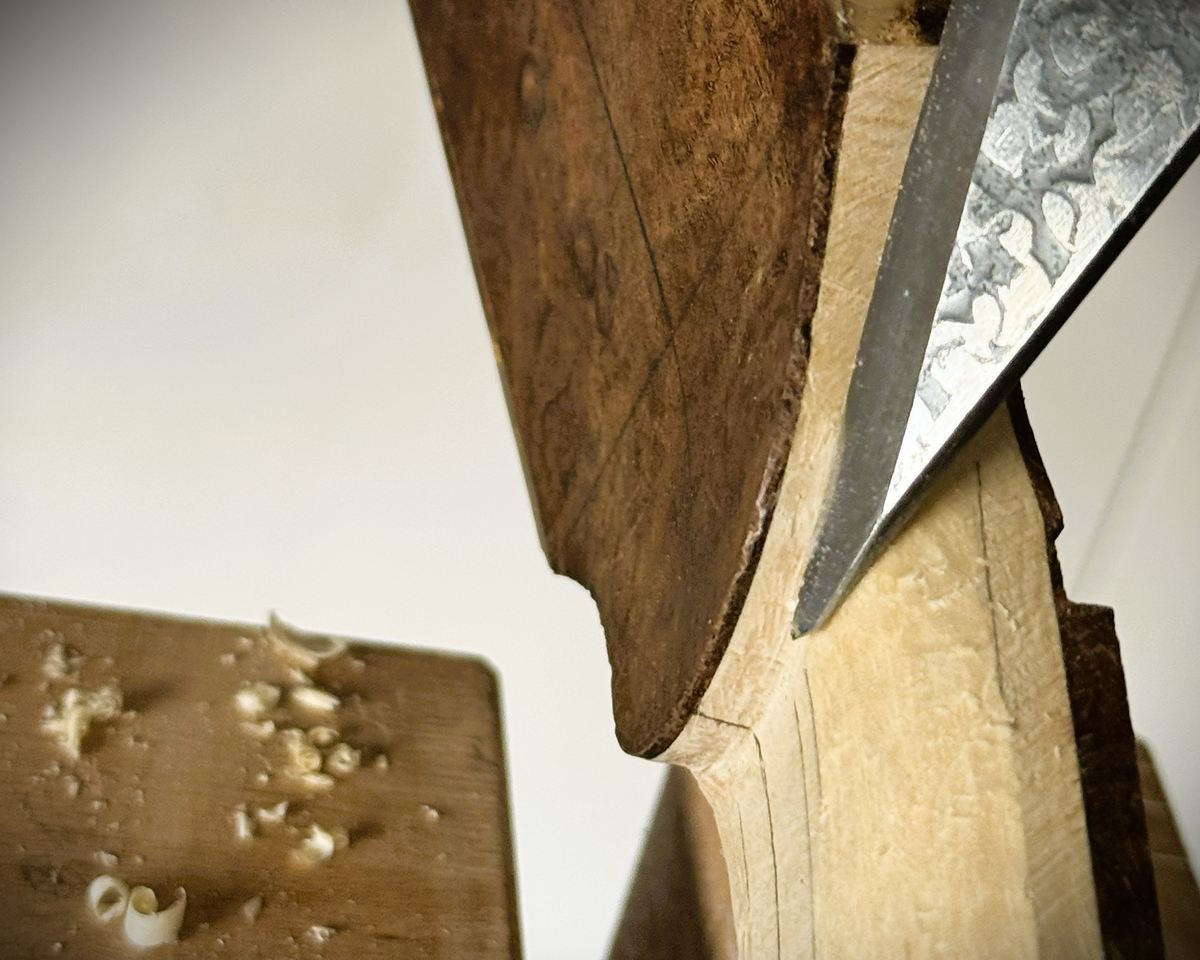
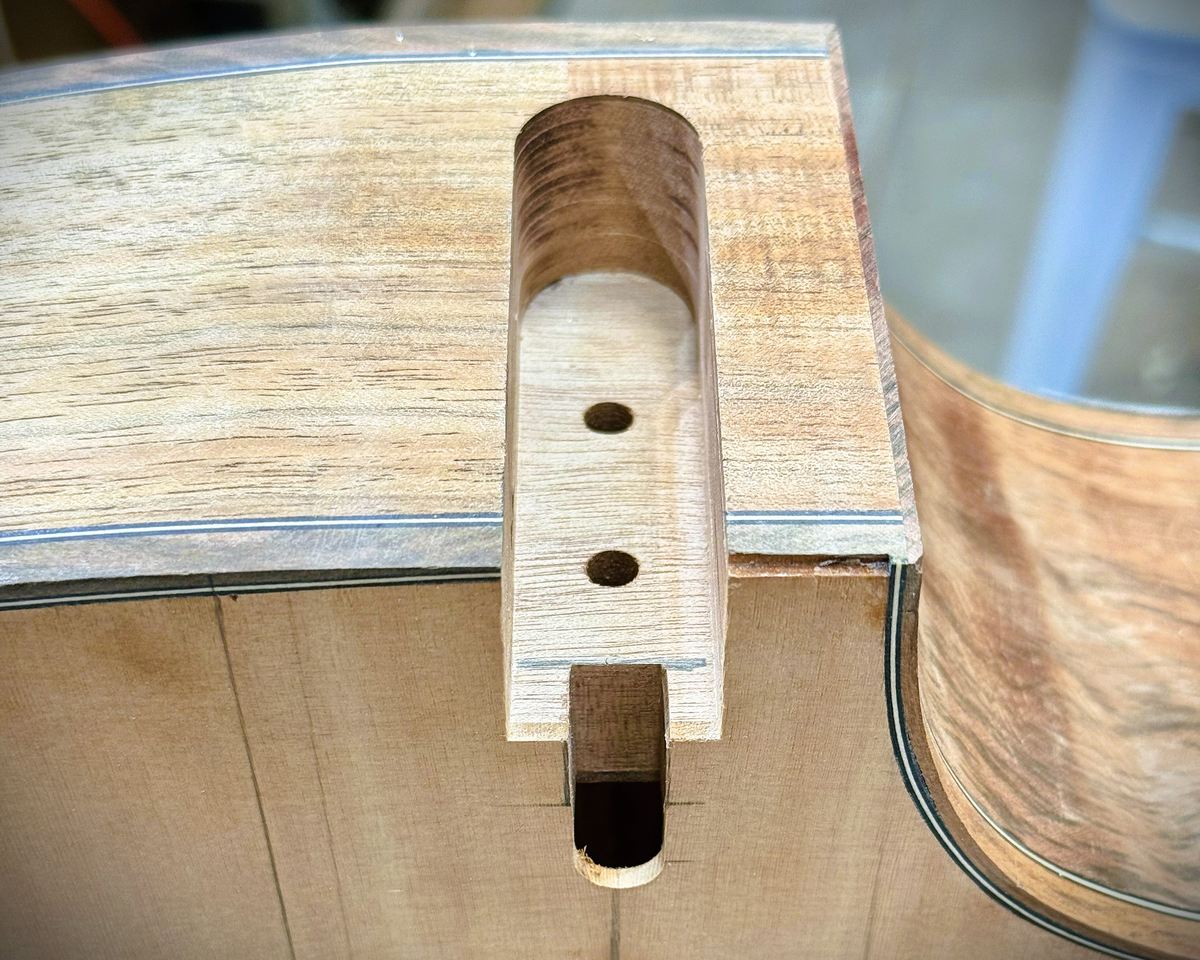
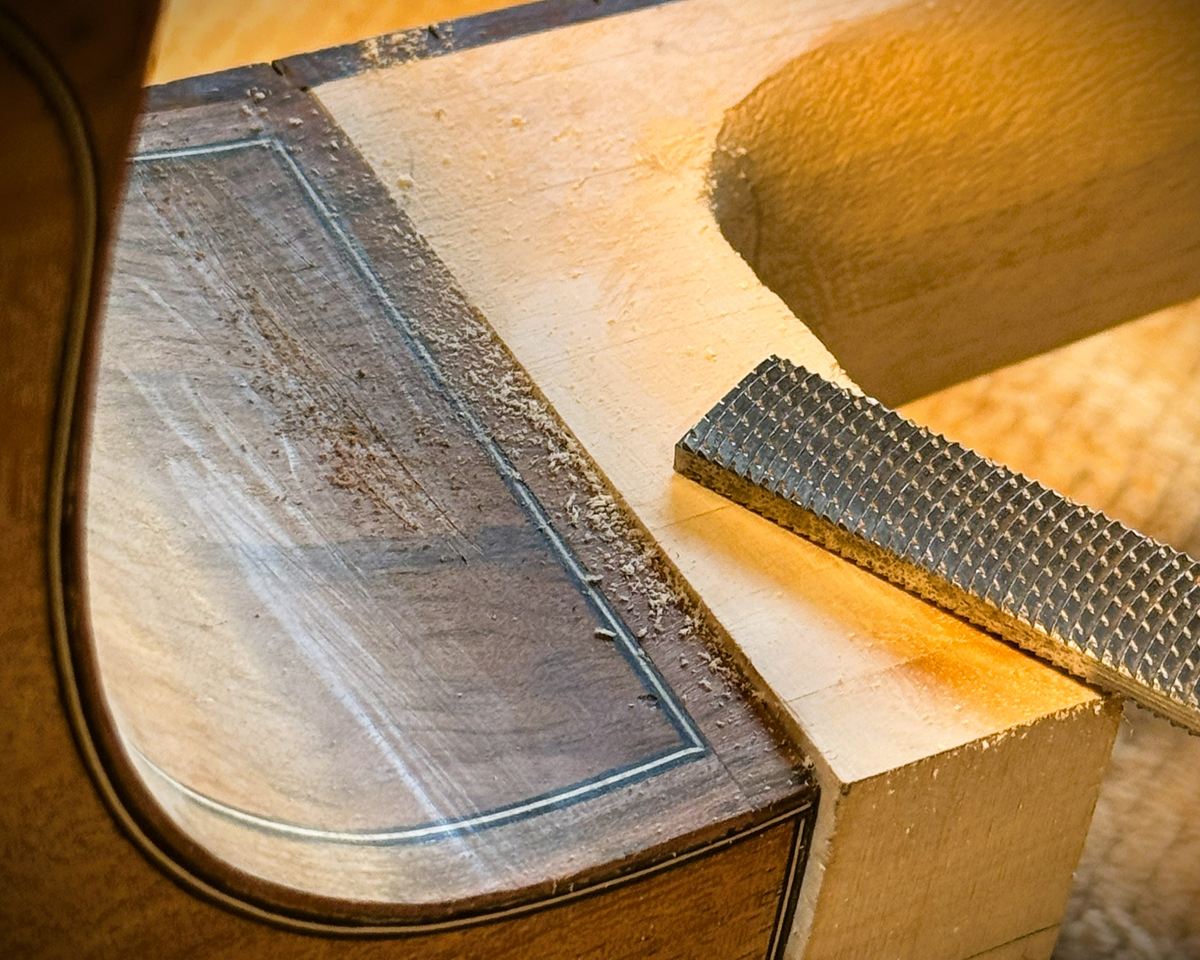
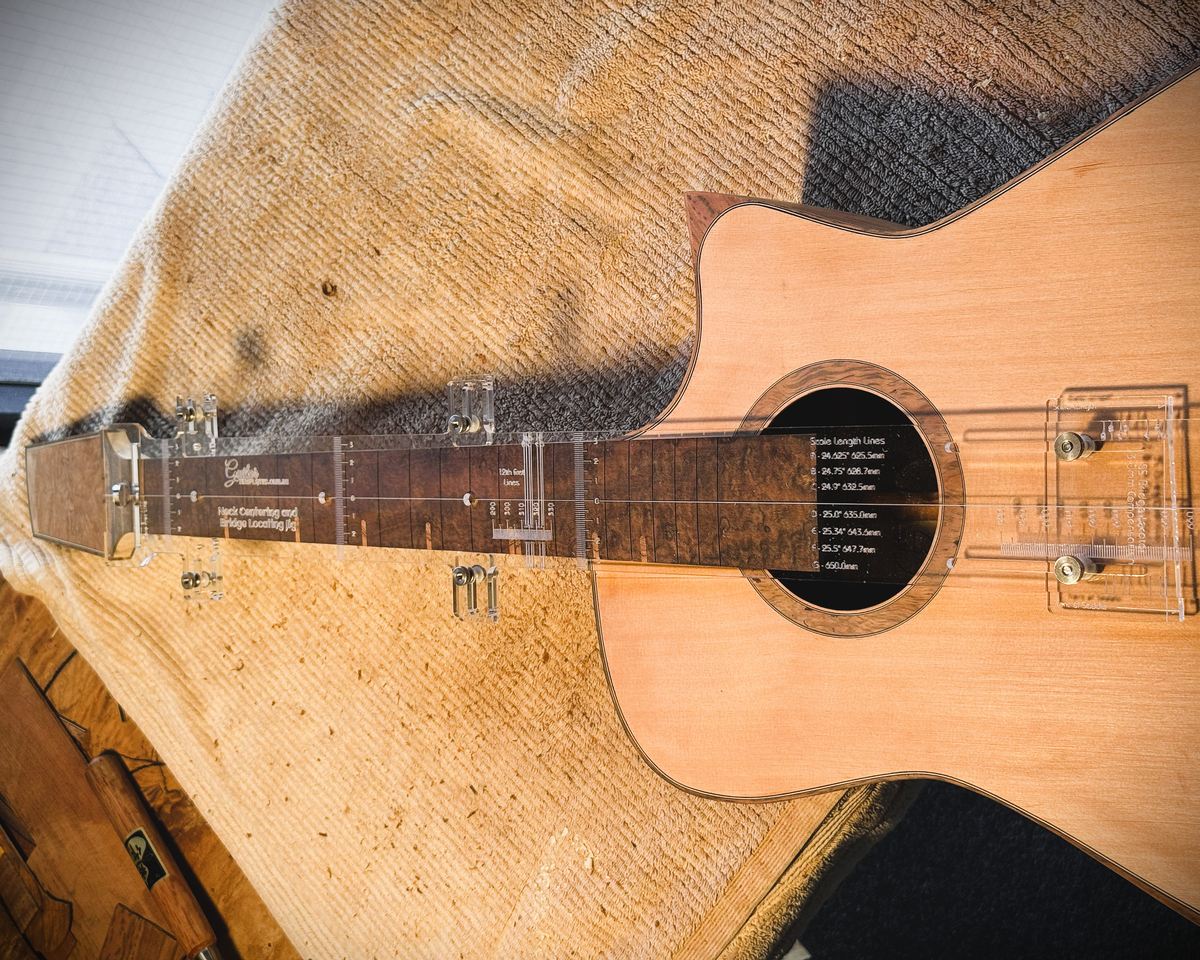
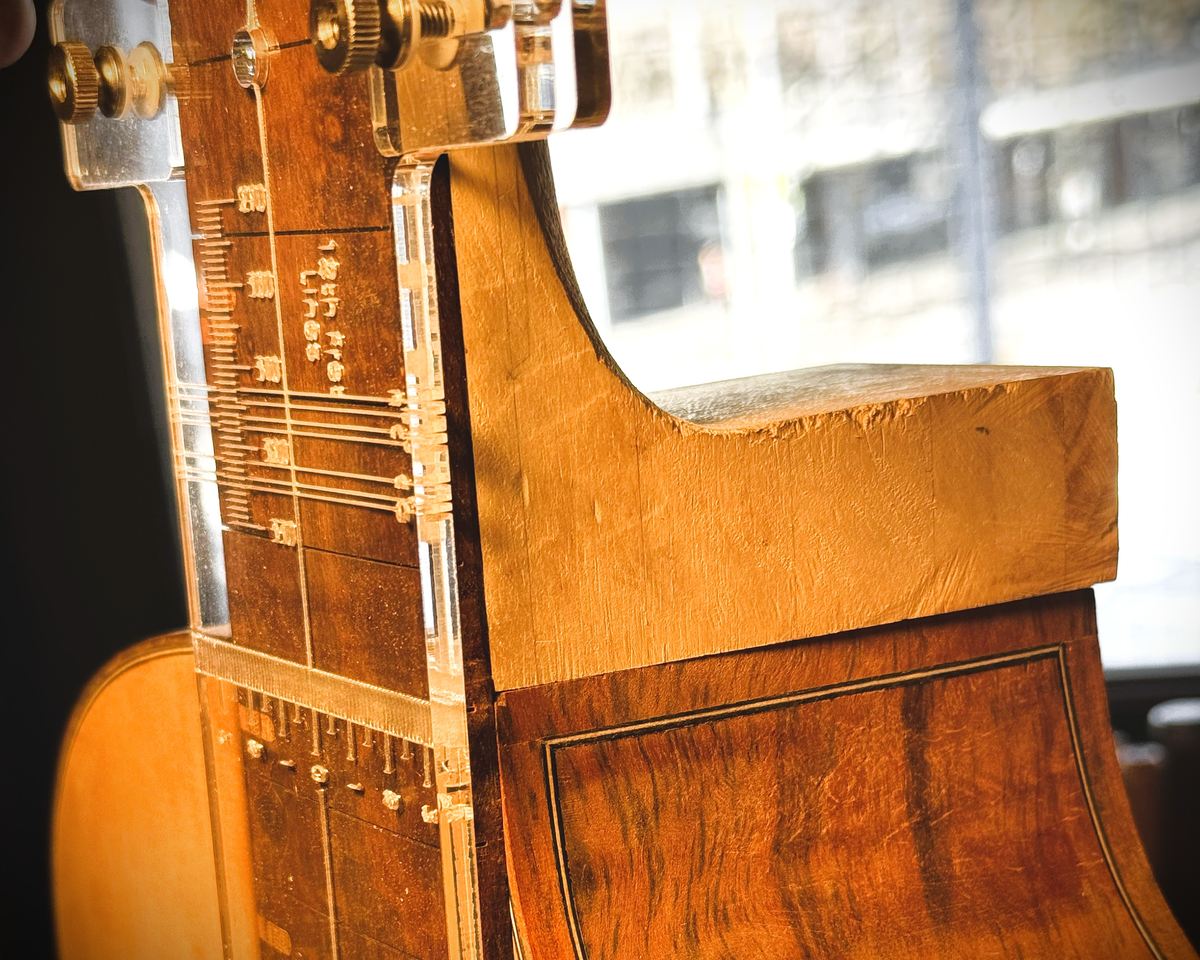
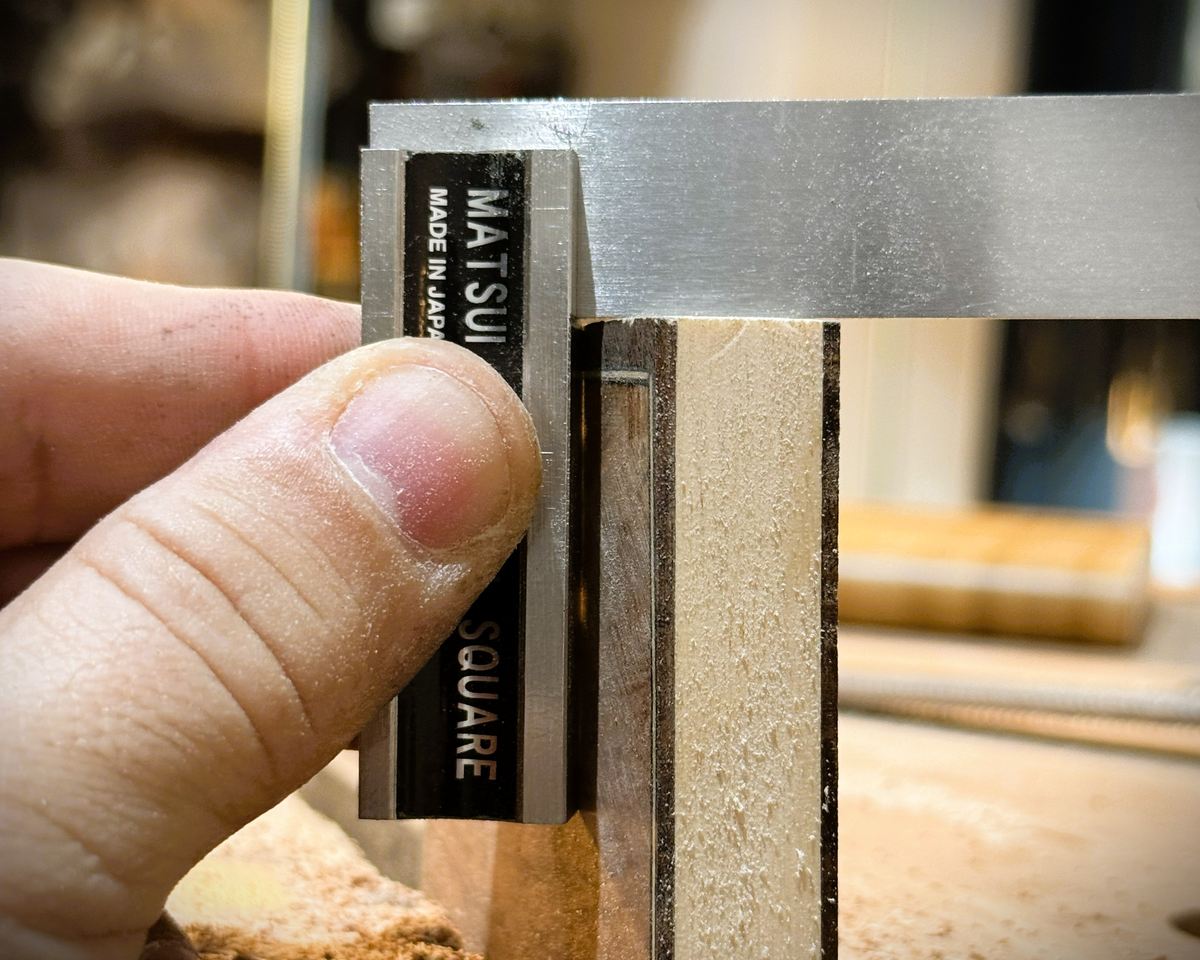
The neck is fitted to the body before anything is finished. The heel is pared back in small cuts until it sits against the rim with no gap anywhere along the joint, and the centreline of the fingerboard is checked against the centre of the soundhole and the bridge position.
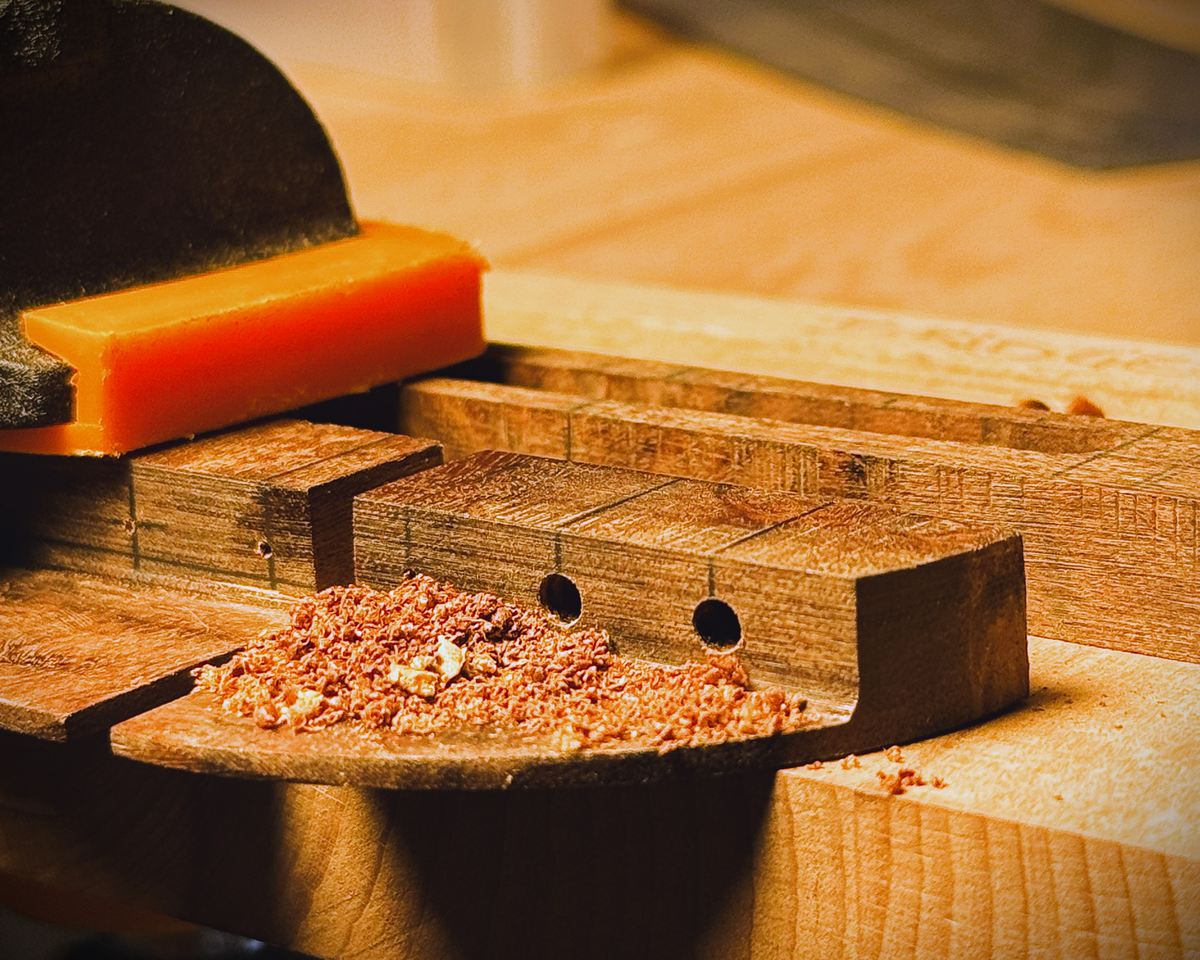
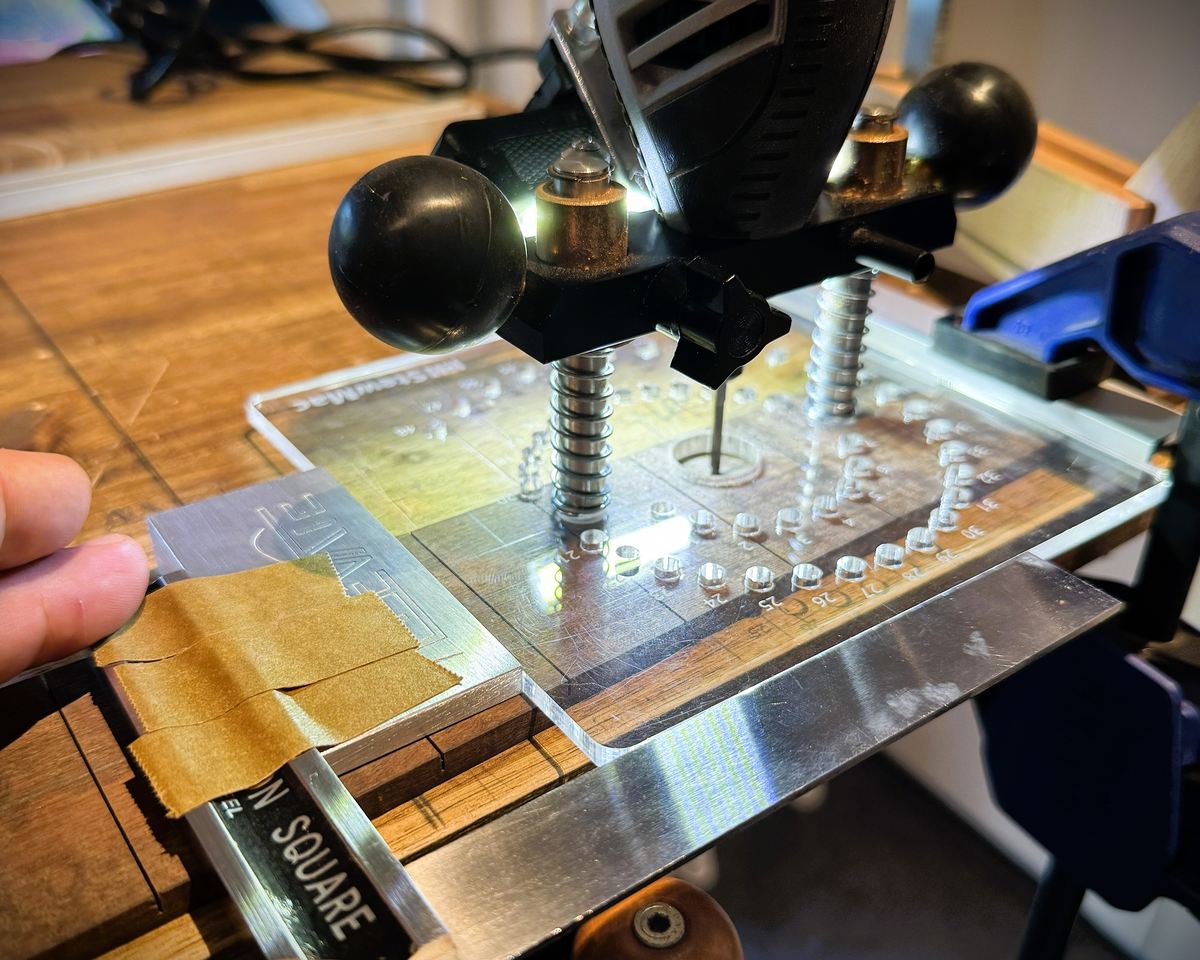
The tuner holes are drilled through the head plate on the drill press, backed underneath with a scrap block so the bit cannot tear out the Gidgee backstrap as it breaks through. Each hole is then countersunk to seat the press-in bushing flush with the face, the bushings are pressed home, and the six Schaller GrandTune tuners are set on the back and screwed down.
The instrument is french polished. Shellac is dissolved in ethanol and carried by a rubber, a wad of cotton wrapped in linen, worked over the surface in small circles with a trace of oil as a lubricant.
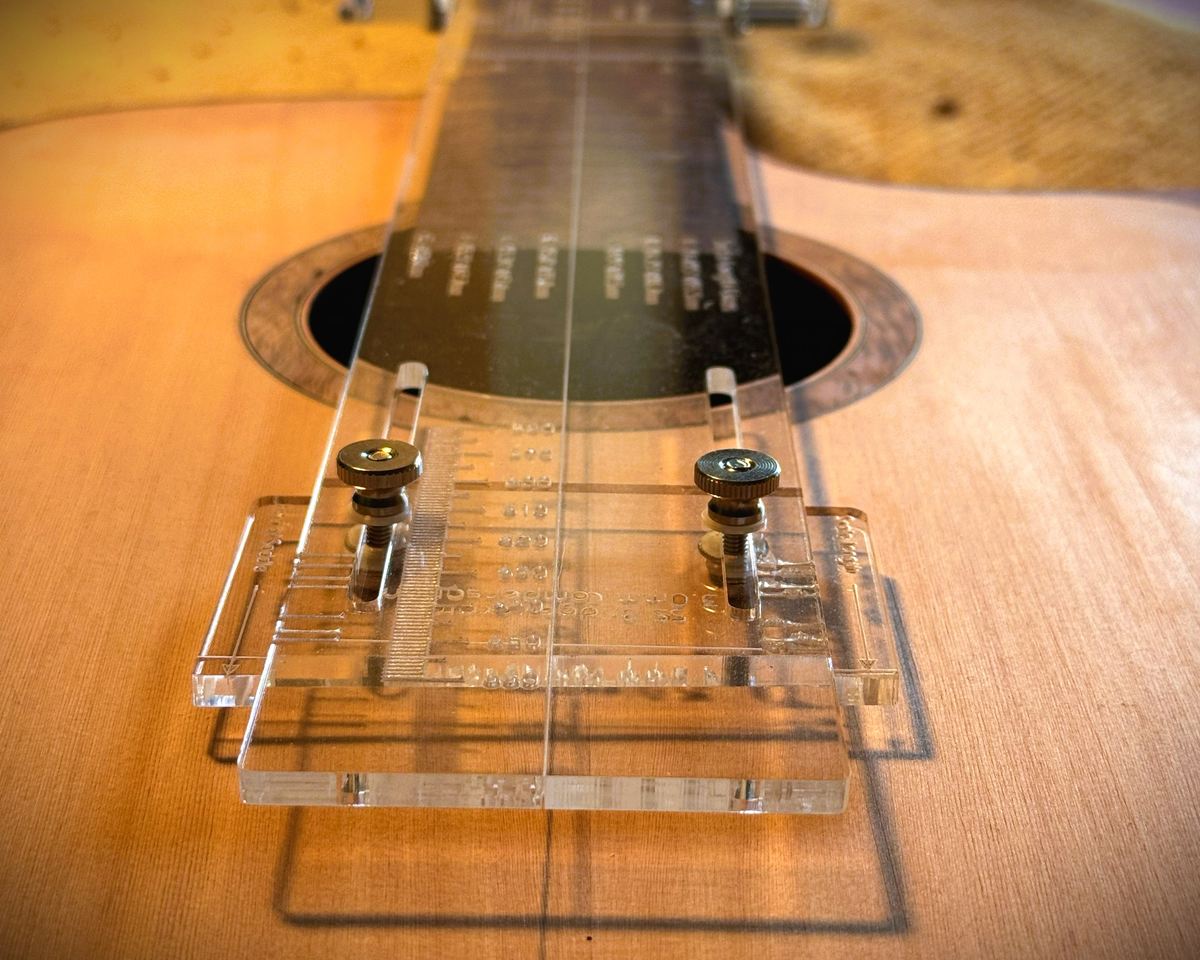
The bridge is located off the scale length, clamped and glued to the soundboard, and the saddle and nut are cut and dressed to height. Then the setup: action, relief, intonation and the first hour of playing it in.
45–55%Below about 40% the top sinks and the fret ends begin to feel proud. Above about 65% the top swells and the action rises.
Temperature
15–27 °CNever leave the instrument in a closed vehicle.
Storage
In its case, with a case humidifier in dry conditionsLoosen the strings a quarter turn for long storage or air freight.
Cleaning
Dry or barely damp cotton cloth onlyThe finish is french polish under carnauba wax. Do not use guitar polish, silicone, alcohol or solvent cleaners on it.
Re-waxing
Annually, or when the surface dullsThe maker will do this as part of a service, or supply the wax and the method.
Service1 entry
2026
Final setup and first string-updesk34 guitars, Sydney
Reversibility
Structural joints are made with reversible adhesivesA top can be removed and refitted by a competent luthier without destroying the instrument.
Finish repair
French polish is spot-repairableUnlike a thick lacquer, a damaged area can be dressed back, re-polished and re-waxed locally.
User-serviceable
Strings, truss rod adjustment, saddle heightEverything else should go to the maker or a qualified repairer.
A voluntary passport, structured to follow the published EU Digital Product Passport system standards (EN 18216–18246). No EU product-specific rule currently applies to musical instruments, so nothing here is issued under a legal obligation. It is published because the information is worth having.
Travel & border complianceCITES · EUDR
CITES
None of the species used are listed in the CITES AppendicesNo CITES permit or musical instrument certificate is required to cross a border with this guitar. The status is re-checked at each passport revision.
EU Deforestation Regulation
The finished instrument sits outside EUDR Annex IAnnex I covers wood under HS chapters 44, 47, 48 and parts of 94. Musical instruments fall under HS chapter 92 and are not listed.
Species substitution
No rosewood, ebony or other imported restricted species is used
This passport lists the status of the species used. It is not legal advice,
and not a claim of compliance with a regulation that does not apply.